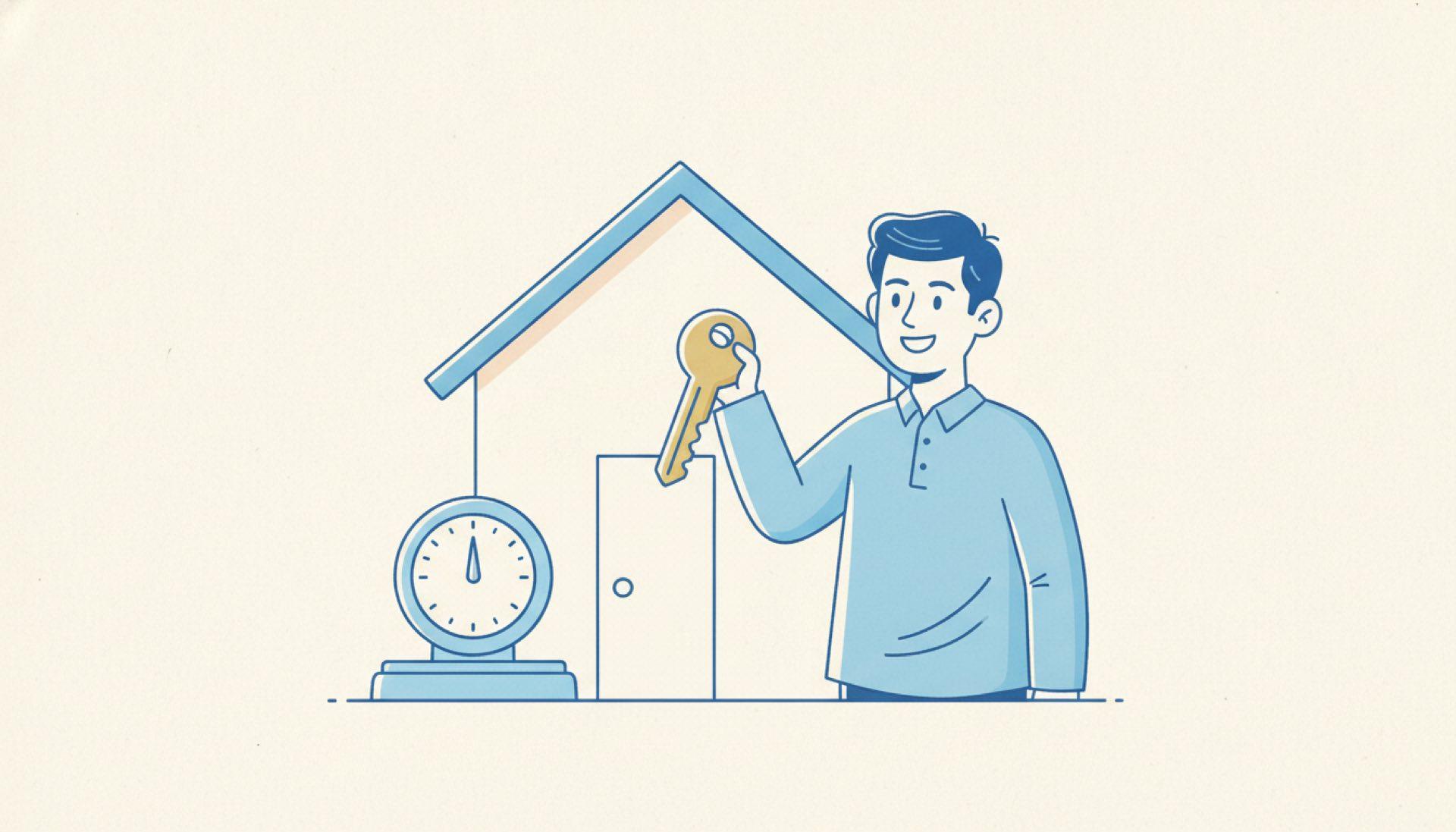

Inflation is the steady rise in the general price of goods and services, and its effect on your money is direct: each year the same rupee buys a little less. A balance that sits in cash, or earns a return that only matches inflation, loses purchasing power every year even though the number on the statement holds or ticks up.
This is monetary inflation, the kind measured by the Consumer Price Index (CPI). It is a different thing from "lifestyle inflation", where your own spending creeps up as you earn more. Both shrink what you keep, but only one is outside your control.
Inflation and your money (illustrative)
What does inflation do to your money?
Prices drift upward over time. A grocery basket, a bus fare, a school fee, a plate of food, all tend to cost more in a few years than they do today. When they rise, each rupee you hold covers a little less than it did, so your money loses purchasing power without a single rupee leaving your account.
Over the last decade or so, India's retail inflation has historically run in the mid-single digits, broadly around a 5-6% range in many recent years. That is a historical pattern rather than a forecast, and it shifts from year to year. The point is not the exact figure but the direction: prices keep climbing, so money that does not grow at least as fast is slowly being left behind.
Real return vs nominal return
The distinction that matters is between the return you are quoted and the return you actually keep. The nominal return is the headline rate, say 6% on a deposit. The real return is what is left after inflation is taken out.
Suppose a fixed deposit pays 6% and prices are rising at 6%. On paper your money grew by 6%. In the shopping aisle it bought exactly what it did a year ago. The real return is close to zero. Add tax on the interest, and the real return can even turn slightly negative. A "safe" 6% is only safe in rupees, not in what those rupees buy.
Why idle cash keeps losing ground
Cash feels like the safest place to keep money, and for near-term needs it is. But stretch the horizon and it becomes the riskiest option on the shelf, because it earns little or nothing while prices keep rising around it. Notes in a drawer earn zero. A savings account paying low single digits while inflation runs faster is losing you real value every year it sits there.
This is the hidden cost of playing it too safe. Money set aside for a goal a decade away, parked in cash "to be careful", can end up buying noticeably less than when you put it in.
Why you have to invest to beat inflation
If prices rise every year, standing still is not neutral, it is a slow loss. To hold your purchasing power, your money needs to grow at least as fast as inflation, and to build real wealth it needs to grow faster. That is the case for owning growth assets over long horizons rather than leaving everything in deposits.
Category-level, this usually means exposure to assets such as equity through diversified mutual funds for money you will not need for years, matched to your goals and risk capacity. The right split is personal and not a one-size answer. For the groundwork, see saving vs investing and long-term investing, and for where investing sits among the other blocks, what financial planning covers.
How fast do prices double? The Rule of 72
There is a quick way to feel inflation without a spreadsheet. Divide 72 by the inflation rate, and the answer is the rough number of years for prices to double, which is the same as your purchasing power halving. At 6% inflation, 72 divided by 6 is about 12 years.
Read that the other way and it is unsettling: money left idle can be worth half as much, in real terms, within a working lifetime's mid-stretch. The same compounding maths that grows an investment also grows prices. Our guides to the Rule of 72 and the power of compounding work through both sides of it.
What ₹1,00,000 held in cash still buys (illustrative, at 6% inflation)
Illustrative only, assuming a steady 6% inflation rate and money earning nothing. Actual inflation varies year to year. The rupee balance does not change; what it buys does.
Monetary inflation is not lifestyle inflation
It helps to keep two very different "inflations" apart. Monetary inflation is the economy-wide rise in prices, measured by the CPI, and no individual controls it. You respond to it by investing so your money grows faster than prices.
Lifestyle inflation is personal. It is the drift of your own spending upward as your income rises, where a raise turns into a bigger flat, a newer phone, more subscriptions. You control that one by choice, not by investing. Confusing the two leads people to blame "prices" for a savings gap that was really spending creep. Our guide to lifestyle inflation covers that side in full.
Related nyvo guides
- The Power of Compounding, Explained: the same maths that grows prices grows your investments.
- The Rule of 72: How Fast Money Doubles: the shortcut for how fast inflation halves purchasing power.
- Saving vs Investing: Which Comes First?: why beating inflation needs growth, not just a deposit.
- Long-Term Investing: Why Time in the Market Wins: the horizon over which growth assets outpace prices.
- Lifestyle Inflation: Why a Raise Never Feels Like Enough: the other inflation, the one you actually control.
At 6%, prices double roughly every 12 years, and ₹1,00,000 left idle for 30 years buys about ₹17,400 worth of today's goods. The statement will still read ₹1,00,000. The shopping basket will tell the truth.