Family Finance
Family Finance
Budgets, kids, parents, joint accounts – the money choices that shape a household.
About family finance
An Indian household's money rarely belongs to one person. There are parents who may need support, children whose education costs rise faster than headline inflation, and often a single earner carrying an EMI that everyone depends on.
Imported budgeting rules do not survive contact with that. The 50/30/20 split assumes no joint-family obligation and no 40% EMI. These guides cover what actually holds up: a split built for Indian cashflows, how to talk to a partner about money before it becomes an argument, and how to teach children about it early enough to matter.

How to Invest on a ₹30,000–₹50,000 Salary
How to invest with a low salary in India: build a small cushion first, start a SIP from as little as ₹500, automate it on payday, and step it up as you earn more.

How to Build Wealth From a Salary
How to build wealth from a salary: use EPF as the forced base, turn appraisal season into a step-up, handle ESOPs and bonuses well, and work around the salary ceiling.

Needs vs Wants: The Line That Decides Your Budget
The difference between needs and wants isn't fixed. Most budget failures come from wants that quietly reclassified themselves as needs. And one test that tells them apart.

How to Automate Savings From Your Salary
How to save from your salary without willpower: automate a payday transfer, plug the recurring leaks that fund it, and give the money a destination. Tactics, not targets.

Pay Yourself First: The Budgeting Rule That Sticks
The pay yourself first method turns saving from a monthly leftover into the first bill you pay – here's how it works and how to set it up in India.

Lifestyle Inflation: Why a Raise Never Feels Like Enough
Lifestyle inflation is why higher earners still feel broke. Every raise gets absorbed. Here's how the creep works and how to bank your raise instead.

Smart Ways to Save Money on Groceries (India)
A practical, India-specific guide on how to save money on groceries, the list, the once-a-month staples run, and the unit-price habit that beat every in-store trick.

Money Mindset: The Beliefs That Quietly Shape Your Balance
Your money mindset, the beliefs about money you absorbed as a child, shapes your bank balance as much as your salary does. Here's how to spot and rewrite them.

Sinking Funds: The Trick to Never Breaking Your Budget
A sinking fund turns once-a-year costs, insurance, Diwali, school fees, into a small monthly line you barely feel. Here's how to set one up.

How Much of Your Salary Should You Actually Save?
How much you should save from your salary isn't a fixed number. The target to build toward is 20% of take-home, and the real lever is banking your next raise before lifestyle eats it.
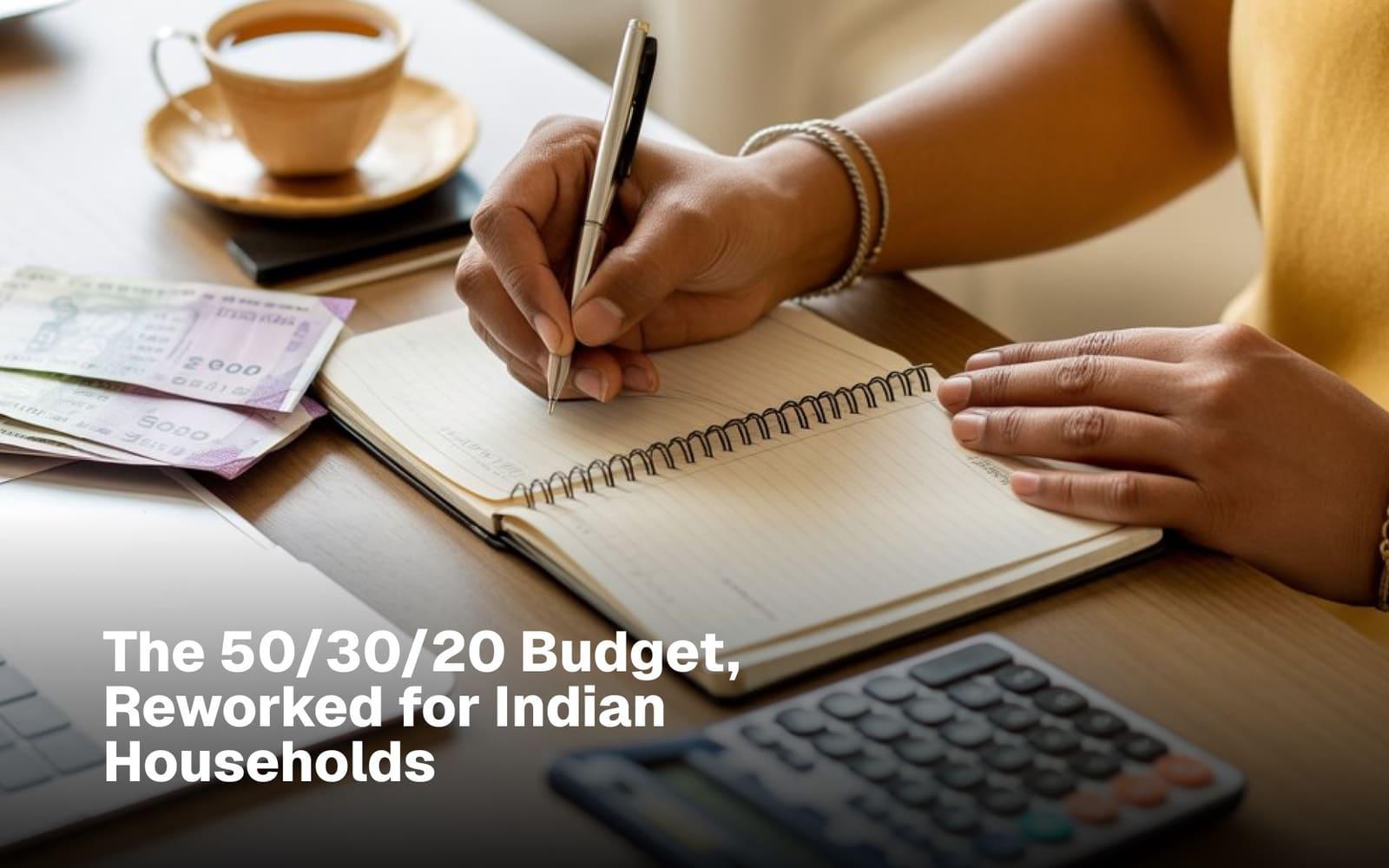
The 50/30/20 Budget, Reworked for Indian Households
Why the American 50/30/20 rule breaks in Indian families, and the 50/25/15/10 split that actually fits large EMIs, parental support, and joint-family commitments.

Teaching Kids About Money in India: An Age-by-Age Playbook
From ₹10 pocket money at age 6 to a first mutual fund at 16: the practical roadmap Indian parents can actually execute.
Run the numbers
Calculators that pair with these guides.
SSY
Project maturity value and interest from Sukanya Samriddhi Yojana: 15-year contribution, 21-year maturity, current government rate, fully tax-free.
CalculateHUF Guide
Step-by-step guide to creating a Hindu Undivided Family in India. Unlock up to ₹6.5L of extra tax-free income a year through a separate HUF PAN.
Calculate80C Optimizer
Which Section 80C slots to fill first to use your full ₹1.5 lakh deduction: ELSS, PPF, EPF, insurance, home-loan principal, SSY. Ranked by lock-in.
CalculateSIP
Estimate the future value of a monthly mutual-fund SIP in India. Enter your amount, expected return and horizon to see the corpus and gain split.
Calculate