The biggest way to save money on groceries is to decide before you reach the shop, not in the aisle. Shop from a written list, never on an empty stomach, and buy your dry staples once a month. That beats every in-store discount trick. Buy fresh food weekly so it doesn't spoil, and compare the unit price, not the pack price.
Chasing offers and switching brands helps at the margin. But an offer on something you didn't need is not a saving; it's a smaller overspend. The real money is in buying less, less often, on purpose.
Why your grocery bill leaks before you reach the shop
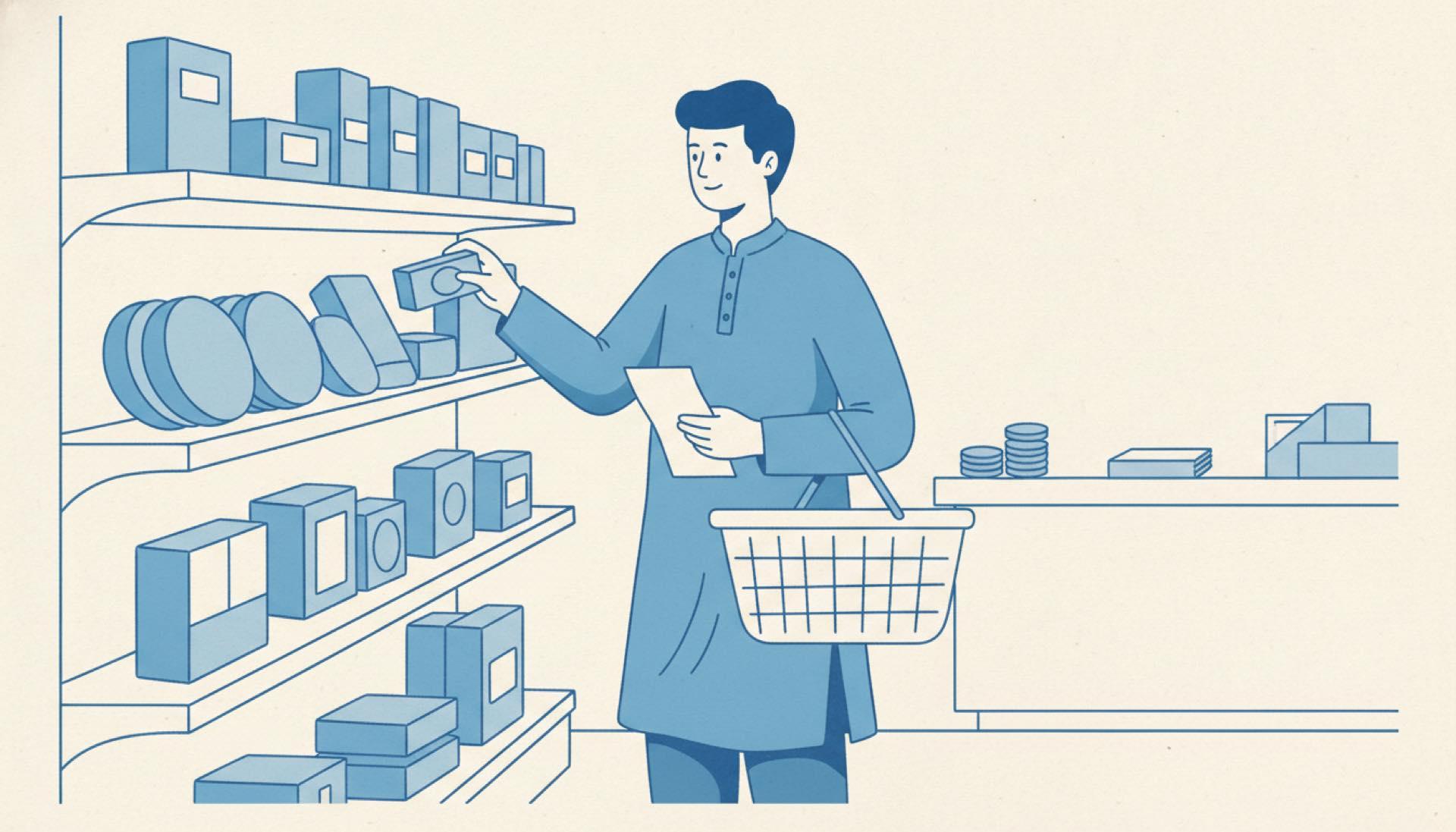
The leaks are set before you walk in. You go without a list, so you buy on memory and mood. You go after work, hungry, so everything looks worth buying. You "just need milk," so you make a trip every second day and grab four extra things each time.
None of that is a pricing problem. It's a planning problem, and planning is the part you fully control. The store is designed to sell you more: eye-level brands, end-of-aisle stacks, a layout that walks you past everything. You don't beat that inside the store. You beat it by deciding what enters the cart before you arrive.
The one-list, one-trip way to save money on groceries
Three habits do most of the work:
- Write the list from what's actually missing. Check the kitchen, not your memory. If it isn't on the list, it doesn't go in the cart.
- Never shop hungry. A hungry shopper buys snacks, ready-to-eat packs, and treats that were never needed. Eat first, and the list survives.
- Cut your trip frequency. Every extra visit is another chance to impulse-buy. Fewer, planned trips beat frequent "quick" ones.
Buy staples monthly, fresh food weekly
Split your shopping in two, and two leaks close at once.
- Monthly staples: rice, atta, dals, oil, spices, tea, cleaning supplies, toiletries. These keep, so buy the month's worth in one planned trip. One decision instead of thirty.
- Weekly fresh: vegetables, fruit, milk, curd, eggs, bread. Buy these little and often so they don't rot in the fridge. Wasted food is money you already spent, thrown out.
Kirana, supermarket, or 10-minute delivery
Each channel wins at a different job. Prices vary by city, so treat the comparison as general, not exact.
| Channel | Best for | Watch out for |
|---|---|---|
| Kirana / local mandi | Fresh produce, small top-ups, home delivery, monthly credit | No printed unit price – weigh and check |
| Supermarket / wholesale club | Monthly staples in bulk, unit-price comparison, store brands | The layout is built to trigger impulse buys |
| 10-minute delivery apps | A genuine emergency, one truly forgotten item | Convenience markup and fees on impulse orders |
The only price that matters is the unit price
The pack price fools you. A bigger pack is not automatically cheaper. Look at the price per kg, per litre, or per 100 g; the shelf label usually prints it in small type. Compare that number, not the sticker on the front.
Sometimes the 1 kg pack is dearer per kg than the 5 kg bag. Sometimes it's the reverse, because the "family pack" is betting you won't check. The only way to know is to read the unit price every time.
Bulk buying: when it saves, when it wastes
Bulk works for things that keep and that you reliably use: dry staples, cleaning supplies, toiletries. The unit price usually drops, and you cut trips too.
It wastes money when you bulk-buy perishables you can't finish, or a new brand nobody ends up liking. The rule: buy one, confirm the household actually uses it, then buy the big pack.
Related nyvo guides
- The 50/30/20 Budget, Reworked for Indian Households – where groceries sit in a budget that actually fits an Indian family.
- Emergency Fund: How Much Do Indian Families Actually Need? – the buffer that the money you stop leaking on groceries can build, month by month.
Write the list at the kitchen table, eat before you go, and make one staples trip a month. The store can keep its tricks.