How is this year's Nobel Prize paper linked to your household finances?

Who won, and what the paper says
On 12 October, Robert Hall of Stanford and Michael Woodford of Columbia won the 2026 Nobel Prize in economics. They share 12 million Swedish kronor.
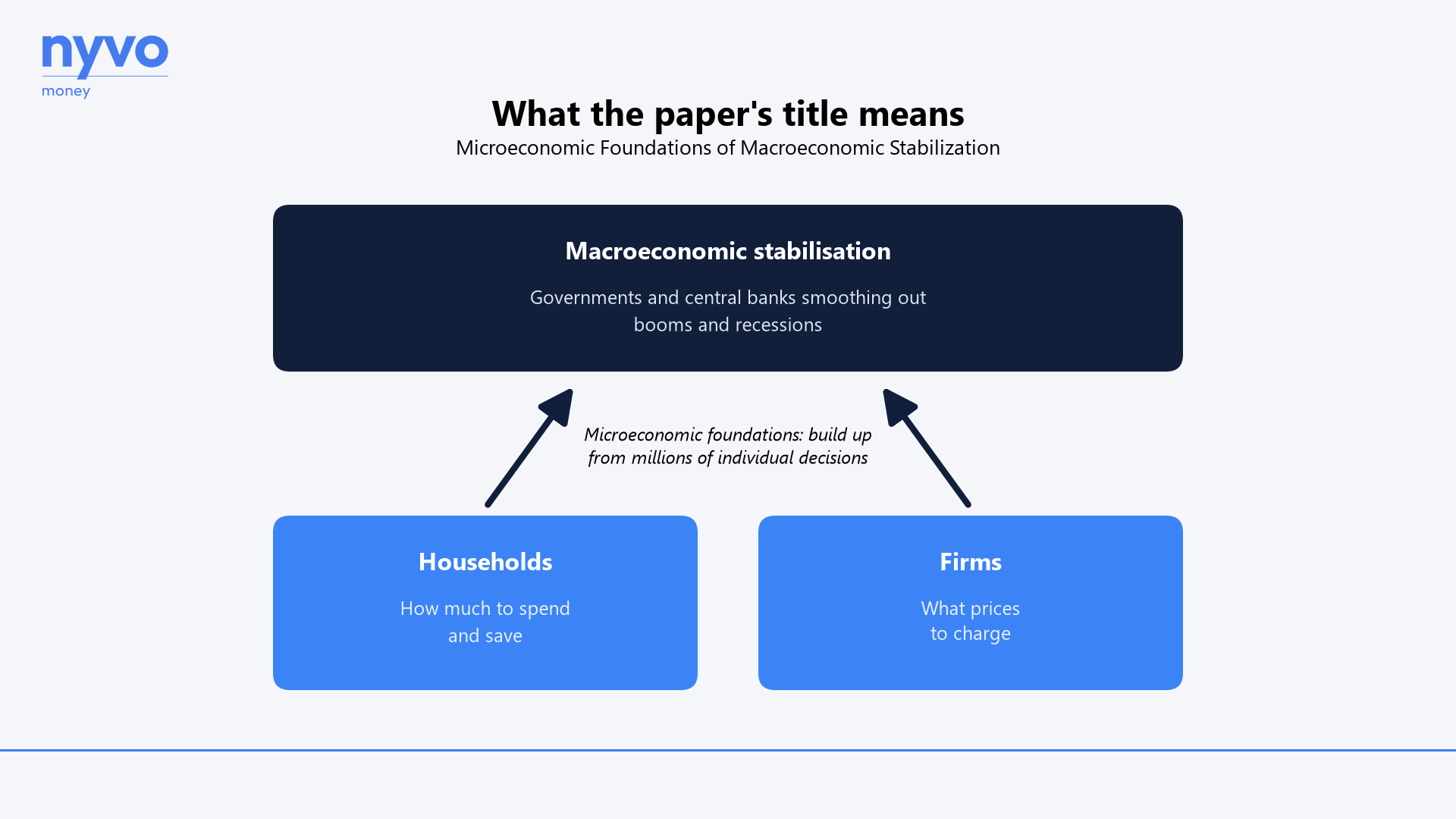
The Nobel committee's paper on their work is called Microeconomic Foundations of Macroeconomic Stabilization. It sounds complicated, but the idea is simple.
Macroeconomic stabilisation is the big picture: governments and central banks trying to smooth out booms and recessions. For decades, they used models built on John Maynard Keynes's ideas. These assumed fixed rules, such as "when income rises, spending rises".
In the 1970s, oil shocks brought high inflation and high unemployment at the same time. Those fixed rules stopped working.
Microeconomic foundations is the fix Hall and Woodford helped build. Start from how individual firms and households make decisions, including yours, and build up from there. Let's break that down.
Why the work is split between Hall and Woodford
The model behind the prize has three parts: households deciding how much to spend, firms deciding what to charge, and a central bank setting the interest rate.
Hall worked out the first part, households, in 1978.
Woodford came later, through the 1990s. He built on other economists' work on how firms set prices. He showed how a central bank can steer the whole system with an interest rate. Then he joined the three parts into one model.
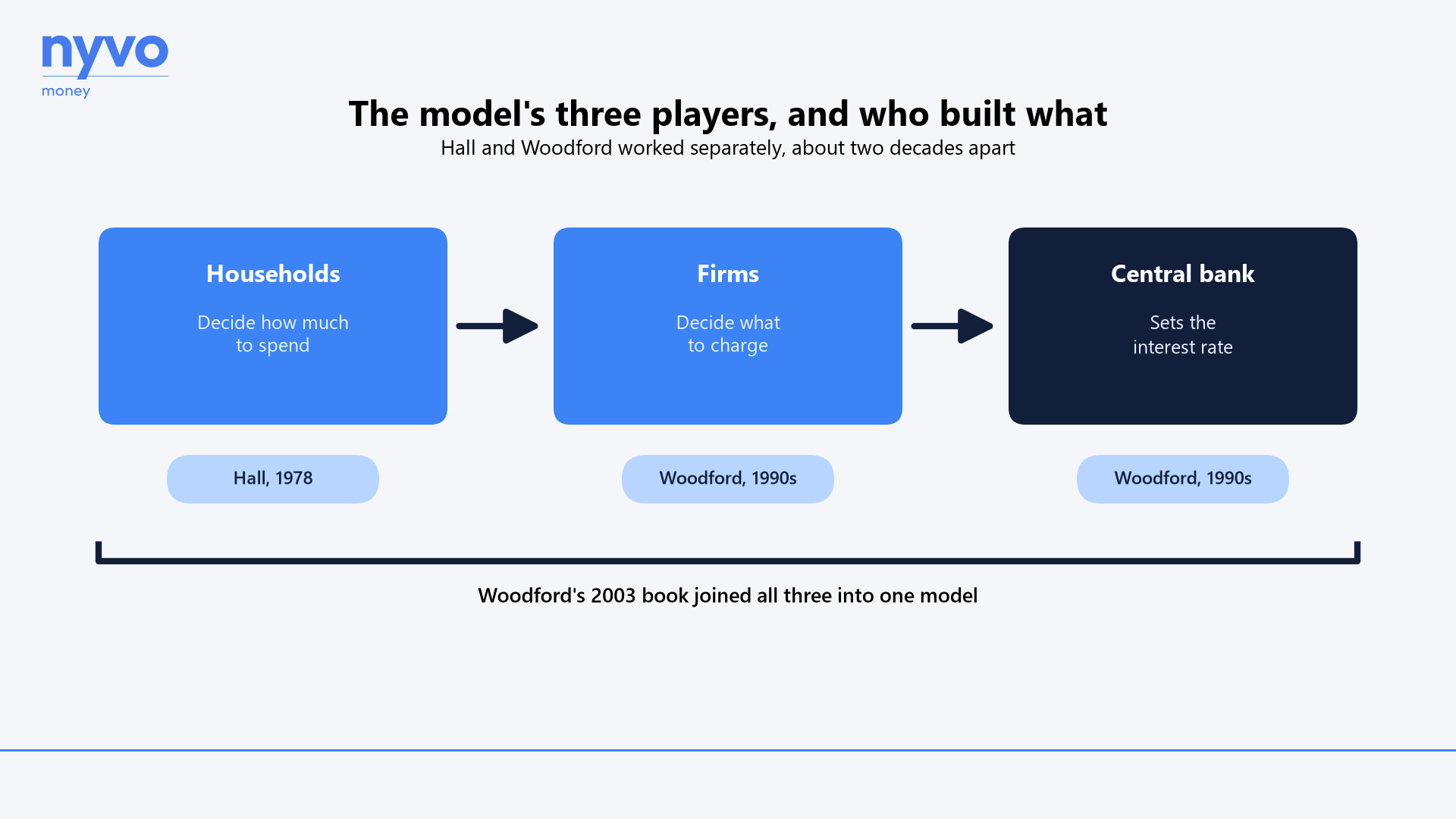
The two worked separately, years apart. That's why the paper covers them one at a time.
Robert Hall: how households decide what to spend
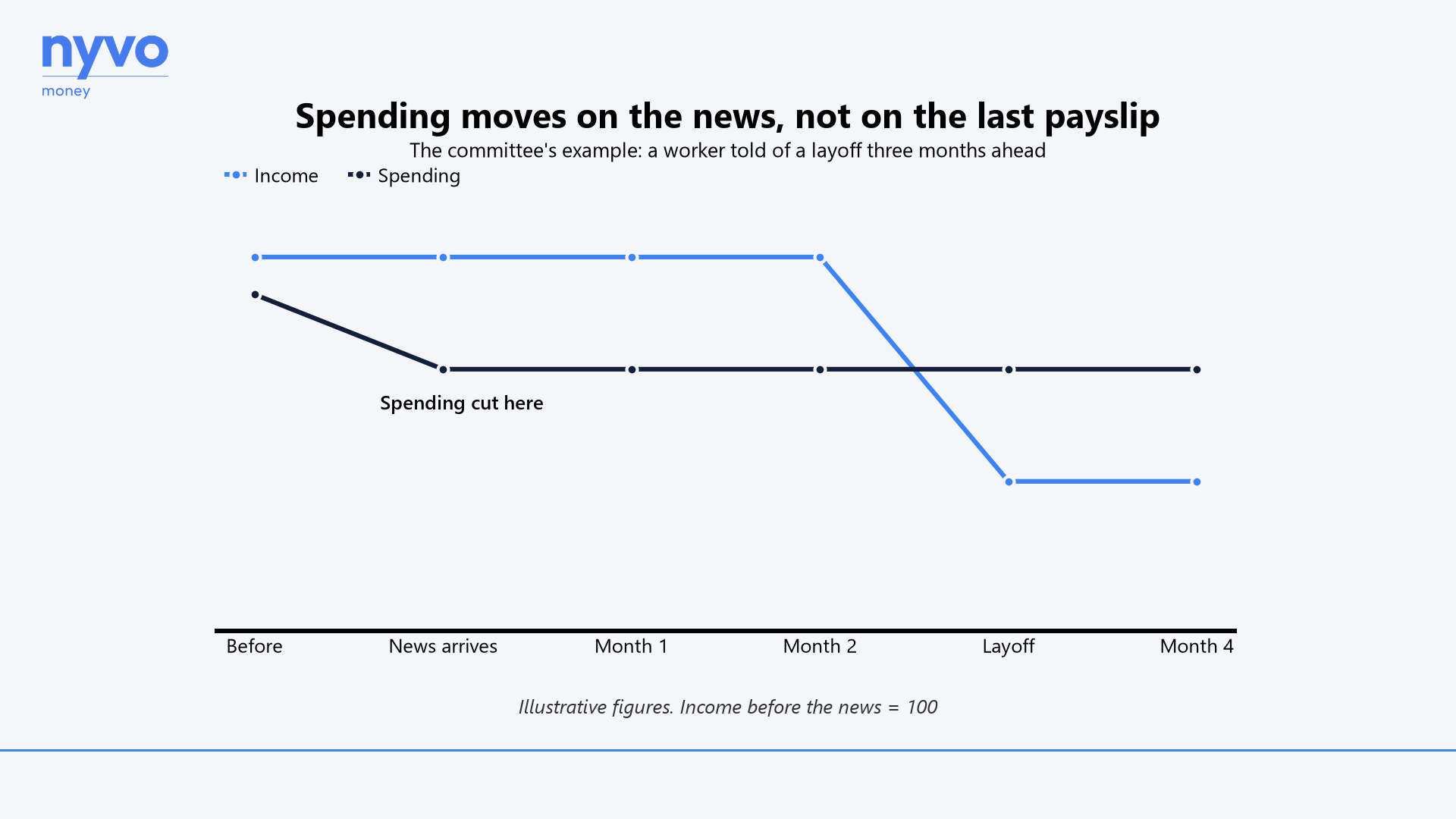
Hall's 1978 idea: people base their spending on what they expect to earn over their whole life, not just this month. So their spending changes only when that expectation changes, which means when there's news.
The committee gives an example. A worker who learns they'll be laid off in three months should cut spending right away, not wait for the last salary.
In 1982, Hall and Frederic Mishkin studied 2,309 US families. About 80% behaved the way the theory predicts. The other 20% lived hand to mouth: they spent whatever came in.
Michael Woodford: how firms and central banks fit in
Businesses can't change their prices every day. So when they do, they set prices based on what they expect their costs to be in the coming months.
In his 2003 book, Woodford put these businesses together with Hall's households and a central bank that sets interest rates. The result is known as the New Keynesian model.
Because households and businesses both plan ahead, even what a central bank says about future interest rates affects the economy today. The committee calls the model the main tool central banks now use.
What it means for your household
Hall's theory says spending should follow lasting income, like a raise, not one-off money, like a bonus.
Take a two-earner household in Pune expecting a ₹1 lakh Diwali bonus. At 2% a year after inflation, as the paper assumes, ₹1 lakh earns about ₹2,000 a year. The theory says: spend that ₹2,000 each year and keep the ₹1 lakh.
In reality, people spend 21% of a windfall on average, within weeks or months. Even adjusted for the fact that big findings get published more often, it's 11%.
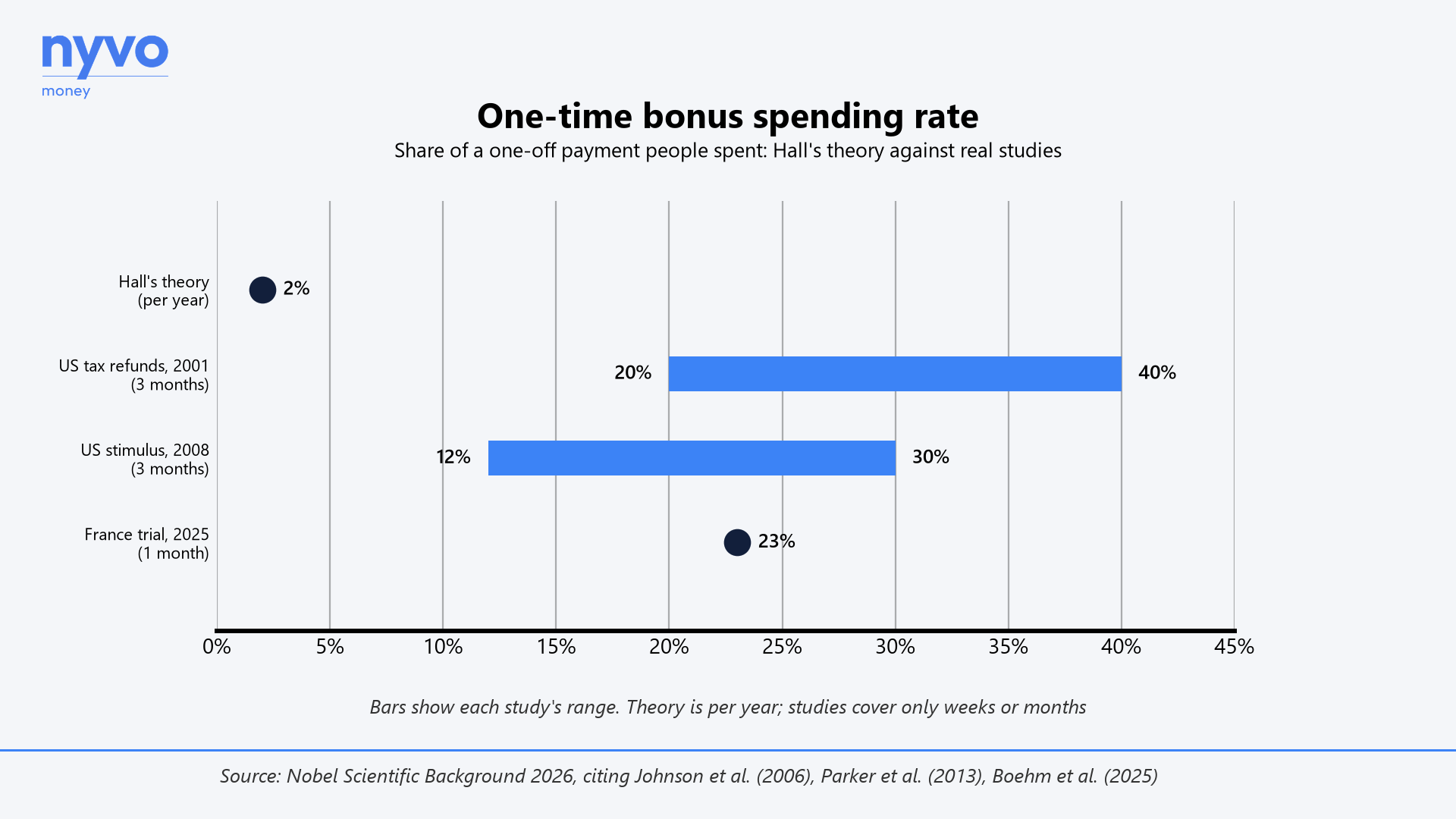
Why? Many households have no savings to fall back on, so extra money gets spent as soon as it arrives. Economists call this living hand to mouth.
Why a raise and a bonus are treated differently
Hall and Mishkin also found that people spend more from a raise than from a one-off payment. That makes sense when you compare the two.
A ₹1 lakh-a-year raise, kept for 25 years, adds up to ₹25 lakh. In today's money it's worth about ₹19.5 lakh, because money that arrives years from now is worth less than money in hand. A ₹1 lakh bonus is worth just ₹1 lakh.
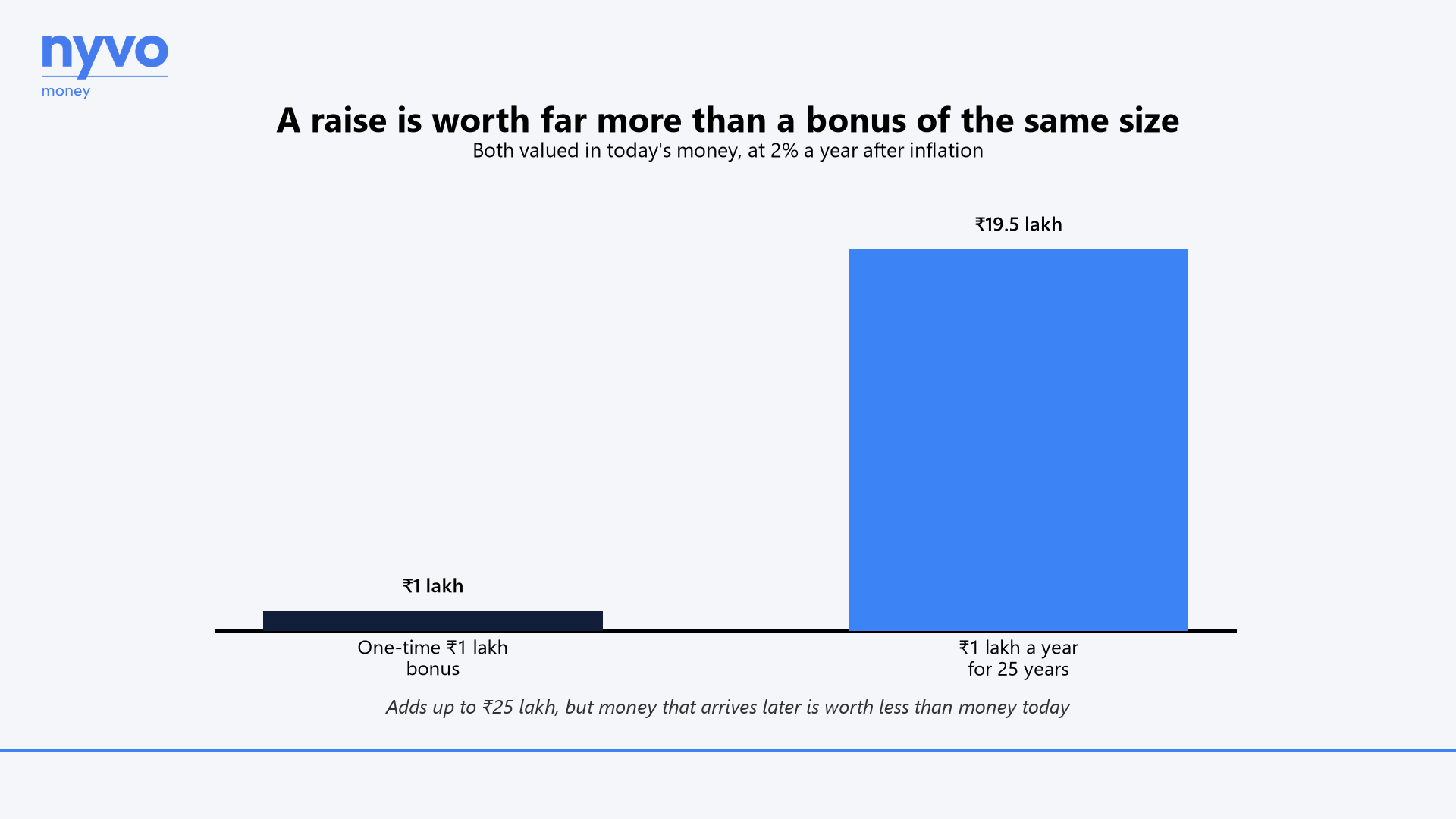
So spending more each month after a raise fits the theory. Doing the same after a one-off bonus is lifestyle creep.
One exception: if your bonus comes reliably every year, it works more like salary. Research also finds people plan better for big, expected payments than for small surprises.
The third player: central banks
Households and firms are two of the model's three players. The third is the central bank, and in India that's the RBI.
Since 2016, the RBI's main job has been to keep inflation close to 4%. Anything between 2% and 6% is acceptable.
To decide when to raise or cut interest rates, the RBI uses models of the economy. The model it published in 2016 is built the same way as Woodford's.
Why the RBI raised rates during an oil shock
On 7 October, the RBI raised the repo rate, the rate at which it lends to banks, from 5.25% to 5.50%. It's the first increase since February 2023.
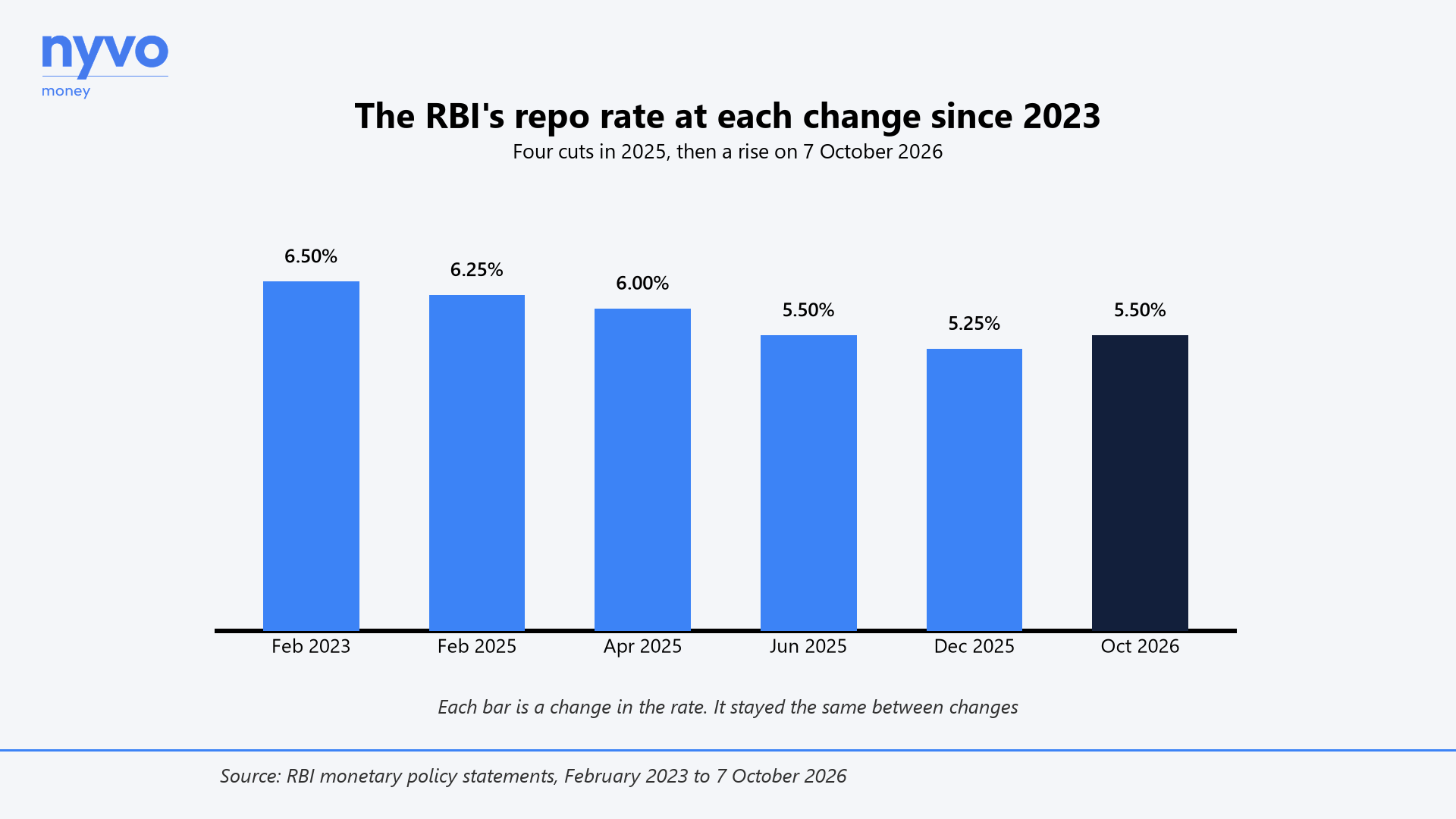
The RBI pointed to conflict in West Asia and swinging crude oil prices. It expects inflation to average about 5.8% over the next three quarters.
But why raise rates when expensive oil is already slowing the economy? Woodford's model explains it.
Costlier oil means the economy can produce less. But businesses don't raise their prices all at once, so people keep buying as before.
Demand ends up higher than what the economy can now supply, and prices rise over the following months. A higher interest rate cools spending early, before that happens.
The committee is open about the model's limits. It assumes people believe inflation will come back down. And it can't fully predict how a war changes people's behaviour.
What the rate hike means for you
A higher interest rate affects households in two ways. Saving pays more, so people may spend less. And borrowing costs more.
Hall's research found the first effect is small: people don't change their spending much when interest rates move. The second effect is the one you'll notice.
If your home loan is linked to the repo rate, the bank must update your rate at least every three months.
On a ₹50 lakh, 20-year loan at 7.5% to 8.5%, this hike adds ₹768 to ₹794 to your monthly EMI. Or your EMI stays the same and the loan runs longer.
Why owning a flat is not enough
Being hand to mouth is about access, not wealth: can you get to money quickly when income drops?
In 2017, an RBI committee found the average Indian household kept 77% of its assets in property and 11% in gold. Only 5% was in financial assets, bank deposits included.
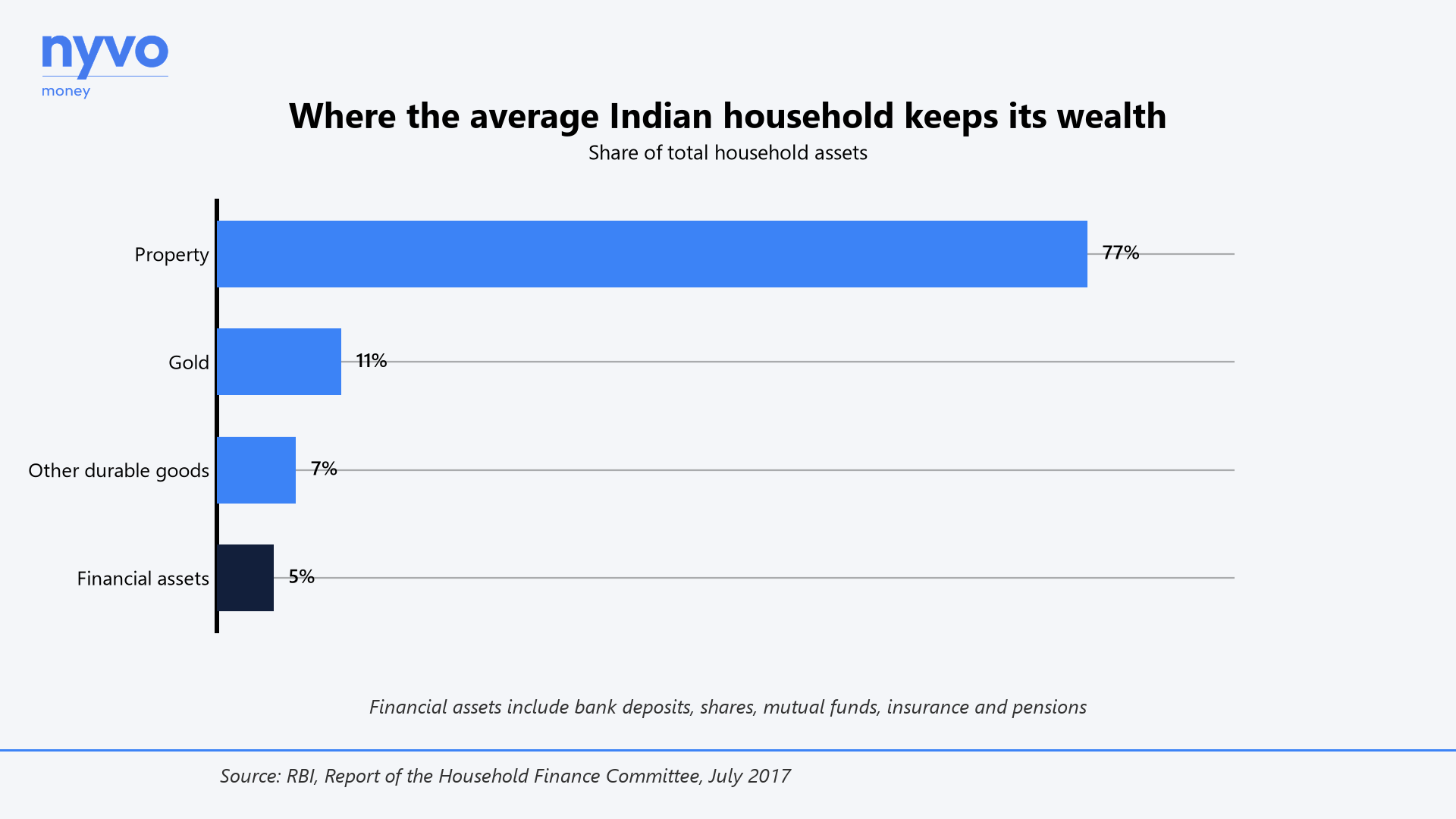
Economists call people with property but little cash the "wealthy hand-to-mouth".
A family can own a flat in Pune and still not have enough cash to get through a month without salary. For them, a bonus isn't extra money. It's the safety net they didn't have.
What this means for your bonus
For the household in Pune, it comes down to one choice. If they save part of the ₹1 lakh, the next surprise, like a higher EMI, a hospital bill or a market fall, won't force them to cut everyday spending.
That's exactly what Hall's theory describes: spending that stays steady even when income doesn't.
Educational content, not investment advice. The examples are illustrations; what suits your household depends on your own income, loans and savings.
Now in the nyvo app
Plan it for real in the nyvo app.
Goals, projections, fund grades and your whole family's money – in one place. Free. SEBI-registered.
Tools to try
Run the numbers yourself.
Free calculators that go with this issue. Built for Indian rules (rupees, inflation, tax regime).
- Home Loan EMI Calculator – Monthly EMI India 2026
Calculate monthly EMI, total interest and the principal/interest mix over your home loan tenor in India. Stress-test prepayments and rate changes.
- Home Loan Prepayment Calculator – Interest Saved
See the interest and time a lumpsum prepayment saves on your home loan. Compare keep-tenor (lower EMI) against reduce-tenor (faster closure).
Also worth reading

18 September 2026
Where Did All Our Money Go?
Two salaries, ₹2.7 lakh a month, and a balance that never adds up on the 22nd. Four leaks explain it, and not one of them needs a single bad decision.

26 June 2026
Having Lots of Credit Cards Is a Trap More Than a Power Move
More credit cards feels like more power, but it's usually more trap – how stacking cards quietly raises spending, fees, and debt risk, and what actually helps your finances.

9 July 2026
Rent vs Buy a Home in India in 2026: The Math Nobody Does Before Signing
Compare renting and investing versus buying a home in India using 2026 loan rates, rental yields, affordability rules, stamp duty, and a 10-year model.