
All issues
nyvo weekly · #38· 1 October 2026· 4 min read·By Harsh Soni
Same ₹1 lakh a year, ten times the cover. Then: how a real education fund gets built.

Child plans are not an education fund

A young Indian couple and their five-year-old sit at a bank relationship manager's desk in warm afternoon light. The mother studies a blue brochure, the father raises a hand as he asks a question, and the child rests their chin in their hands between them. The manager slides another brochure across the desk towards an unsigned form and pen.

They're sold at the bank desk as one. The brochure may look interesting, but this article tells you what it leaves out, and how a real education fund is built.

A two-in-one deal

Everyone loves a combo offer. A 35-year-old parent is offered a child plan at ₹1 lakh a year, for 20 years.

The brochure shows that this one plan covers both investment and insurance. Your money goes into investments, with a waiver on top: if the parent dies, the insurer pays the remaining premiums.

That sounds like a bonus benefit. As interesting as it may seem, the fine print tells a very different story.

Part 1: The investment

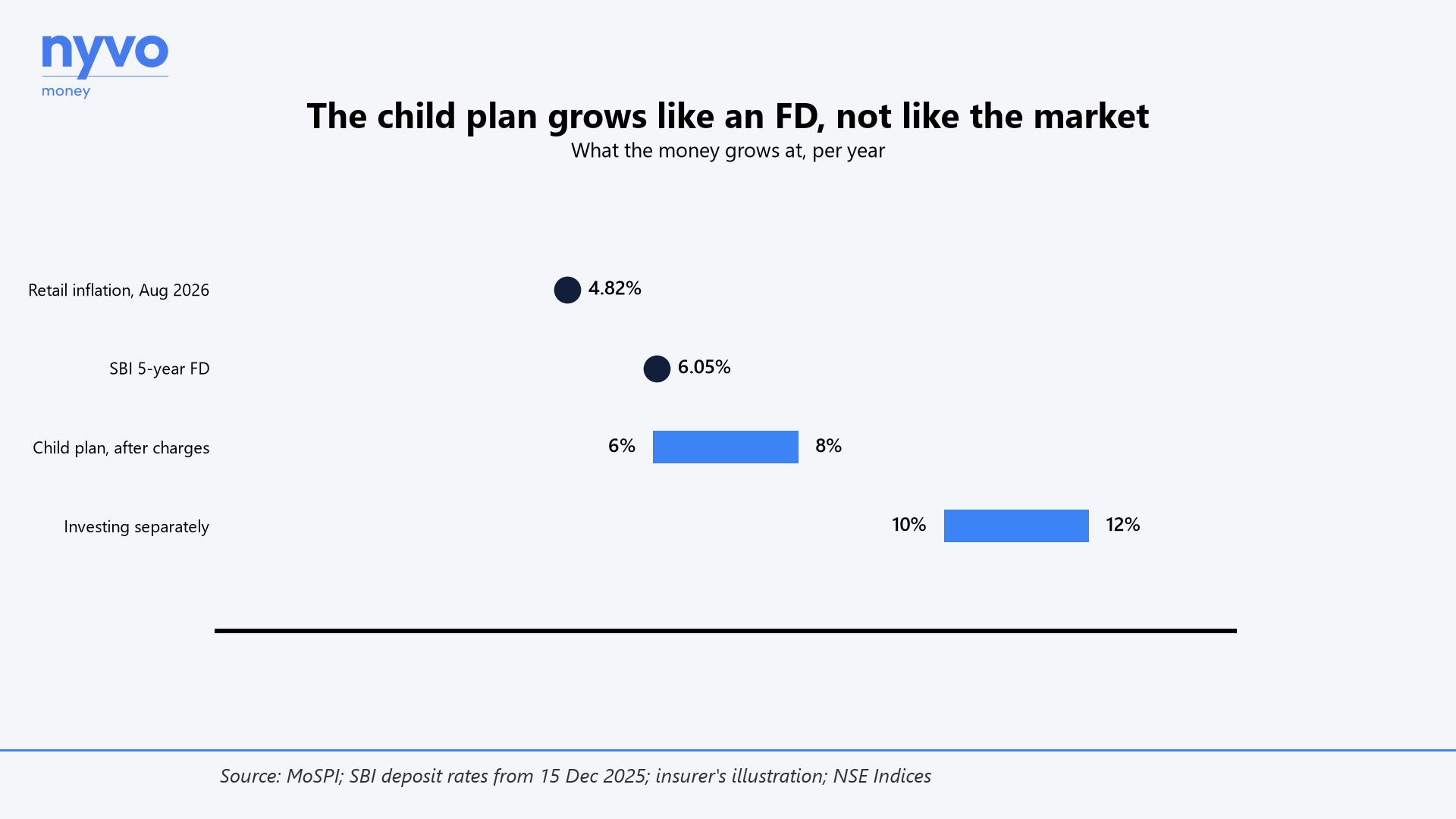
What most people don't realise is that after all the fees and cuts, your investment in a child plan earns only about 6–8% a year.

That's barely ahead of an FD or inflation. SBI pays 6.05% on a five-year deposit, and retail inflation was 4.82% in August 2026.

Invested separately, the same money can earn around 10–12%, roughly what the market has made on average.

Child plan, after charges

6–8%

a year, close to what an FD pays


Invested separately

10–12%

a year, roughly the market's average

The child plan grows like an FD, not like the market

Part 2: The insurance

For the ₹1 lakh you pay each year, the plan gives you ₹10 lakh of cover. A separate term plan gives you ten times that.

Child plan

₹10 lakh

of cover, for ₹1,00,000 a year


Term plan

₹1 crore

of cover, for under ₹15,000 a year

Same ₹1 lakh, bought separately

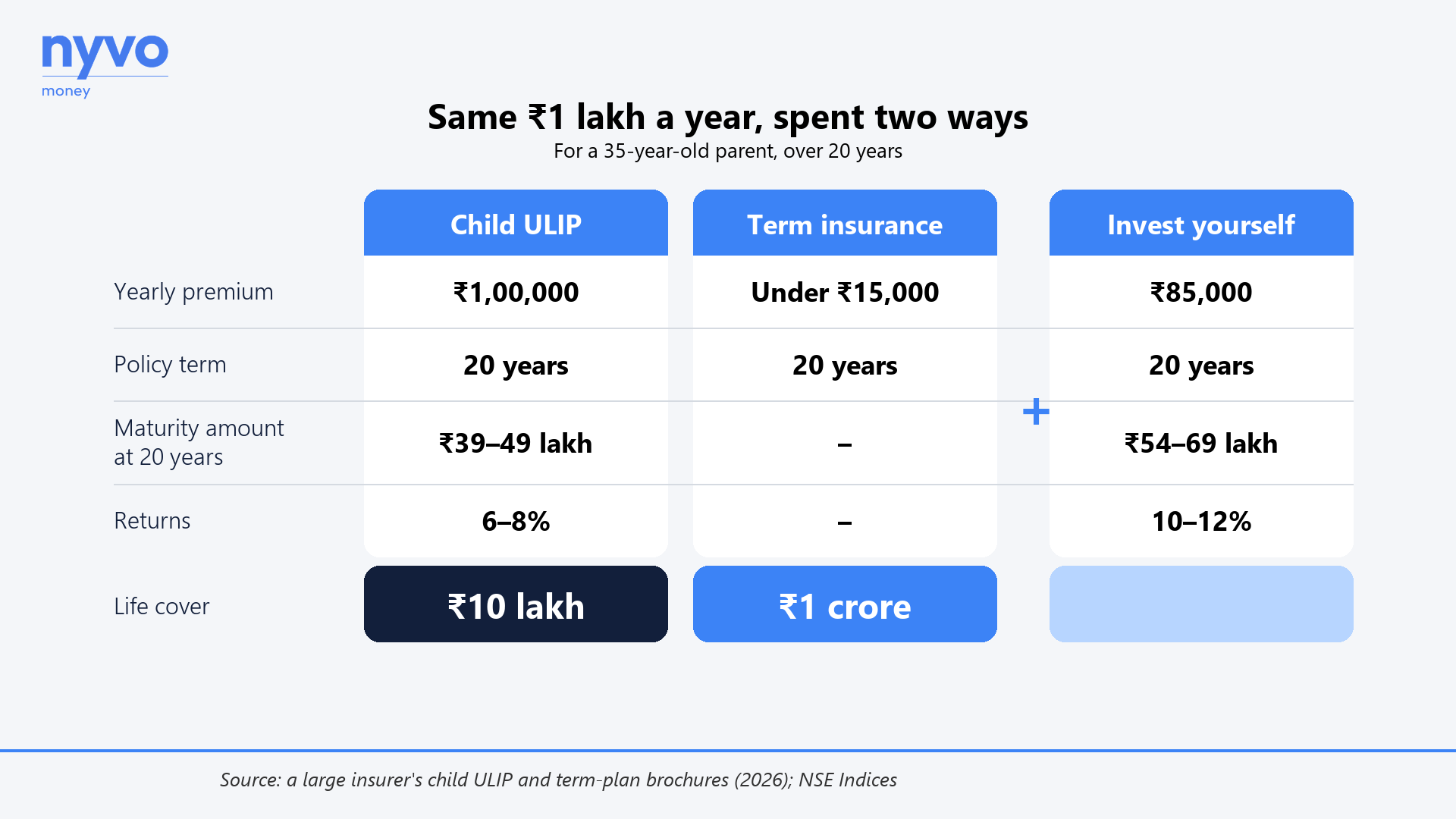
Now spend the same ₹1 lakh a year on the two parts: under ₹15,000 on a 20-year, ₹1 crore term plan, and ₹85,000 invested yourself.

Same 1 lakh rupees a year, spent two ways over 20 years. A child ULIP: 39 to 49 lakh rupees at maturity, 6 to 8% returns, 10 lakh of life cover. Or a term plan at under 15,000 rupees a year with 1 crore of cover, plus 85,000 rupees a year invested yourself, worth 54 to 69 lakh at 10 to 12% returns.

Invested directly, the money keeps what the market makes, less a small fund fee. Over 10-year periods since 2005, the Nifty 50's median was 12.7% a year.

So how do you actually build an education fund? In four steps.

Step 1

Give the goal a number and a timeline

It starts with the degree, not a product. Work out what the education costs today, then add inflation for every year until the goal.

Working it out

The degreeFour-year engineering at BITS Pilani
Fees today₹28.68 lakh
Inflation10% a year (these fees rose 10.9% a year from 2013-14)
Years to go13, college starts in 2039
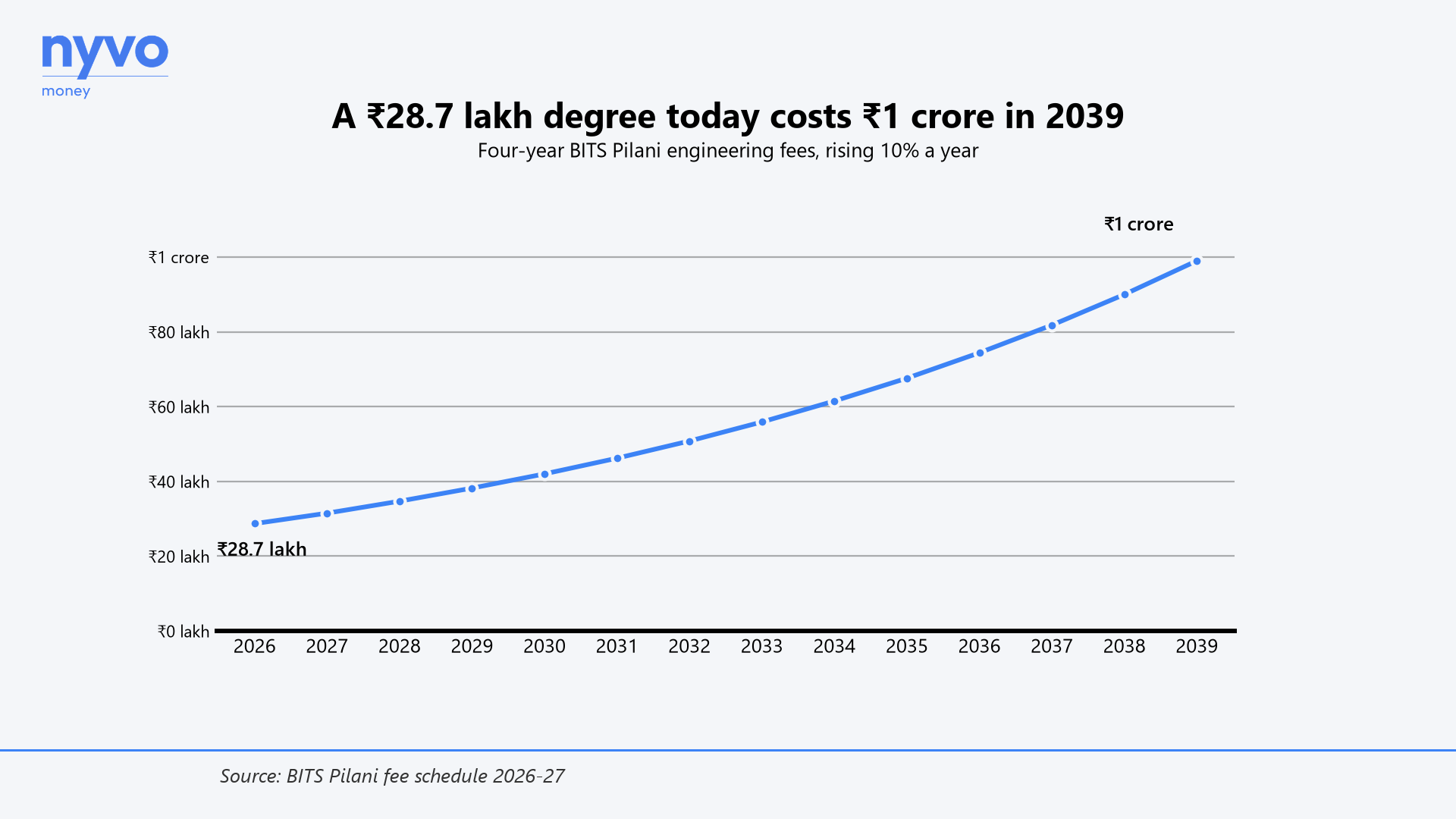
Cost in 2039About ₹1 crore
SIP needed at 10–12%₹27,900 to ₹32,300 a month
A ₹28.7 lakh degree today costs ₹1 crore in 2039

That's the goal: ₹1 crore by 2039. Even at 8%, the child plan's ₹8,333 a month reaches about ₹22.4 lakh, under a quarter of it.

Step 2

Put the money in the right assets

The right asset depends on how far away the goal is.

Match the asset to the time left

7 years or moreMostly equity
3 to 7 yearsA mix of equity and debt
Under 3 yearsMostly liquid and short-term debt funds

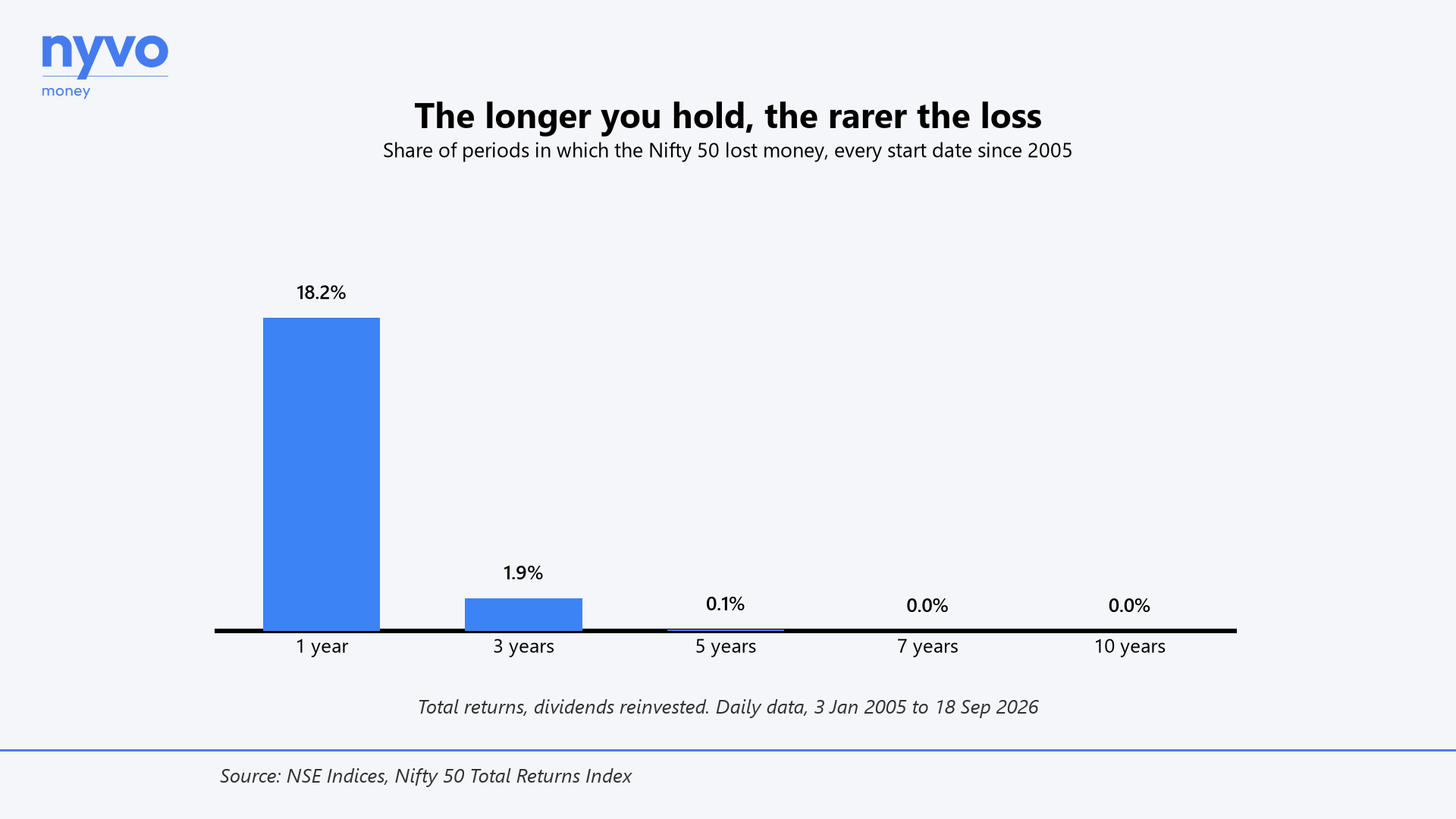
Since 2005, anyone who held the Nifty 50 for one year lost money 18.2% of the time. Anyone who held it for seven years never did. The worst 13-year stretch still made 6.61% a year.

The longer you hold, the rarer the loss

Based on how much time you have, pick the asset that gives you what you need on the day you take the money out.

Step 3

Move to safer assets as the date gets close

If you started in equity, you can't leave it there as the goal nears. Equity comes with volatility and market risk, and close to the date there's no time to wait out a fall.

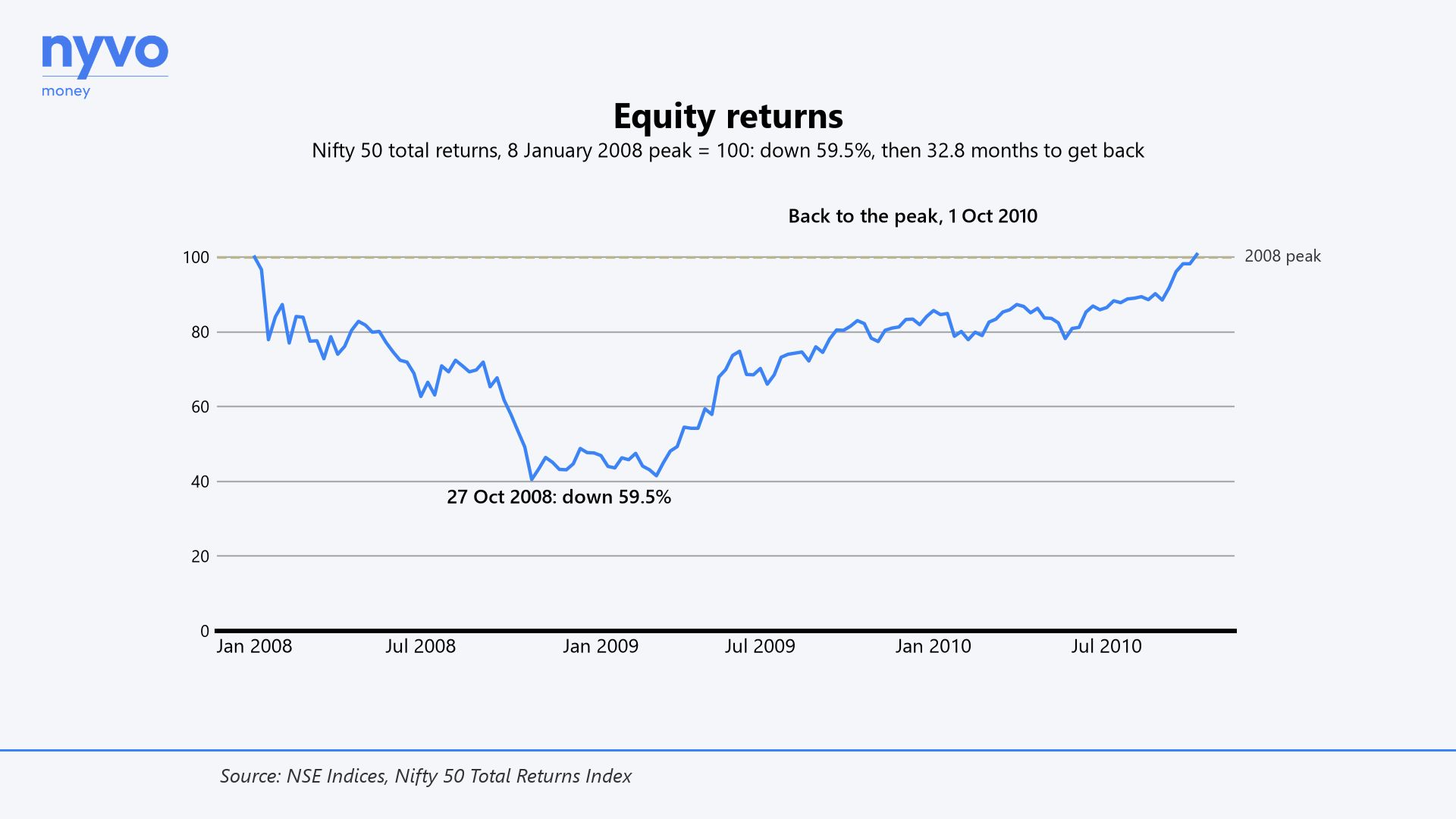
In 2008 the Nifty 50 fell 59.5% in ten months, and took 32.8 months to get back. A family with fees due in 2009 couldn't wait that long.

Equity returns

The glide path

3 years outNew SIPs go into liquid or short-term debt funds, and existing equity moves across in stages
1 year outThe first year's fees sit entirely in liquid funds
Every year afterThe next year's fees move across a year ahead

Liquid funds hold only debt that matures within 91 days, so they barely move. They earn close to short-term interest rates, with RBI's repo rate at 5.25%. Less than equity, but they can't fall 55% in a year.

Move your assets as time passes, to make the most of both.

Step 4

Insure the parent

The fund only gets built if the parent is around to keep investing. That's the one job for insurance.

A ₹1 crore term plan does it for under ₹15,000 a year. If the parent dies, that payout, invested, more than covers the ₹1 crore goal. It's what protects the wealth being built, and it should always be taken on the parent.

The five-year-old doesn't need a child plan. They need a number, a date, and an insured parent.

The takeaway

•Don't rely on a child plan. Your money is split across insurance and investment, two products that each work better on their own.
•Bought separately, the same ₹1 lakh a year gets ₹1 crore of cover instead of ₹10 lakh, and keeps more of its returns.
•The right way to protect your child's future is four steps: set the number and date, invest mostly in equity while the date is far, move to liquid funds as it nears, and insure the parent.

Now in the nyvo app

Plan it for real in the nyvo app.

Goals, projections, fund grades and your whole family's money – in one place. Free. SEBI-registered.

nyvo weekly

Get the nyvo weekly direct to your inbox.

Every Monday. One practical money idea, math worked out. Free, no spam.

By subscribing, you agree to receive the nyvo weekly newsletter. No spam, unsubscribe anytime.