The seven deadly sins of investing

You picked the shorter queue at the supermarket. Then the long one started moving, so you switched, and watched the queue you had just left clear out ahead of you.
Nothing was hidden. Both queues were in front of you the whole time. Your mind talked you into moving anyway.
Investing is the same. Everyone has the information now: factsheets, returns, ratings, holdings, all a search away. Information was never the constraint. Temperament decides more than analysis does.
Seven sins. Have you committed any?
1 · Pride
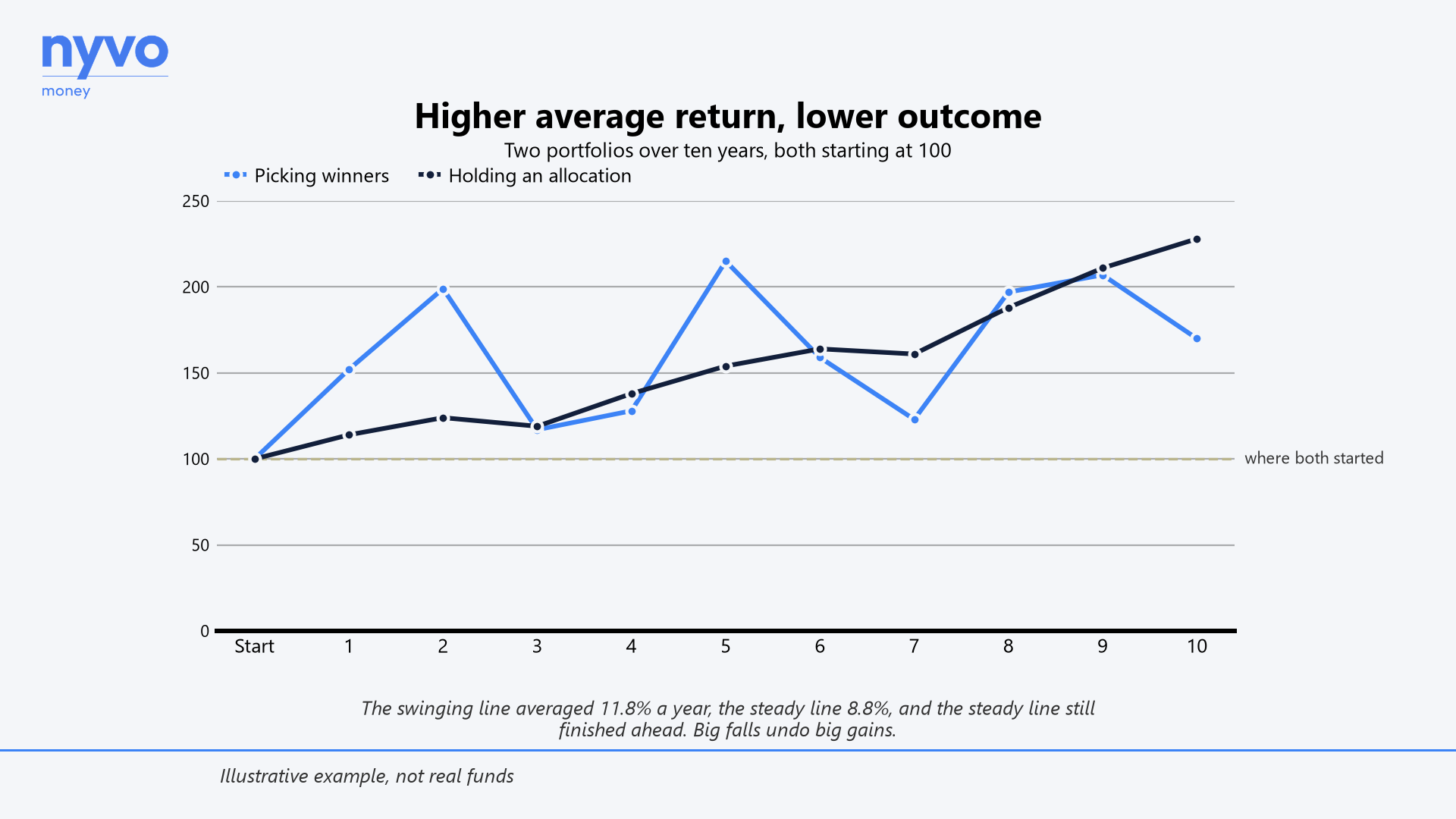
In January 1999 a five-year-old chimpanzee named Raven threw darts at a board of 133 internet companies and picked ten. Her portfolio returned 213% that year against the Nasdaq's 86%, beating more than 6,000 professional money managers. Then the bubble burst. By the end of 2002 virtually nothing was left.
The chimp was never good. Most of the 6,000 weren't either.
A rising market makes everyone look like a genius. Only a falling one tells you who was.
Overconfidence bias is believing you can pick the winner. Real skill is smaller: across 118 large rated Indian equity funds, the median beats its benchmark in just 52.8% of rolling three-year windows.
2 · Greed
Everyone wants to make money, so you pick the fund with the best returns. It sounds rational. That's what makes it misleading.
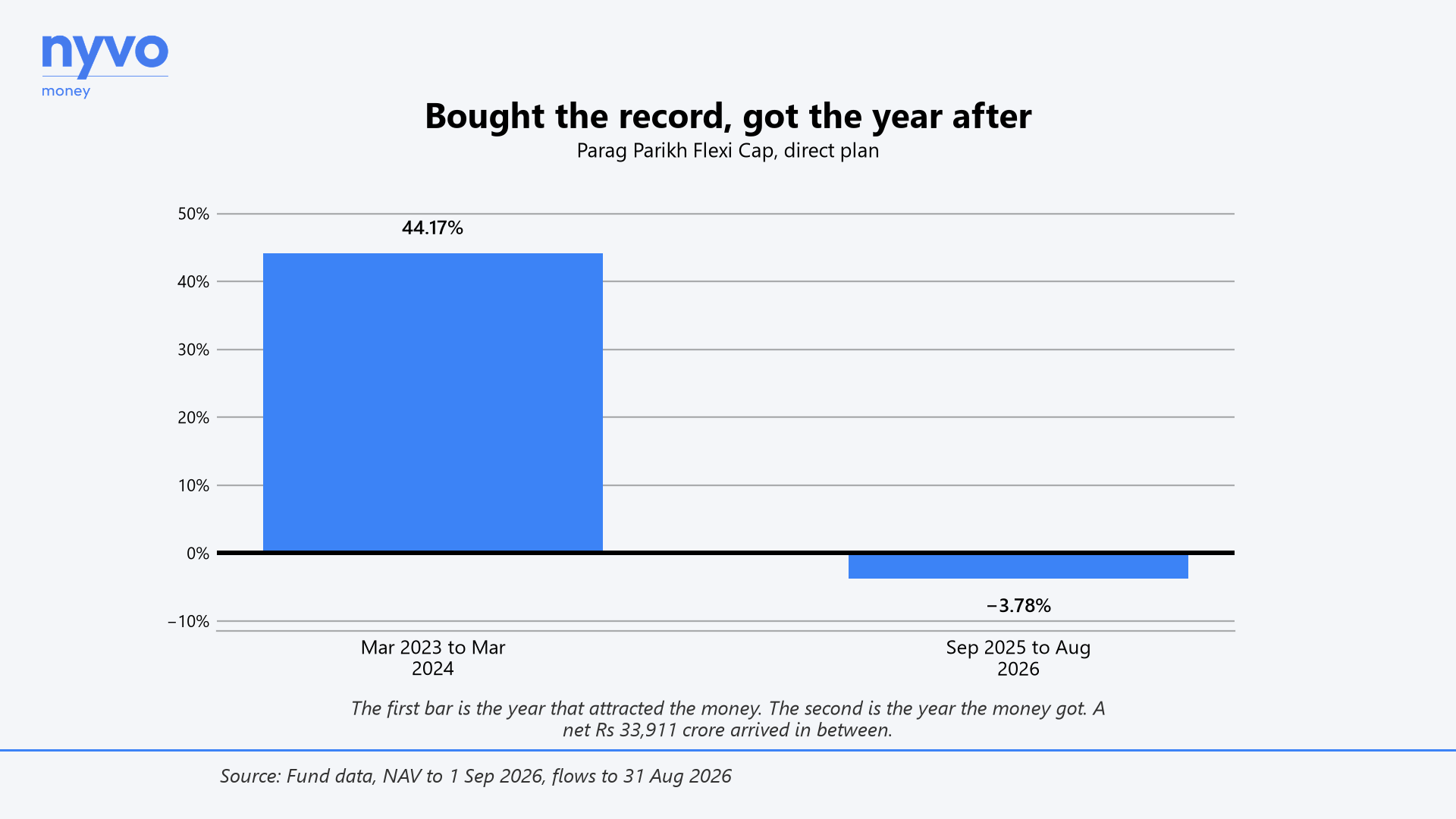
Parag Parikh Flexi Cap returned 44.17% in the twelve months from March 2023, its best year in five. The same rational thought sent money after it: a net ₹33,911 crore over the year to August 2026, making it the country's largest flexi cap.
Over that same year, the fund returned −3.78%.
Nothing broke at the fund. People got in after it had already ridden its high.
3 · Envy
Your neighbour bragged about a midcap giving him great returns, so you move your money into the same one. He isn't lying. The numbers feel like proof.
But his money isn't working towards the same goal as yours.
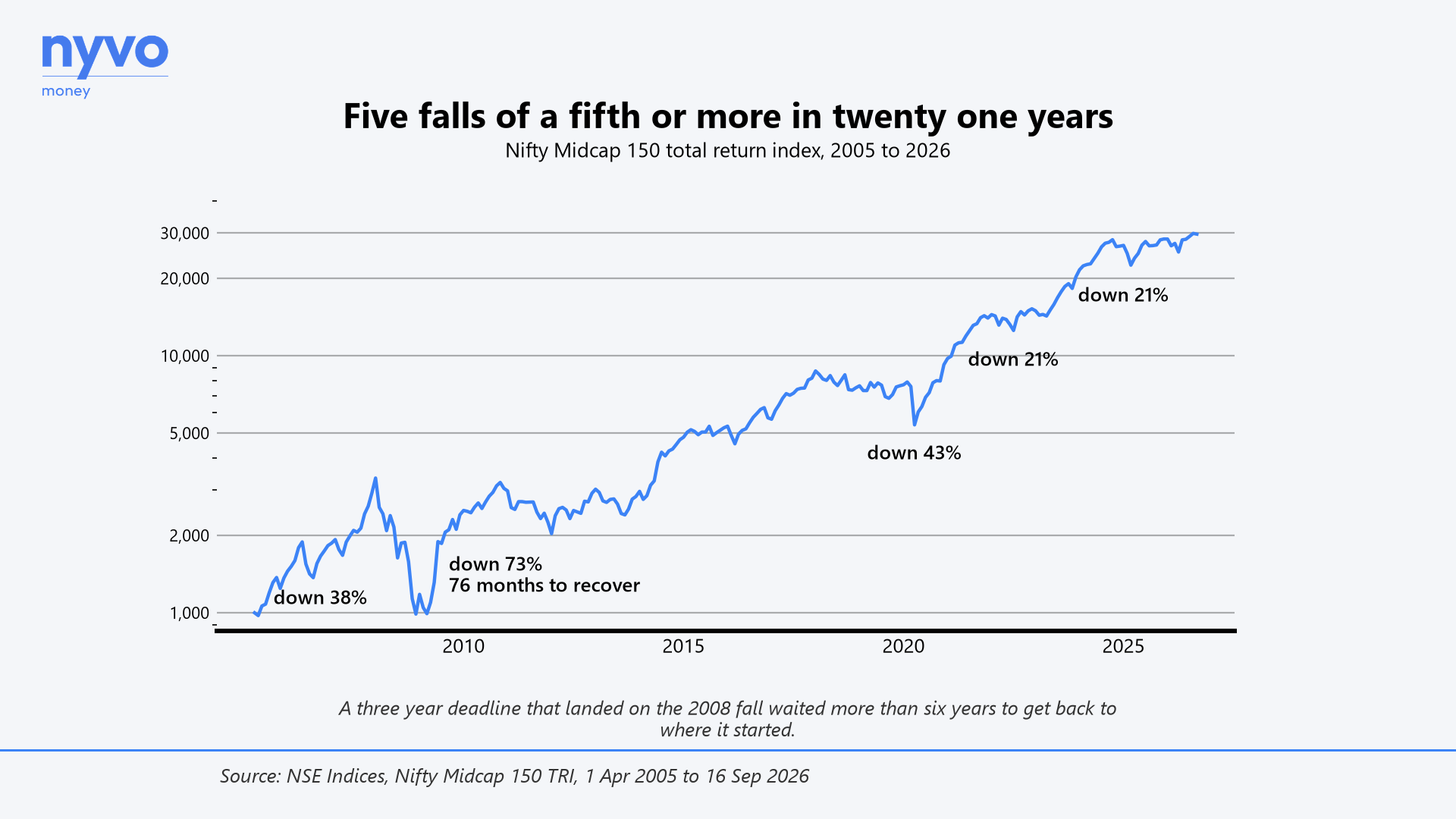
Say yours is for a house deposit, needed in three years. The Nifty Midcap 150 has had five falls of a fifth or more since 2005. The worst, from January 2008, took it down 73% and needed 76 months to get back to where it started.
Six years to recover, but you need your money in three.
Your neighbour may not need his money for fifteen years, so none of that would reach him.
4 · Wrath
A fund has a bad year or the market crashes and you want out. Pulling money out feels like control.
The mind registers a loss as far more painful than an equal gain feels good: loss aversion is one of the most reliable findings in behavioural economics. A 10% fall reads as an emergency, and emergencies demand you do something.
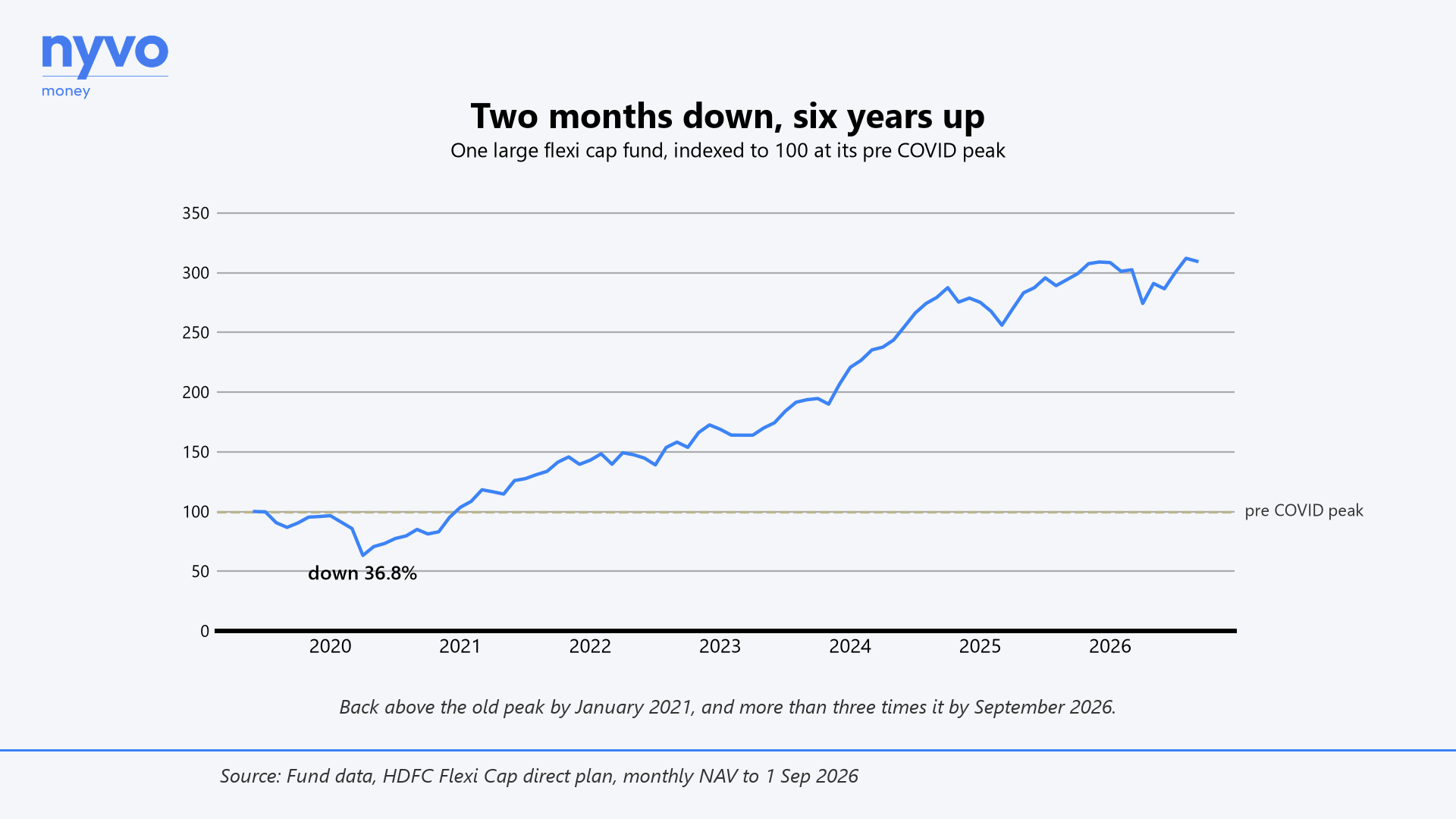
But compounding doesn't happen inside the stretch you're watching. Between February and April 2020, a large flexi cap fund fell 36.8%. It is up 390% from its April 2020 low. Someone who bought in the worst possible month before the crash and simply held is up 210%. Someone who left has none of it.
5 · Gluttony
You own six funds, so you feel diversified. Six categories, six fund houses, six managers.
But diversification is a property of what you own, not how many products you own it through.
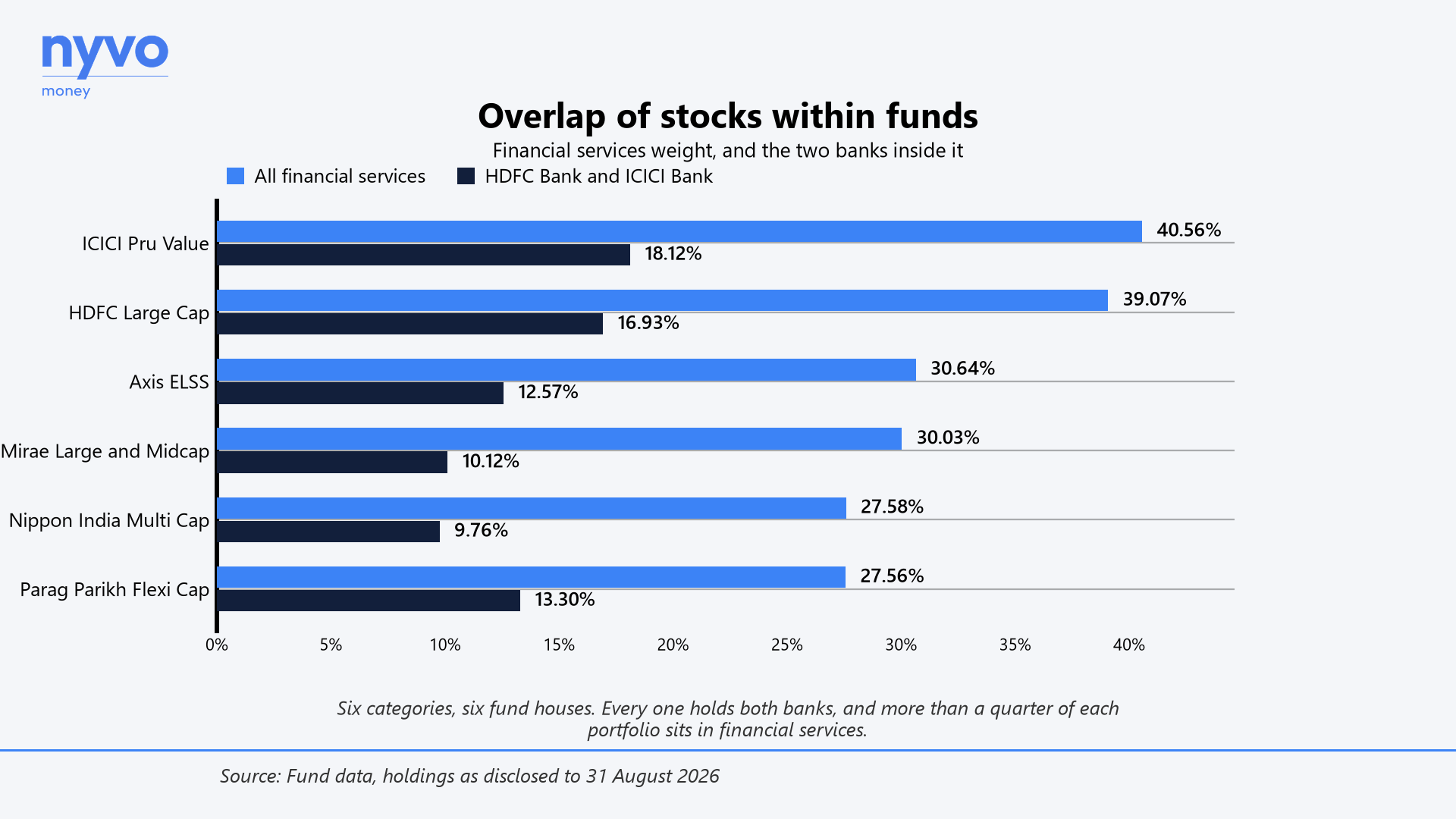
Take the largest fund in each of six equity categories: value, large cap, ELSS, large and mid cap, multi cap and flexi cap. Six different AMCs, six different managers.
All six hold HDFC Bank. All six hold ICICI Bank.
Those two alone are 18.1% of the value fund, 16.9% of the large cap, 13.3% of the flexi cap. Widen it to financial services and every one of the six is more than a quarter banks and lenders, up to 40.6%.
Most large Indian equity funds are fishing in the same pool, and the biggest names are in almost everybody's net.
6 · Sloth
You let someone else handle it. They set it up, they send the statements. The fee is somewhere in the paperwork.
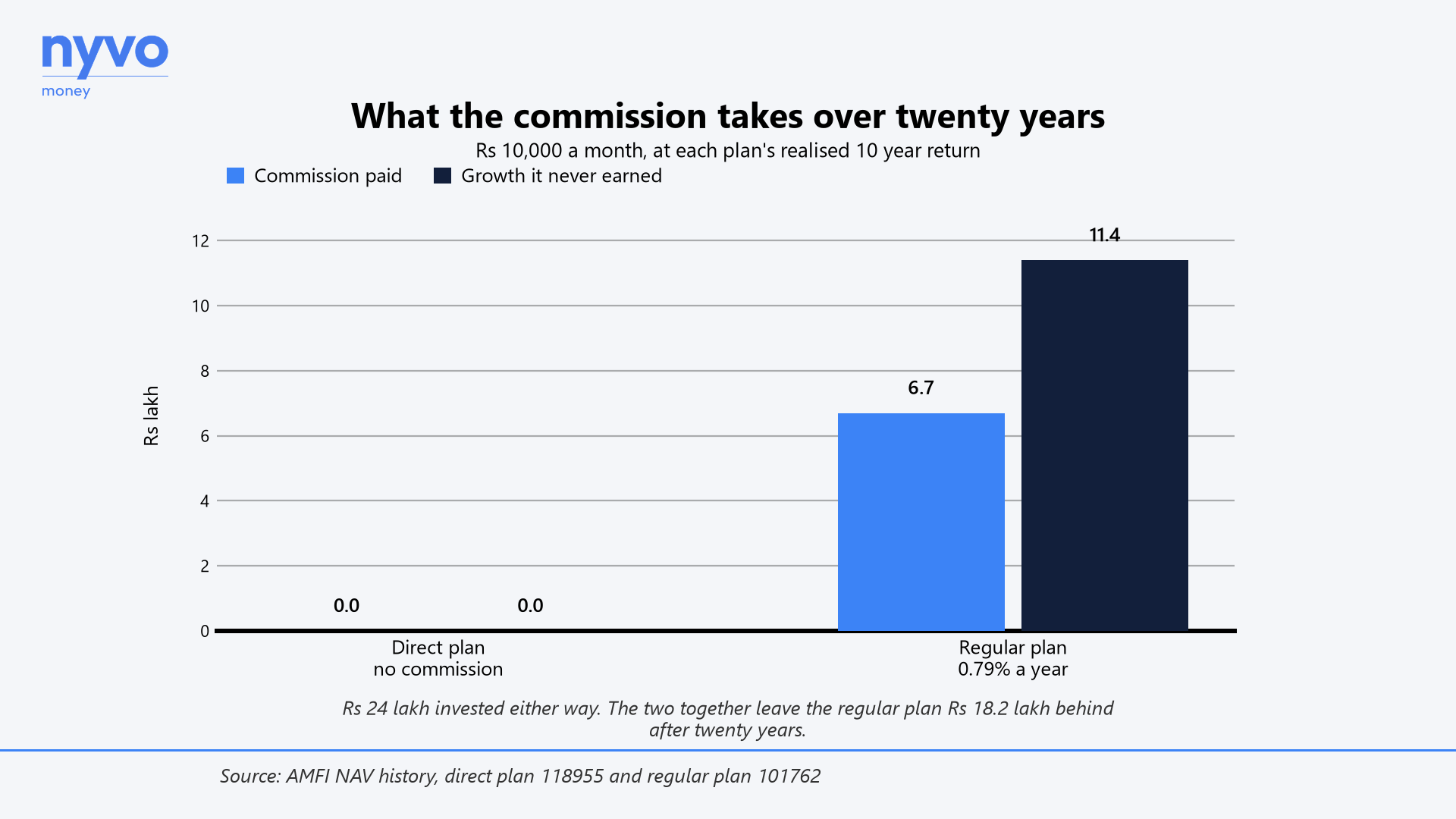
A regular plan and a direct plan are the same fund. Same manager, same holdings. The only difference is a commission, charged every year on your whole balance, whether the fund rises or falls.
You can measure it, because both plans are public. Over ten years HDFC Flexi Cap returned 15.80% a year in direct and 15.01% in regular. Parag Parikh: 17.02% against 16.12%.
On a ₹10,000 monthly SIP run for twenty years at those same returns, that commission comes to about ₹6.7 lakh, and leaves you ₹18.2 lakh poorer, because the money paid out never compounded either.
7 · Lust
A New Fund Offer arrives with a story you're already hearing. Defence, manufacturing, electric vehicles. It's all over the news. It feels like a worthwhile bet.
That's availability bias. The theme is everywhere. The fund is new.
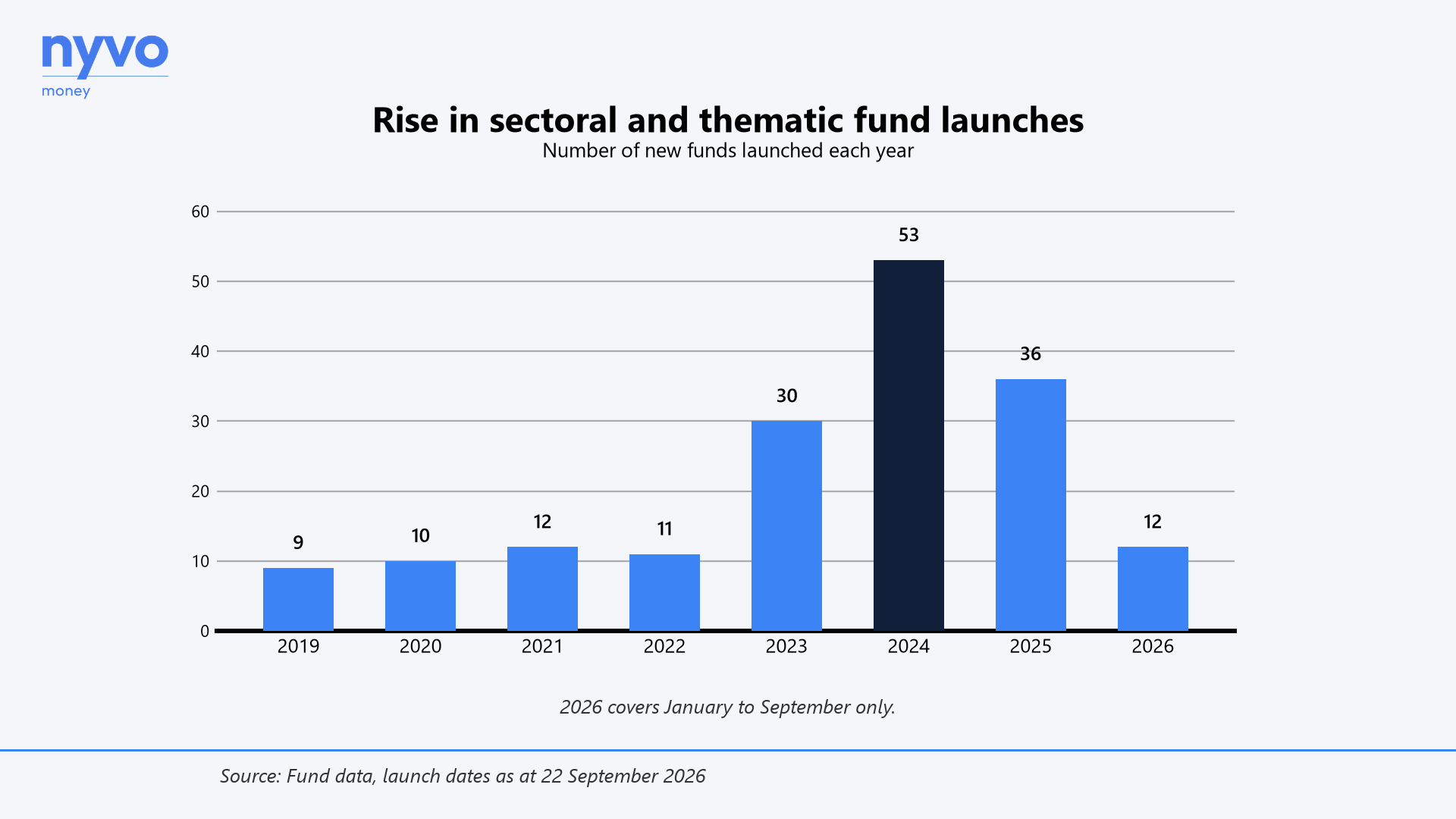
Sectoral and thematic launches ran at roughly ten a year through 2022. In 2024 there were 53. Fund houses don't launch themes they hope will work. They launch themes already being spoken about. Of the 1,861 funds on the shelf, 1,027 have launched since 2021.
A new fund gives you a story and no evidence.
It was never the market
Every one of these seven is a decision that felt sensible on the day it was made.
You might want to switch queues again. The only thing that changes is whether you notice.
A small behavioural change can move your money in the direction you want.
Published for information only. Nothing here is investment advice or a recommendation to buy, sell or hold. Funds are named to show how the data behaves. Past performance is not a guide to future returns. Speak to a registered adviser before acting.
Now in the nyvo app
Plan it for real in the nyvo app.
Goals, projections, fund grades and your whole family's money – in one place. Free. SEBI-registered.
Tools to try
Run the numbers yourself.
Free calculators that go with this issue. Built for Indian rules (rupees, inflation, tax regime).
- Direct vs Regular Mutual Fund Calculator India
See what a regular plan's distributor commission costs you over the years versus a direct plan of the same fund – the gap compounds.
- SIP Calculator – Monthly Mutual Fund Returns India
Estimate the future value of a monthly mutual-fund SIP in India. Enter your amount, expected return and horizon to see the corpus and gain split.
Also worth reading

21 May 2026
The mutual fund return number: choose your reality wisely
Three metrics – CAGR, XIRR, Rolling Returns – tell three completely different stories about the same investment. Here's which one you should actually be using.
27 August 2026
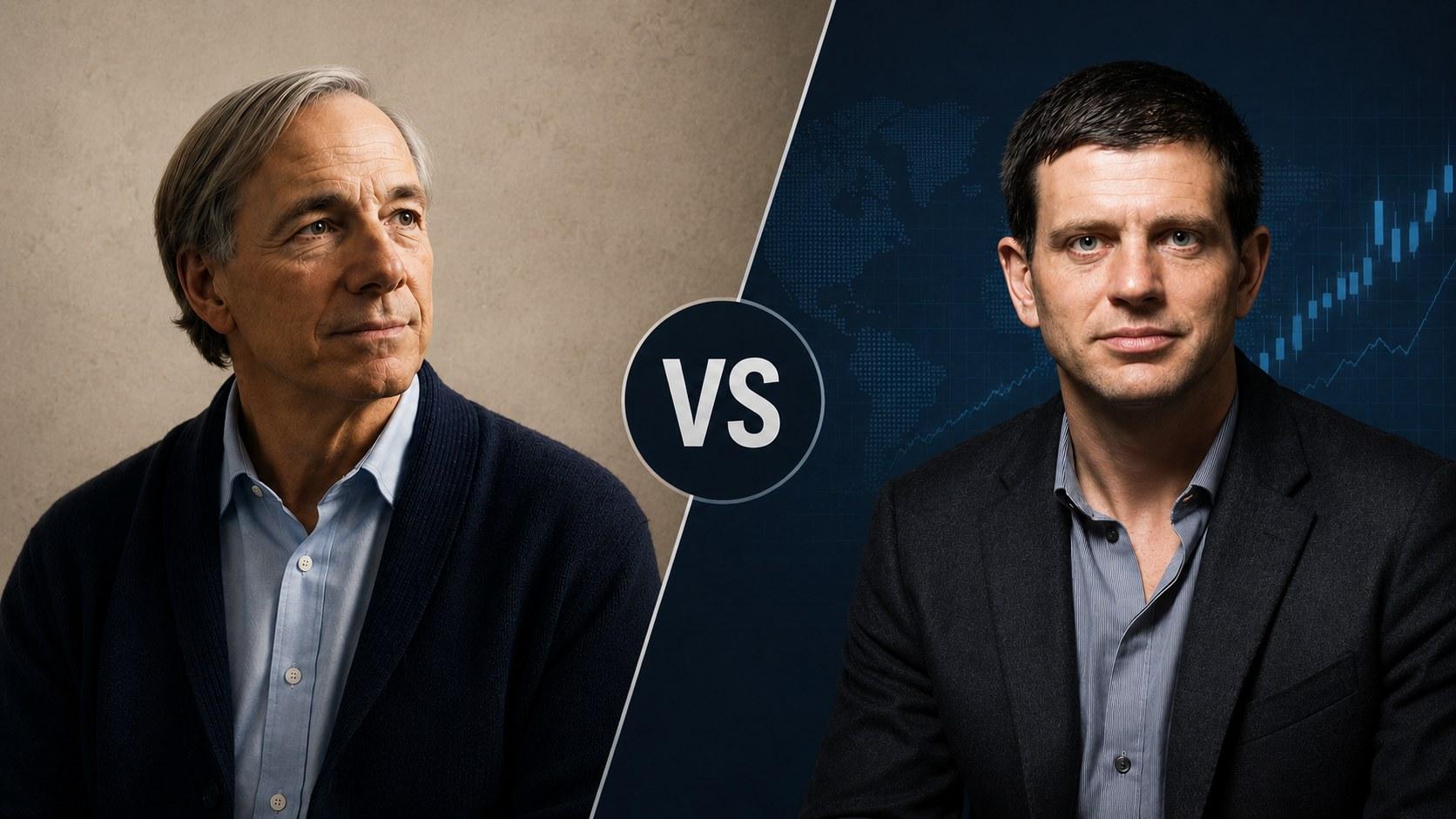
Two Philosophies of Asset Allocation – and What Works Best in India
Ray Dalio built a portfolio for every phase of the economy. Chris Cole thinks the thing that saved Dalio's portfolio may not save the next one. Both approaches, in plain English, and what each would look like for an Indian investor.

29 May 2026
You can't lose with SIPs: if you stick around long enough
Across 29 years of Indian equity market history and 120 diversified funds, no 10-year SIP investor has ever ended in the red. Not low probability – zero. The maths is straightforward; the behaviour is the hard part.