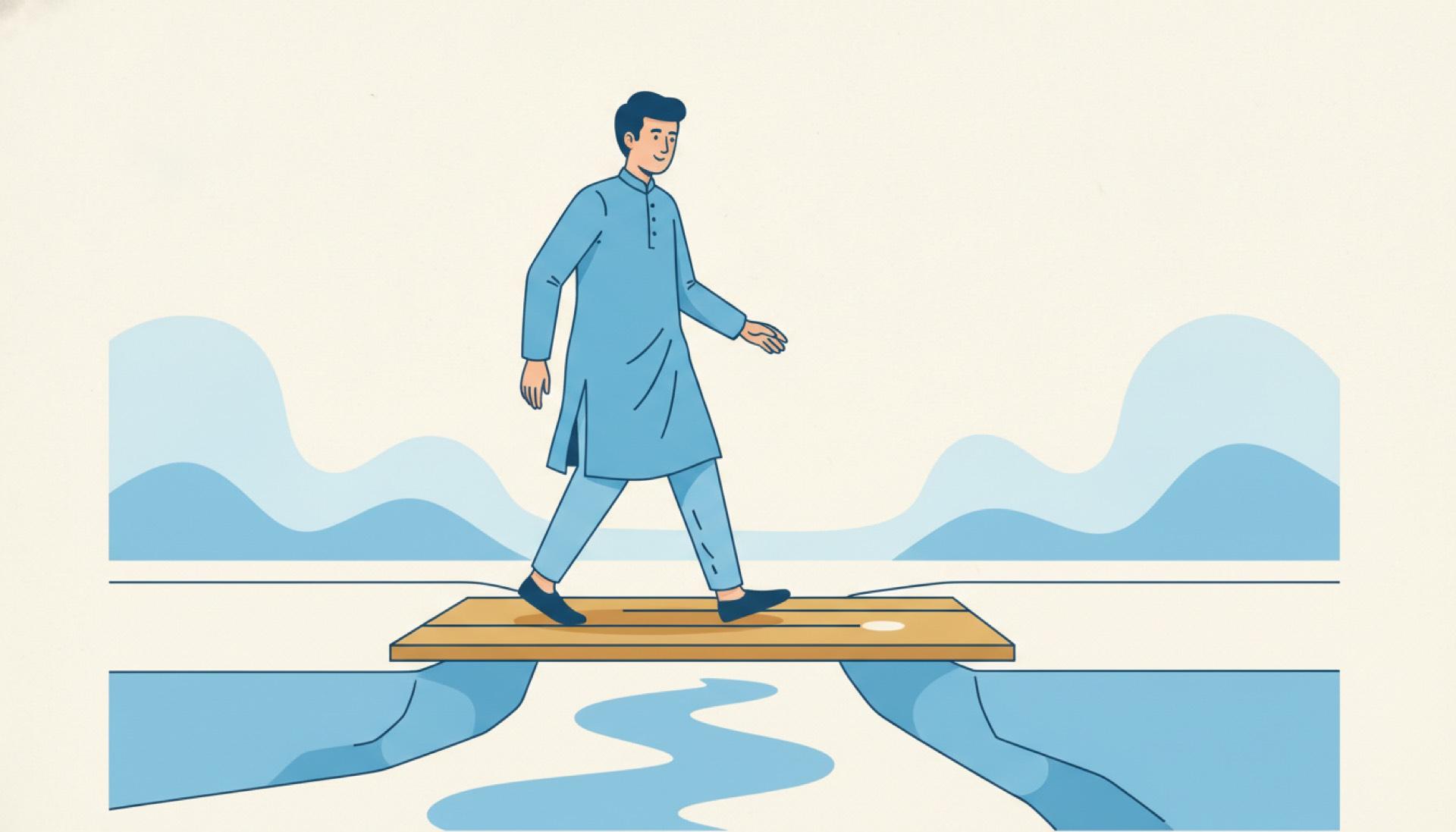
Just above ₹12 lakh of taxable income, the new regime's Section 87A rebate disappears and a full tax bill takes its place: a cliff. Marginal relief caps that jump: the extra tax you pay can never be more than the income you earned above ₹12 lakh. So earning slightly more than the threshold never leaves you worse off than stopping just below it.
The rebate cliff and its cushion (FY 2026-27, new regime)
What is the rebate cliff in the new tax regime?
Under the new regime, the Section 87A rebate makes income tax nil up to ₹12 lakh of taxable income for FY 2026-27. At exactly ₹12 lakh, tax is zero. The moment income rises above ₹12 lakh, the rebate no longer applies and the normal slab tax on the whole income appears.
Without any cushion, that would be brutal. A person at ₹12 lakh pays nothing. A person at ₹12.1 lakh, just ₹10,000 more, would face slab tax of several tens of thousands. Earning ₹10,000 more would cost far more than ₹10,000 in tax. That is the cliff.
The ₹12 lakh here is taxable income, not gross pay: gross salary minus the ₹75,000 standard deduction and any other allowed subtractions. For a salaried person it maps to a somewhat higher salary, which is why the threshold is sometimes quoted loosely as around ₹12.75 lakh of salary rather than ₹12 lakh flat.
How does marginal relief work?
Marginal relief removes the cliff by putting a ceiling on the tax. Just above ₹12 lakh, your tax cannot exceed the amount by which your income crosses ₹12 lakh. You pay the lower of the two: the normal slab tax, or the income earned above ₹12 lakh.
So the extra rupees are taxed at most one-for-one, never at a rate that would swallow more than you earned. The relief shrinks as income rises, and once normal tax naturally falls below the excess income, it stops mattering.
A worked example (illustrative)
Take a taxable income of ₹12,10,000, which is ₹10,000 over the line. The figures below use the current new-regime slab structure and are for illustration only.
| Step | Amount (illustrative) |
|---|---|
| Income above ₹12 lakh | ₹10,000 |
| Normal slab tax on ₹12,10,000 | about ₹61,500 |
| Marginal relief (the difference) | about ₹51,500 |
| Tax payable after relief | ₹10,000 (plus cess) |
Instead of roughly ₹61,500, the person pays ₹10,000 before cess, exactly the extra they earned. The relief absorbs the rest. As income climbs further, the relief tapers, until around ₹12.7 lakh the normal tax and the excess income meet and marginal relief no longer bites.
Up to what income does marginal relief apply?
Marginal relief works only in a narrow band just above the threshold. It runs until the normal slab tax equals the income earned above ₹12 lakh, roughly up to about ₹12.7 lakh on the current slabs. Below that ceiling, relief lowers your tax to the excess income. Above it, the normal tax is already smaller than the excess, so there is nothing to relieve and full slab tax applies as usual.
Does marginal relief exist anywhere else?
Yes. The idea is older than the ₹12 lakh rebate. Marginal relief also caps the surcharge that attaches to high incomes, at the points where income crosses thresholds such as ₹50 lakh and ₹1 crore. There too, the extra tax-plus-surcharge is limited so it cannot exceed the income earned above the threshold. The rebate-linked relief around ₹12 lakh is simply the newest use of the same principle, added so the new regime's zero-tax ceiling does not create an unfair edge for the people who land just past it.
This is general information, not tax advice. The ₹12 lakh threshold, the slab rates behind the example and the break-even point are for FY 2026-27; they are set in the Budget and can change, and the exact figures depend on your situation.
Related nyvo guides
- Section 87A Rebate: How the Zero-Tax Threshold Works: the rebate that creates the ₹12 lakh line marginal relief protects.
- Old vs New Tax Regime: How They Differ explains why this cliff exists only in the new regime.
- Income Tax Slabs in India – the bands the slab tax in the example is built from.
Marginal relief never makes headlines, but it fixes a real unfairness: without it, a threshold designed to help would punish the people who just cross it. With it, a raise is always a raise.