An IPO Party, But a Stock Market Hangover
Companies have rarely been keener to sell shares. The people already holding them have rarely had less to show for it.
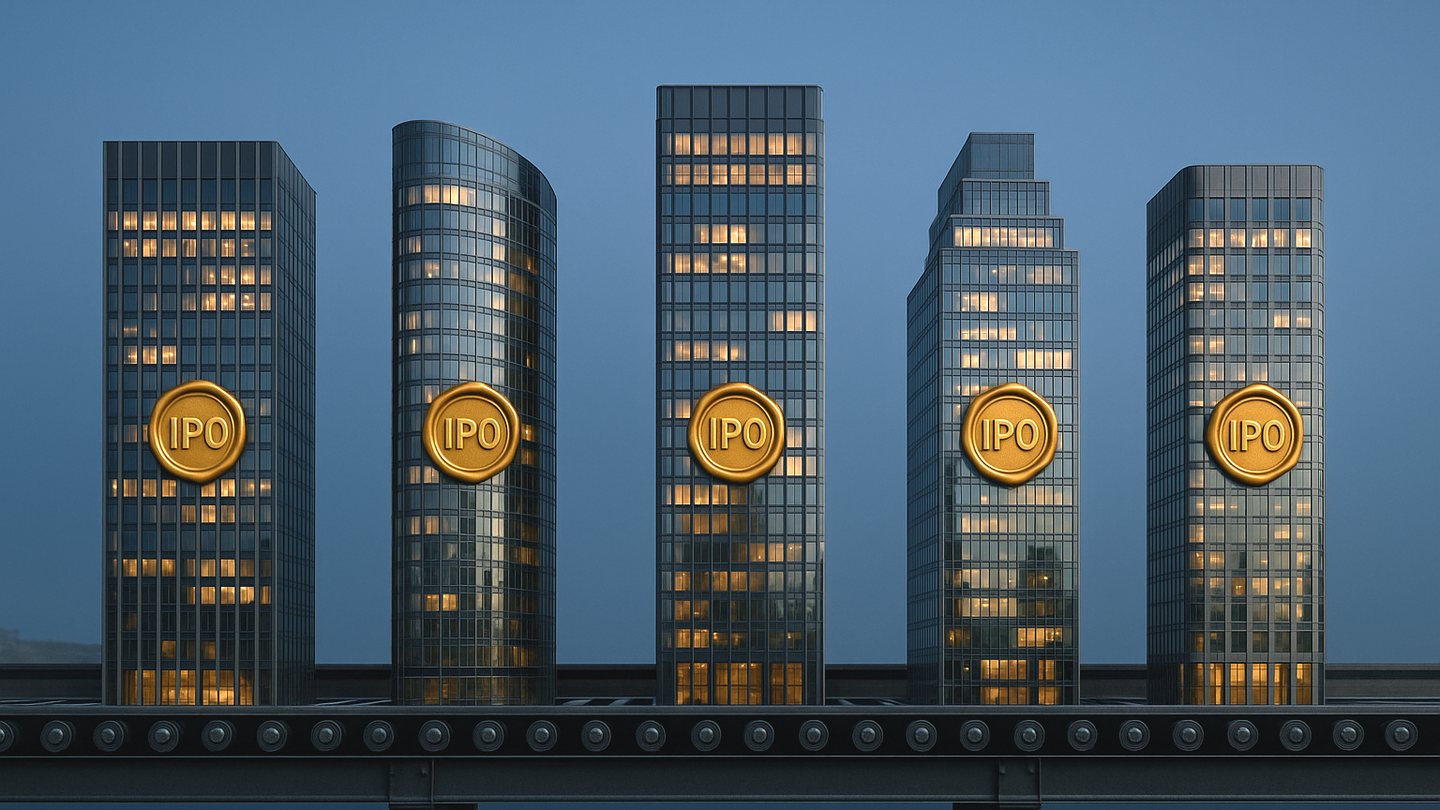
A recent Economist piece used Hong Kong's TastySounds lollipops – the ones that let you “hear” music through your jawbone as you eat – as a metaphor for the territory's stock market: a sugary, buzzing primary market for new listings sitting on top of a flat, disappointing secondary market.
It's worth asking whether India, in the middle of its own headline-grabbing IPO wave, is throwing the same kind of party – only to wake up with the same kind of hangover.
The short answer: yes, with a distinctly Indian accent.
Why Hong Kong's market feels off, even with IPOs booming
Hong Kong hosted 104 IPOs in the first seven months of 2026, raising about $42bn – more than double 2025's already-record pace, capped by Shein's debut after New York and London fell through.
But the Hang Seng index itself is down roughly 1% this year, one of the worst showings of any major exchange. A hot market for new shares, sitting on top of a flat one for existing shares.
So why would a company go public into a weak market at all?
The Economist draws on two strands of research. One camp of academics treats this as a sign of irrationality or information asymmetry: insiders sell shares when they privately believe their company is overvalued, and outside investors, not knowing this, buy anyway – a classic case of the seller knowing more than the buyer.
But a 2005 paper by Lubos Pastor and Pietro Veronesi offers a more forgiving explanation. Going public is a decision made under genuine uncertainty and, once made, is hard to reverse – a company can't easily un-list itself if the timing turns out badly. Because of that irreversibility, waiting has real value.
That single distinction – “better than before” versus “as good as it gets” – explains why IPO waves so often show up early in a recovery, and can end up straddling, or even sliding into, the next downturn rather than trailing safely behind it.
India is living the same story, at bigger scale
India's version has been running for longer, and at a larger scale, than Hong Kong's. What makes 2026 striking is how far the two halves of the market have pulled apart.
One market is booming. The other is not.
The party · new shares
₹1.76 tn raised across FY2025-26
108 mainboard IPOs in FY26
₹49,795 cr from financial services alone – a decade high
₹28,648 cr in July 2026 – an all-time monthly record
The hangover · existing shares
–9.6% Nifty 50, year to mid-June 2026
–16% Nifty's correction from its January peak
–4% Sensex, year-on-year at 1 September 2026
9–10% India's 2025 gain, against ~30% rallies elsewhere in Asia
The party is partly due to strong receptions for large recent issues – the SBI Funds Management listing among them – and partly a backlog of SEBI-approved offerings finally coming to market. The pipeline awaiting approval stood at 75 companies worth an estimated ₹2.02 lakh crore.
Which is why the year's fundraising is so lopsided. July and August carried more than two-thirds of it between them, and July on its own set an all-time monthly record. Financial services did the heaviest lifting, posting the sector's best year in a decade on the way to a full-year total of roughly ₹1.76 trillion across 108 mainboard IPOs.
The hangover is that existing shareholders got none of that energy. The Nifty 50 was down about 9.6% by mid-June 2026, having corrected nearly 16% from its January peak, and the Sensex was still down roughly 4% year-on-year on 1 September 2026.
Nor is this one bad year in isolation. Through 2025, Indian benchmarks gained only about 9–10% while comparable markets across Asia and the emerging world rallied roughly 30%. Two years of going sideways, while the queue of companies waiting to list only got longer.
Debut day is cooling too
Where Hong Kong's Shein still closed its first day roughly flat, India's 2025 listings landed shakier: 29 of 83 mainboard listings closed below issue price on debut, some down as much as 35%.
| Debut-day performance | 2024 | 2025 |
|---|---|---|
| Average first-day gain | ~30% | ~9% |
| Mainboard listings closing below issue price | – | 29 of 83 |
The once-reliable list, pop, sell playbook is getting less dependable even as issuance volumes climb.
So is India just copying Hong Kong? Not quite
The mechanics behind the dissonance aren't identical.
| What differs | Hong Kong | India |
|---|---|---|
| What's driving it | Imported. Stricter mainland rules and US-China friction have pushed Chinese firms to Hong Kong, crowding out demand for other shares. | Homegrown. India is the only major market to compound steadily on issuance for a decade, rather than in boom-bust cycles. |
| Scale and pattern | A spike. 104 IPOs and $42bn in seven months, double last year's record pace. | A long build. Over 300 mainboard IPOs from FY21 to FY26, roughly 8x the market of ten years ago. |
| Where the market stood | Mid-rally. The Hang Seng had risen over 40% since China's September 2024 stimulus. | Mid-correction. The index was still digging out of a spring slump. |
There's one more Indian wrinkle. Foreign institutions were net sellers of Indian secondary equities in three of the last four years – yet their allocations to Indian IPOs kept growing. Domestic capital, fed by record SIP inflows, has simply grown faster and taken over as the anchor bid.
Why companies list even when the market isn't cooperating
Applied to India, the Economist's central point holds up well: a primary-market boom and a soft secondary market aren't necessarily a contradiction.
If going public is a hard-to-reverse decision, and firms can't know in advance whether current conditions are as good as they'll get, then a rational strategy is to list once things improve – not to wait for, or try to time, the peak.
That produces exactly the pattern both Hong Kong and India are showing in 2026: heavy issuance arriving before, or alongside, disappointing index returns, rather than safely after a period of strong performance.
What this means for investors
| What to notice | Why it matters |
|---|---|
| The window and the index say different things | Backers are rushing to sell because conditions look good enough – not because valuations are attractive for buyers. |
| Debut-day gains are shrinking | The near-automatic 20–30% pop is fading. Average first-day gains nearly halved in 2025, and a third of listings opened in the red. Apply, sell on day one is riskier than it was. |
| Look past the label to the company | With financial services and private-equity exits dominating, more listings are sellers seeking an exit than companies raising money to grow. Weigh who is selling, and why. |
| A flat index isn't a blanket no | Firms list once conditions improve, not at the peak. Business quality, valuation against listed peers, and lock-up structure matter more than the name on the prospectus. |
Figures as reported for the periods named: Hong Kong and Indian issuance data covers the first seven months and FY2025-26 respectively; index moves are to mid-June 2026 and 1 September 2026 as stated. Sources: KPMG, Business Standard, Grant Thornton Bharat, Redseer, EBC Financial Group, Trading Economics, Univest, MarketScreener/Reuters, International Banker.
This piece explains why issuance and index returns can move apart; it is not personal investment advice and names no security as a recommendation. Talk to a SEBI-registered adviser before applying to any offering.
Now in the nyvo app
Plan it for real in the nyvo app.
Goals, projections, fund grades and your whole family's money – in one place. Free. SEBI-registered.
Tools to try
Run the numbers yourself.
Free calculators that go with this issue. Built for Indian rules (rupees, inflation, tax regime).
- Lumpsum Calculator – One-Time Investment India
Estimate the future value of a one-time mutual-fund or fixed-income lumpsum in India. Enter principal, expected return and horizon to see the corpus.
- Mutual Fund Returns Calculator – SIP + Lumpsum India
Project combined returns from a mutual-fund SIP, lumpsum and top-ups in one place. Built for Indian equity, debt, hybrid and ELSS funds.
← Newer issue
What Would You Do If Your Money Paid You Every Month?
Older issue →
Two Philosophies of Asset Allocation – and What Works Best in India
Also worth reading
21 May 2026
Flipkart's IPO has been ‘Coming Soon’ since 2019
Flipkart's IPO has been deferred, again. Here's why Walmart hit pause, what the numbers actually say, and what it tells us about the state of India's IPO market in 2026.
12 June 2026
Forget the Rockets. Look at What Google Is Paying SpaceX For.
Everyone knows SpaceX makes rockets. Almost nobody knows Google pays it $920 million a month – and Anthropic $1.25 billion – to run AI. Inside the IPO that is really an infrastructure, and xAI, bet.