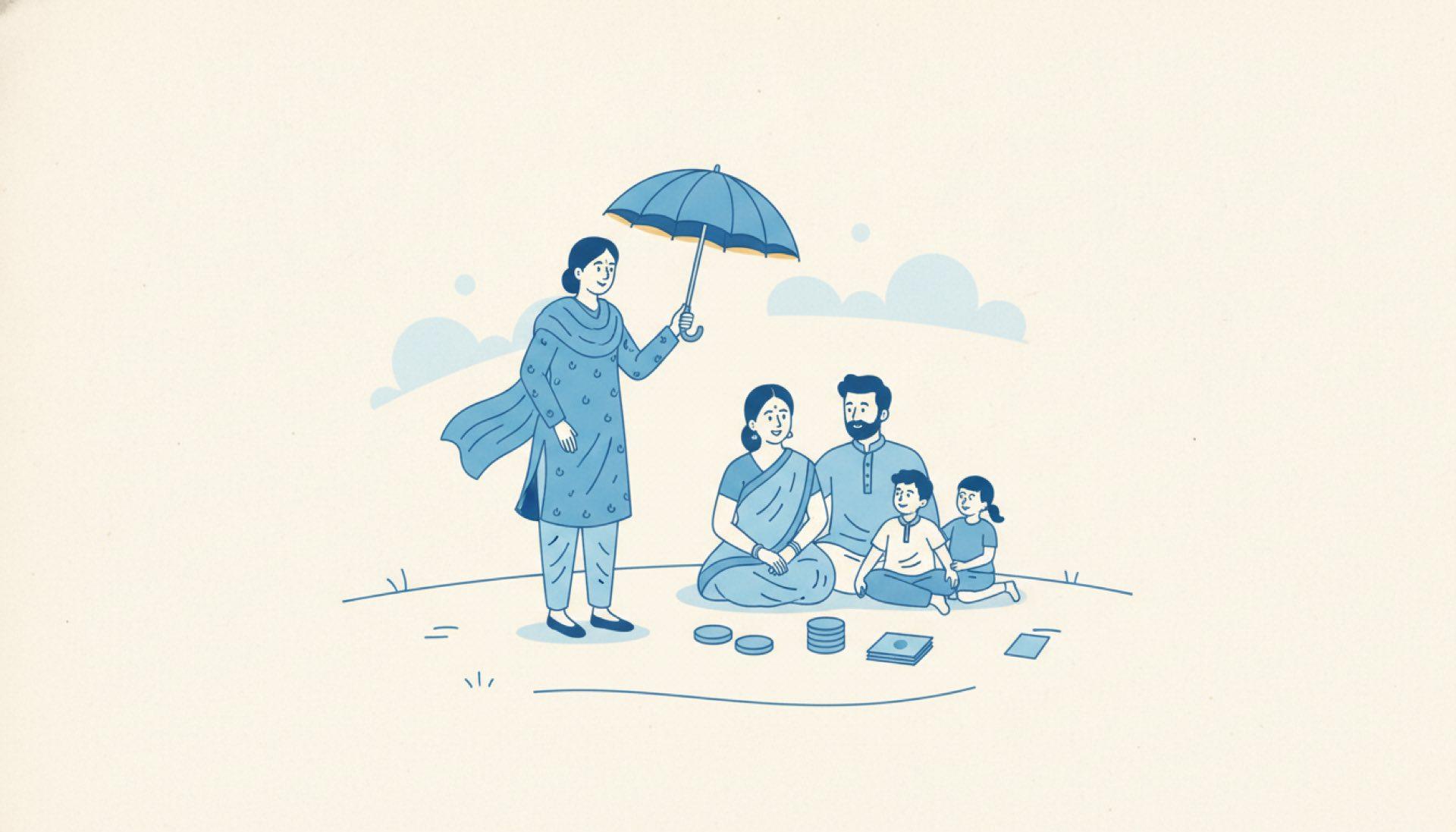
Section 80D is a deduction for the health insurance premiums you pay for yourself, your family, and your parents. For FY 2026-27 it is available only under the old tax regime, and lets you deduct up to ₹25,000 for your own family, plus a further ₹25,000 (or ₹50,000 if your parents are senior citizens) for a policy that covers them. The new regime does not allow it.
It is a deduction, not a rebate: it lowers the income your tax is calculated on, so what it is worth depends on your slab. Premiums have to be paid by any mode other than cash.
| Whose premium you pay | Deduction limit (old regime, FY 2026-27) |
|---|---|
| Self, spouse, dependent children | up to ₹25,000 |
| Parents, below 60 | additional up to ₹25,000 |
| Parents, senior citizens (60+) | additional up to ₹50,000 |
| Preventive health check-up | up to ₹5,000, counted within the caps above |
What is Section 80D?
Section 80D of the Income Tax Act is a Chapter VI-A deduction for money spent on health cover. It covers premiums on health or mediclaim policies for you, your spouse, your dependent children, and your parents. It also covers a preventive health check-up, and for uninsured senior citizens, certain actual medical expenditure can qualify within the limit.
Because it is a Chapter VI-A deduction, it belongs to the old regime. The new regime, now the default, strips out 80D along with most similar deductions, so the premium reduces your tax only if you have chosen to file the old way.
How much can you deduct under 80D?
Think of it as two buckets:
- Your own family: a policy covering you, your spouse and dependent children, up to ₹25,000.
- Your parents: a separate additional deduction of up to ₹25,000, rising to ₹50,000 if a parent is a senior citizen aged 60 or above.
Combined, that is up to ₹75,000 when your parents are seniors, and higher still if you or your spouse are seniors too, subject to the limits in force. These are ceilings on premiums actually paid, not flat deductions: if your family's premium is ₹18,000, you deduct ₹18,000, not ₹25,000.
Does the preventive health check-up count?
Yes: up to ₹5,000 for preventive check-ups for you or your family. The limit to note is that it sits inside the ₹25,000 or ₹50,000 caps, not on top of them. It is also the one item here you can pay for in cash and still claim.
An illustrative example (figures for illustration only): pay a ₹22,000 premium and ₹5,000 for a check-up, and you claim ₹25,000, the cap, not ₹27,000.
Which regime allows 80D, and what does not qualify?
Only the old regime. The new, default regime removes 80D. And even under the old regime, not everything counts:
- Cash premiums do not qualify: pay by card, netbanking, UPI or cheque. Only the preventive check-up can be in cash.
- Life insurance premiums are a Section 80C item, not 80D.
- The premium you claim is the amount actually paid, GST included.
How does 80D show up when you file?
If your salary is run on the old regime, declare the premium to your employer through Form 12BB with proof, and it appears in the Chapter VI-A section of your Form 16 Part B. If you claim it at filing instead, enter it in the 80D field of the ITR and keep the premium receipts. Either route only reduces tax under the old regime.
This is general information, not tax advice. The limits here are for FY 2026-27 and can change in the annual Budget; how they apply depends on your own situation.
Related nyvo guides
- What is Form 16, and How to Read It – where an 80D deduction shows up in Part B if your employer runs your salary on the old regime.
- Health Cover for Investors – how health insurance fits a broader financial plan, beyond the deduction.
- TDS on Salary: How It's Deducted – declaring 80D early lets your employer factor it into your monthly TDS.
The whole section fits on a sticky note: up to ₹25,000 for your own family, up to ₹25,000 more for parents under 60, up to ₹50,000 once a parent is a senior citizen, and none of it under the new regime. Pay by any mode except cash, keep the receipts, and the deduction is yours to claim.