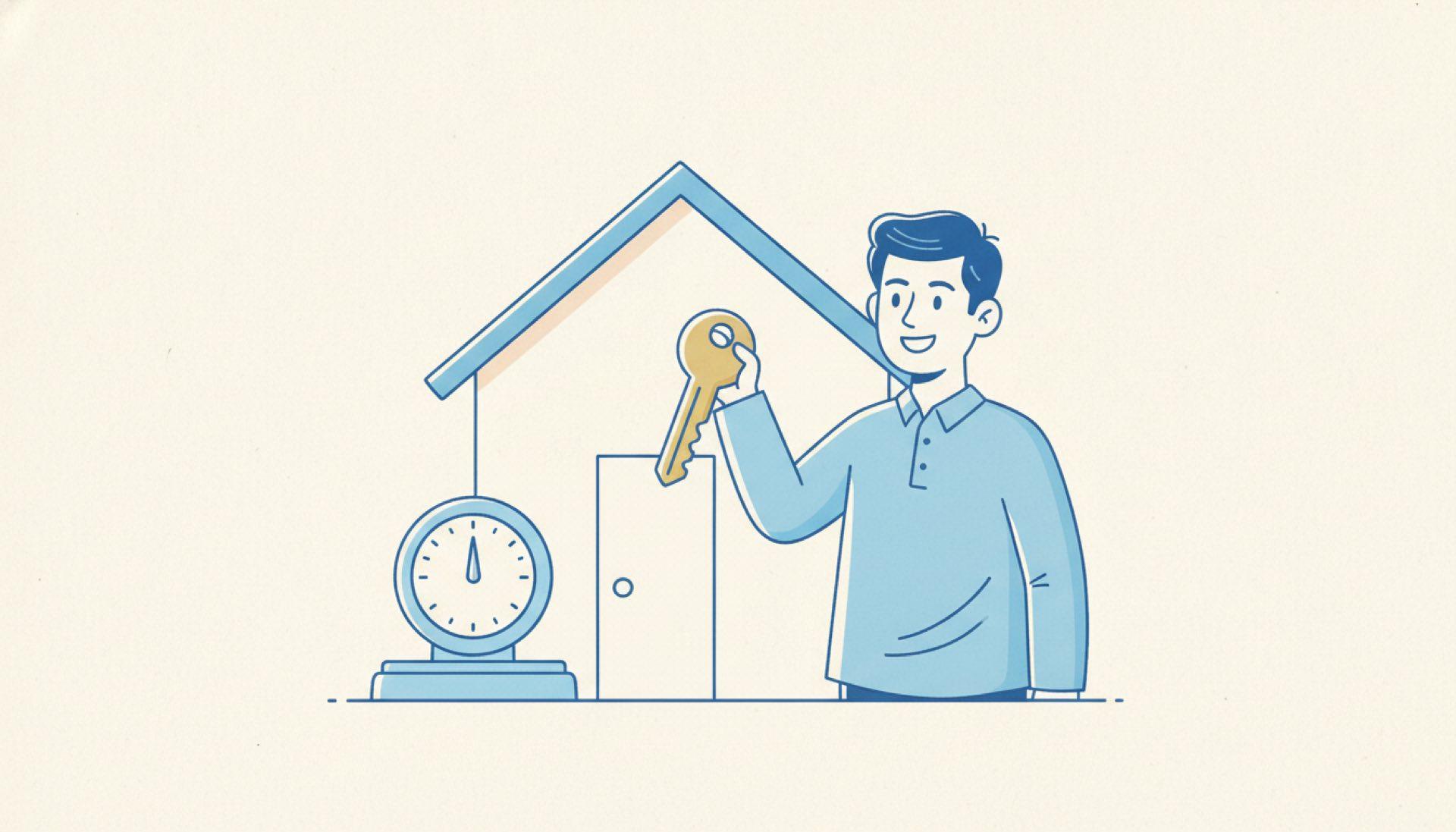

Renting and buying both cost money; the real question is which costs less for your situation and how long you plan to stay. Buying builds equity but locks up a large down payment and ties you to one place; renting frees that cash to invest but builds no asset. Over a long stay, buying often catches up; over a short one, renting usually works out cheaper.
The trap is comparing rent against an EMI and stopping there. A full comparison counts what each option really costs, including the money you tie up.
The numbers behind the choice
What buying really costs
Take a flat priced at ₹1 crore (all figures illustrative). With 20% down, you put in ₹20 lakh and borrow ₹80 lakh. At 8.5% over 20 years, the EMI works out to about ₹69,400 a month, and you pay roughly ₹86 lakh in interest across the full term. On top of the price, stamp duty and registration of 5–8% add another ₹5–8 lakh upfront.
Then come the costs that never stop: society maintenance, property tax and repairs, easily ₹3,000–6,000 a month on a flat like this. And the ₹20 lakh down payment is money you can no longer invest elsewhere, which is the cost most buyers forget.
What renting really costs
Renting the same flat might cost around ₹30,000 a month to start, a gross yield of roughly 3.6% on a ₹1 crore property. Rent rises over time, often 5–10% a year, so this number climbs while a fixed EMI does not.
Against that, the renter keeps the ₹20 lakh and the monthly gap between the EMI and the rent, here about ₹39,400 early on, free to invest. Whether that money grows depends on the market, which is not guaranteed. A renter who spends the difference rather than investing it gets none of this benefit, which is the honest catch in the "rent and invest" argument.
Rent vs buy, side by side
| Compared on | Buying | Renting |
|---|---|---|
| Upfront | Down payment, stamp duty, registration | Deposit of a few months' rent, refundable |
| Monthly | EMI, maintenance, property tax | Rent, which rises over time |
| Builds | Equity in an asset that may appreciate | No asset, but frees cash to invest |
| Flexibility | Low; selling takes time and money | High; move on a month's notice |
| Main risk | Price stagnation, being locked in | Rent inflation, no ownership |
The break-even, and why your horizon decides it
Early on, buying costs more each month than renting, and the transaction costs sit as a loss you have to recover. As years pass, rent keeps rising while the EMI holds steady, and once the loan ends the owner pays only maintenance. Somewhere along that path the cumulative cost of buying dips below the cost of renting and investing the difference. That crossover is the break-even.
Where it lands depends on your rental yield, loan rate, how fast prices and rents move, and what a renter's investments earn. Because India's rental yields are low, the early years tilt towards renting on pure cash flow, and it takes a long stay for ownership to pull ahead. Run your own figures through the rent vs buy calculator rather than trusting a rule of thumb.
The factors the maths leaves out
Numbers do not capture everything. Owning offers stability, freedom to renovate, and protection from a landlord asking you to leave. Renting offers mobility, no exposure to a single illiquid asset, and no large debt if your income wobbles. A home loan is also leverage: it can amplify gains if prices rise and losses if they fall.
For a family planting roots in one city, the non-financial case for buying can outweigh a thin cash-flow disadvantage. For someone whose job or plans may move within a few years, flexibility can be worth more than equity. These preferences are yours to weigh, not something a calculator decides.
Related nyvo guides
- Prepay Your Home Loan or Invest the Money? – the same certainty-versus-uncertainty question, once you own the home.
- Emergency Fund: How Much You Need in India – the buffer to protect before locking cash into a down payment.
- Goal-Based Planning 101 – how to save towards a down payment on a clear timeline.
Rent versus buy has no universal answer, only a break-even that depends on your rent, your loan and how long you will stay put. Price out both paths honestly, count the cash you tie up as well as the interest you pay, and run your own numbers before you commit either way.