The Apps You Use Every Day Are Writing Their Own Rules
On June 1st, five giants – Amazon, Eternal, Meesho, Swiggy and Zepto – formed the Digital Commerce Coalition. One name is missing: Flipkart. Here's what seven years of regulatory pressure, eight platform-fee hikes and a room full of conflicts of interest add up to.
By Kshitij Jain
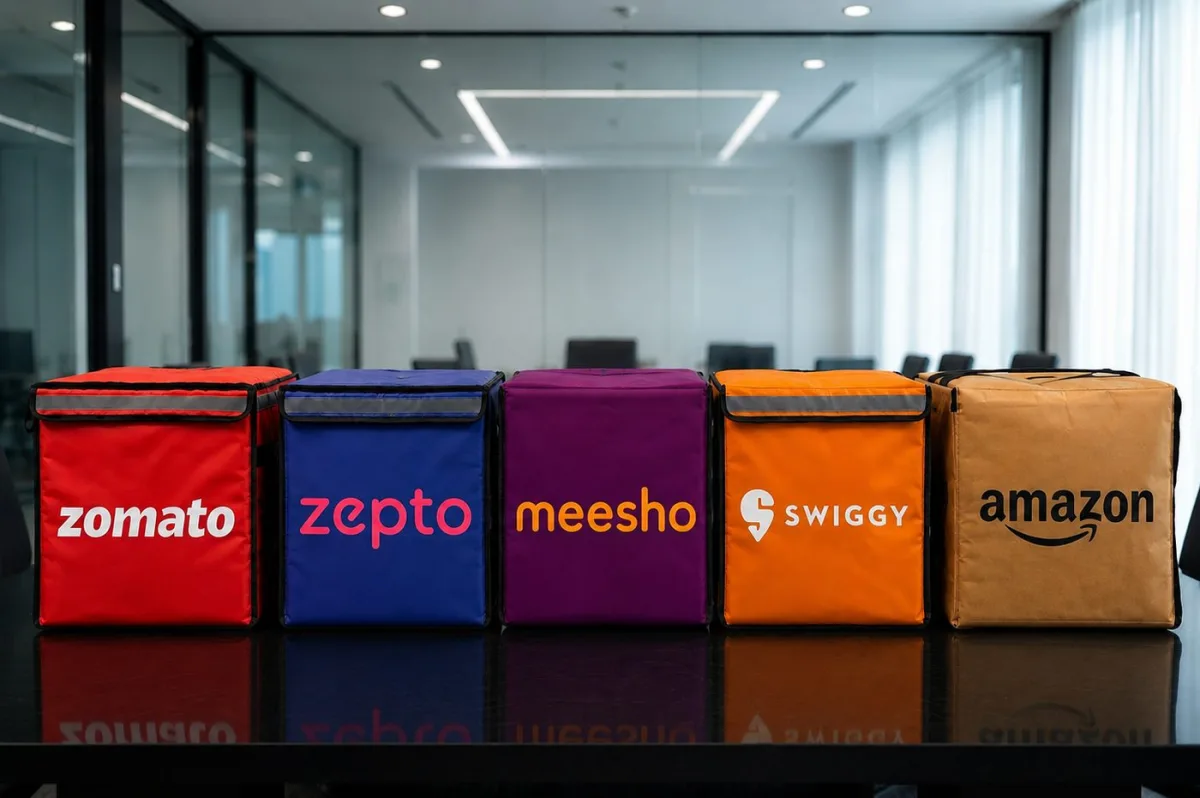
Every time you tap “order” on Swiggy, scroll Amazon for a smartphone, or watch a Zepto rider weave through traffic – you're in an economy about to be governed by the very companies that profit from it.
On June 1st, five giants – Amazon, Eternal, Meesho, Swiggy and Zepto – announced the Digital Commerce Coalition (DCC), a new industry body for India's digital commerce sector.
One name is conspicuously missing: Flipkart – India's largest homegrown e‑commerce platform is not at the table.
The press release is generous with the right words: consumer trust, delivery partner welfare, small businesses, responsible innovation. To understand what's actually happening, you have to start seven years earlier.
How we got here: two words – regulatory pressure
The DCC didn't appear in a vacuum. It's the product of seven years of mounting scrutiny. In 2018, FDI rules put Amazon and Flipkart under the scanner, establishing a simple line: foreign-funded companies can host a marketplace, but can't own and sell inventory themselves.
By 2024, DPIIT had called in Blinkit, Zepto and Swiggy Instamart to examine whether dark-store operations breached that distinction. In September 2025, Blinkit shifted to an inventory-led model to stay on the right side of the line. By December 2025, the fines landed: Zepto was fined ₹7 lakh for dark patterns, and an audit found 97% of platforms still using them. Seven years of pressure, in four moves.
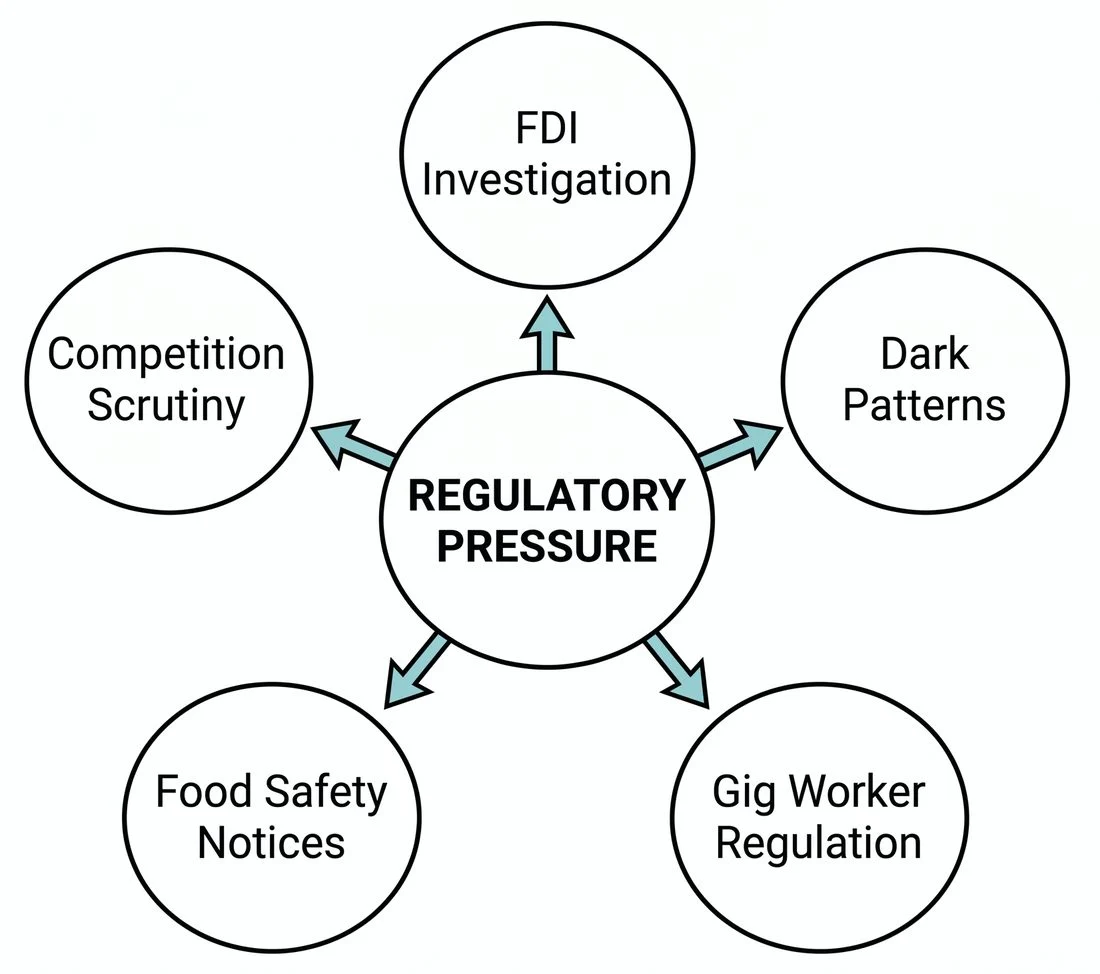
The FDI question was just one front. By 2025 the pressure had compounded across five.
When two competitors always raise prices together
The regulatory pressure is one part of the story. The other is what these platforms have been doing to your wallet. When Swiggy raises its platform fee, Zomato tends to follow within days. Since 2023, both companies have raised platform fees eight times – often within days of each other.
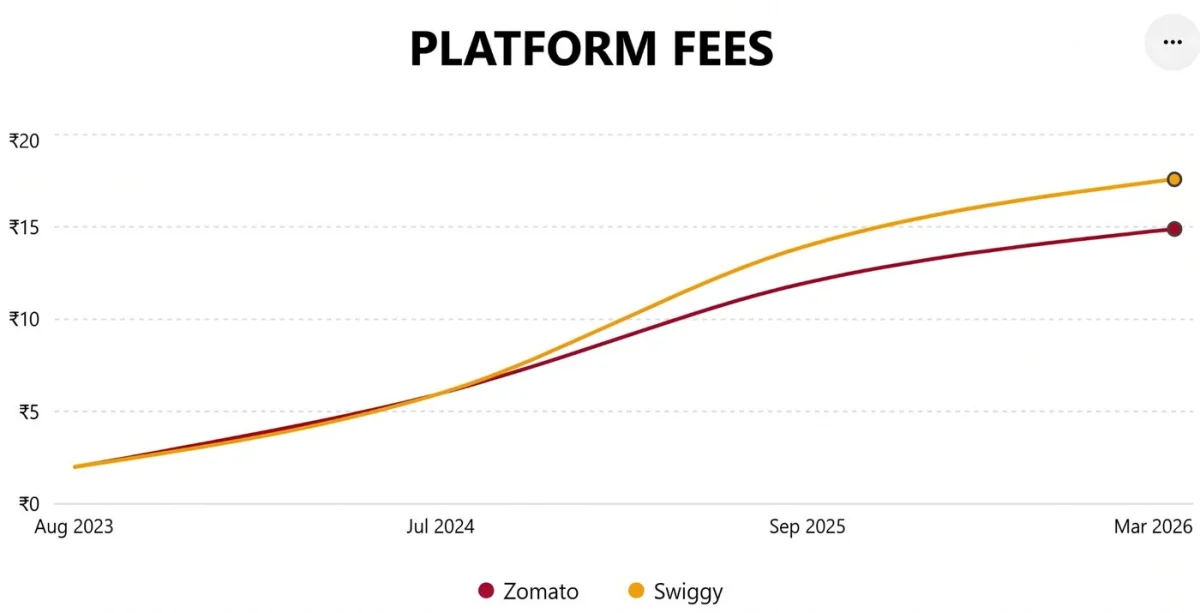
A 600%+ rise in under three years. Not a coincidence – but possibly not coordination either. It's something harder to prosecute: two dominant players reading the same demand signals, serving the same investor pressures, arriving independently at the same conclusion – that the consumer will absorb it. Economists call the broader pattern tacit collusion. No phone calls. No meetings. Just two platforms with parallel pricing and no meaningful pressure to compete on price.
Platform fees are also unusually profitable. Unlike delivery charges, which are partly passed to gig workers, platform fees go almost entirely into the platform's pocket. Now Swiggy and Eternal are both inside the DCC, formally coordinating on “pricing transparency best practices.” Done well, that means real disclosure standards. Done poorly, it means a shared floor dressed up as a standard.
The dark pattern in the room
Pricing is visible. What's harder to see is how these platforms have been shaping your decisions long before you reach the fee screen. The coalition's mandate includes “consumer trust” doing heavy lifting – but these same platforms have been investigated for dark patterns: fake countdown timers, pre-ticked add-ons, fees appearing only at final checkout, cancellation flows buried four menus deep.
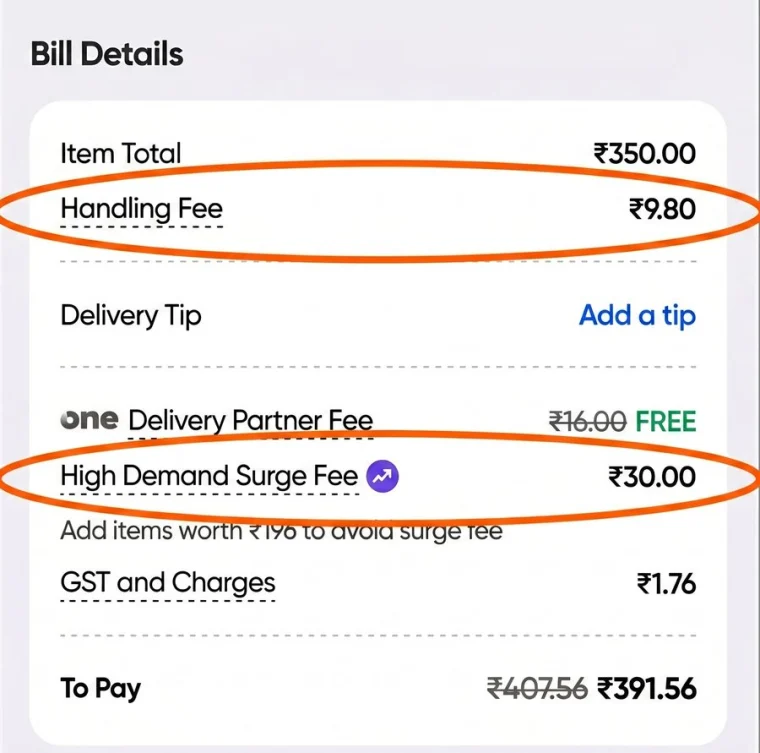
That's choice architecture. The ₹29 handling fee only on screen three. The add-on you didn't ask for. The platform that knows you're far more likely to complete a cart you've spent ten minutes filling than abandon it. Loss aversion, exploited at scale, across millions of checkouts simultaneously. The question is whether the DCC's consumer guidelines get written to actually change behaviour, or to give the appearance of having addressed something while preserving the practices that drive conversion.
What comes next
As we noted at the start, Flipkart is missing from this list. If the coalition succeeds in shaping regulations to suit its members' operating models, Flipkart – sitting outside the room – inherits rules it had no hand in writing.
The DCC's promises are the right ones for a sector growing toward $450 billion. No single company can fix dark patterns on its own, or set fair standards for gig workers who move between platforms. There are real problems here that need collective action.
But the tension is just as real. The companies promising to protect consumers have been fined for exploiting them. The platforms promising gig-worker welfare are the ones whose profits depend on keeping that labour cheap. The players promising to support small businesses benefit when those businesses stay dependent on their platforms.
None of that makes the coalition's intentions cynical. It makes the outcomes uncertain. The apps shaping your spending are now shaping the rules around it.
Now in the nyvo app
Plan it for real in the nyvo app.
Goals, projections, fund grades and your whole family's money – in one place. Free. SEBI-registered.
← Newer issue
Your NPS Just Got an Upgrade. Here’s How Your Retirement Income Changes.
Older issue →
International Mutual Funds Are Outperforming. But How Accessible Are They?
Also worth reading
21 May 2026
Flipkart's IPO has been ‘Coming Soon’ since 2019
Flipkart's IPO has been deferred, again. Here's why Walmart hit pause, what the numbers actually say, and what it tells us about the state of India's IPO market in 2026.
5 June 2026
International Mutual Funds Are Outperforming. But How Accessible Are They?
The best-performing route for Indian investors last year ran straight out of the country – through Taiwanese chips, US tech and global gold. The Nippon India Taiwan fund returned 195.7%. The catch: SEBI's overseas-investment cap means the door is half-shut.