Silver ETFs in India: Should the "Poor Man's Gold" Be in Your Portfolio?
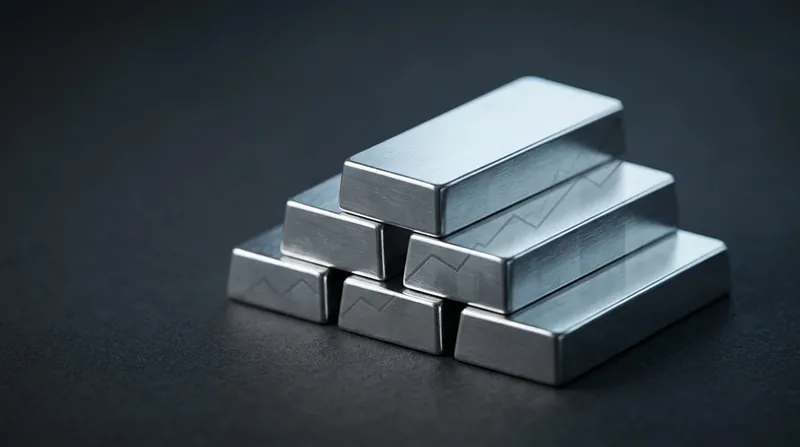
Silver ETFs let you own 99.9%-pure silver from your demat account with no locker, no making charges and no hallmark worries – but the same solar-panel and EV demand that makes silver interesting also makes it swing far harder than gold.
What exactly is a silver ETF?
A silver ETF is a mutual fund unit backed by physical silver, traded on the stock exchange like a share. SEBI notified the regulatory framework for Silver ETFs in November 2021 (effective 9 December 2021), and the first funds launched in India in January 2022. By rule, a Silver ETF must invest at least 95% of its assets in physical silver – standard 30 kg bars of 99.9% purity conforming to the LBMA Good Delivery standard – or silver-related instruments. The mutual fund's statutory auditor must physically verify the bullion and report to the trustees every half-year, and the fund's tracking error against the domestic silver price cannot exceed 2% (annualised), disclosed monthly on the AMC's website. In short: the NAV is designed to move in step with the local price of silver, minus costs.
Why does silver move so much more than gold?
Because silver has two masters, not one. Gold is bought almost entirely as a store of value and a hedge; silver is bought for that and consumed in factories – solar panels, electric vehicles, semiconductors and electronics. Industrial uses now absorb close to three-fifths of global silver demand, and that dual identity is exactly why silver is structurally more volatile than gold.
Source: Silver Institute, World Silver Survey 2025; long-run volatility estimates from World Gold Council and State Street research.
Practically, this means silver can fall (or rally) 15–20% in a matter of months when industrial demand expectations shift or global risk appetite swings – moves that would be unusual for gold over the same stretch.
How do you actually buy and hold a silver ETF?
Like any ETF: through a demat and trading account, during market hours, at the live exchange price. There's no lock-in, no minimum beyond one unit, and you can exit any trading day. Expense ratios on the major Indian silver ETFs currently run about 0.4–0.6% a year – far below the real cost of insuring and storing physical silver, which is bulky for its value. The trade-offs: a small tracking difference versus the metal, and in illiquid stretches, a wider bid-ask spread than you'd see on a large-cap stock – so use limit orders, not market orders.
Silver ETF vs gold ETF: how do they actually compare?
Same wrapper, very different metal. Both are exchange-traded, bullion-backed and taxed identically – the difference is behaviour: gold is the calmer hedge, silver the higher-beta industrial bet.
| Feature | Silver ETF | Gold ETF |
|---|---|---|
| Primary demand driver | Industrial (~58%) + investment | Almost entirely investment, jewellery and central-bank reserves |
| Volatility | Higher – roughly 1.5–2x gold, swings with industrial cycles | Lower – calmer, hedge-like |
| SEBI framework since | November 2021 (first fund: January 2022) | 2006 norms; first Gold ETF listed 2007 |
| Purity held | 99.9% (LBMA Good Delivery) | 99.5% (LBMA Good Delivery) |
| Typical expense ratio | ~0.4–0.6% p.a. | ~0.3–0.8% p.a. |
| LTCG holding period | 12 months | 12 months |
| LTCG tax rate | 12.5%, no indexation | 12.5%, no indexation |
Source: SEBI circular on Gold/Silver ETF norms (24 November 2021); fund house factsheets, July 2026 (indicative expense ratios, subject to change).
How are silver ETF gains taxed in 2026?
Simply, now. Hold a listed silver ETF for more than 12 months and the gain is long-term, taxed at a flat 12.5% without indexation (the rate introduced from 23 July 2024). Sell within 12 months and the gain is short-term, added to your income and taxed at your slab rate. One transition wrinkle worth knowing if you bought early: units purchased on or after 1 April 2023 were temporarily caught by the "specified mutual fund" rule (Section 50AA), which taxed all gains at slab rate regardless of holding period – Budget 2024 removed gold and silver ETFs from that definition with effect from 1 April 2025, so the clean 12-month/12.5% regime applies to sales made after that date.
Two more details: the ₹1.25 lakh annual LTCG exemption does not apply here – that carve-out is reserved for equities – and there's no Securities Transaction Tax on silver ETF trades. If you're stacking gains across silver, gold and equity ETFs in the same year, run the numbers through nyvo's LTCG calculator before you sell: slab-rate STCG on a large short-term silver trade can bite far harder than the flat long-term rate.
Who does a silver allocation actually suit?
So, does silver deserve a slice of your portfolio?
In moderation, maybe. Silver ETFs solve the real, practical problems of physical silver – purity doubts, storage, resale haggling – cheaply and liquidly. But "poor man's gold" is a misleading nickname: silver behaves less like a calmer, cheaper gold and more like a commodity with a side hustle in wealth preservation. For most financial plans, a small allocation – low single digits of overall assets, folded into the same precious-metals sleeve as gold – is a reasonable satellite bet. It is not a substitute for your core equity-debt allocation, and not a place to park money you'll need soon.
Sources: SEBI, "Norms for Silver Exchange Traded Funds (Silver ETFs) and Gold Exchange Traded Funds (Gold ETFs)", circular dated 24 November 2021; Silver Institute, World Silver Survey 2025; Finance (No. 2) Act, 2024 – capital gains changes effective 23 July 2024 and Section 50AA amendment effective 1 April 2025; AMC factsheets, July 2026.
Key source links: SEBI Silver ETF circular; World Silver Survey 2025; Income Tax capital gains guide.
Now in the nyvo app
Plan it for real in the nyvo app.
Goals, projections, fund grades and your whole family's money – in one place. Free. SEBI-registered.
Tools to try
Run the numbers yourself.
Free calculators that go with this issue. Built for Indian rules (rupees, inflation, tax regime).
- Mutual Fund Returns Calculator – SIP + Lumpsum India
Project combined returns from a mutual-fund SIP, lumpsum and top-ups in one place. Built for Indian equity, debt, hybrid and ELSS funds.
- Lumpsum Calculator – One-Time Investment India
Estimate the future value of a one-time mutual-fund or fixed-income lumpsum in India. Enter principal, expected return and horizon to see the corpus.
- LTCG Calculator India – 2024 Capital Gains Rates
Long-term capital gains tax on equity, debt, gold and property in India, with the 2024 Budget changes built in: 12.5% on equity beyond ₹1.25L.
← Newer issue
How to Invest in US Stocks From India: Routes, Costs and Tax in 2026
Older issue →
SM REITs In India: How ₹10 Lakh Now Buys You A Slice Of Commercial Real Estate
Also worth reading

9 July 2026
Sovereign Gold Bonds Are Gone: How to Invest in Gold in India Now (2026)
With no new SGB tranches, compare existing SGBs, gold ETFs, gold funds, digital gold, and physical gold on tax, cost, liquidity, and risk.

9 July 2026
How to Invest in US Stocks From India: Routes, Costs and Tax in 2026
Compare direct US brokerage, Indian mutual funds, and GIFT City routes with the US$250,000 LRS cap, 20% TCS, dividends, LTCG, and estate-tax watch-outs.