nyvo weekly / Case File
The Mystery of Why PSUs Trade for Less Than They're Worth
The market is not calling every PSU broken. It is asking a sharper question: when the State controls the company, where do minority shareholders stand?

The body on the balance sheet
Every investigation starts with a body. This one starts with a bank that looks healthier than its price tag suggests.
State Bank of India is not showing up like a distressed lender. In its FY26 result release, SBI reported a 0.39% net NPA ratio, 1.49% gross NPA ratio, and 15.40% CRAR. These are not the vitals of a patient gasping for oxygen.
SBI's deposits-plus-advances business is roughly 1.7x HDFC Bank's, yet SBI's market cap is still lower than HDFC Bank's. Why?
The discount did not disappear:
| Metric (30 June 2026) | Nifty PSU Bank | Nifty Private Bank |
|---|---|---|
| Price to book (P/B) | 1.2x | 2.18x |
| Price to earnings (P/E) | 8.14x | 18.21x |
That is the first clue. The market is not just scoring asset quality. It is pricing control.
The easy explanation for the discount is: "PSUs are badly run." The more uncomfortable explanation is that the controlling shareholder can be perfectly rational and still not be optimizing for you.

The obvious suspect has a weak alibi
"PSUs are slow." "PSUs have bureaucracy." "PSUs destroy capital." These are not imaginary complaints. Some are earned.
But they are not enough to solve the case. If the discount were only about bad operations, improving operations should steadily erase it. Instead, even after cleaner balance sheets and stronger profitability, the market still asks for a lower entry price.
A good detective does not stop at the first confession. The sharper question is: what risk survives even when the numbers get better?
The risk is custody: who gets to decide what happens with the company's cash, lending book, investment plan, and timing of stake sales?
The dividend tap is not subtle
In a private company, excess cash is a capital-allocation debate. In a PSU, it can become a fiscal-receipts line item.
DIPAM's revised 2024 capital restructuring guidelines say every CPSE – Central Public Sector Enterprise, a company majority-owned by the central government – should pay a minimum annual dividend of 30% of PAT or 4% of net worth, whichever is higher, subject to legal limits. The same document also says predictable interim dividends help the Government receive periodic dividend flows before Budget Estimates are finalized.
That sentence matters. The policy is not just "shareholders deserve dividends." It is also "the Government needs predictable cash flow."
Dividends are not bad. Forced or politically timed payouts are different. They reduce management's freedom to retain capital when reinvestment would create more long-term value.

The company has more than one job
A listed private company usually has one clean commercial target: grow value for shareholders within the law.
A PSU can have two targets at once: earn a return and help execute public policy. Sometimes those goals overlap. Sometimes they fight.
Take priority-sector lending. RBI requires all domestic banks – private and public alike – to direct part of their lending to designated priority sectors. So the rule itself is not PSU-only. But when the government owns the bank, investors worry about what happens on the day a policy goal and a profitable lending decision pull in opposite directions. Which one wins?
That is not a conspiracy theory. It is simple incentives. The market sees a company that has to earn profits and serve policy at the same time – and it pays less for that company.
The seller is always in the room
There is another reason investors hesitate to pay full price: the Government may want high valuations, but it also needs to raise money on the Budget's calendar – not the market's.
Budget documents show how unstable that timetable can be. For 2025-26, India's disinvestment target was Rs 47,000 crore; the revised estimate was Rs 33,837 crore, or about 71.9% of the original target.
A shareholder who may sell because the Budget needs money is not the same as a founder who sells because the business has reached fair value. The market knows the difference. It calls it overhang.
Overhang is not fear of selling. It is fear of forced timing.
If the largest shareholder can sell for reasons outside the business, every rally carries a question mark: is this value discovery, or tomorrow's supply?

The twist: why defence PSUs escaped the script
The exception is defence.
Defence PSUs such as BEL and HAL show why the discount is not automatic. When government policy creates orders, protects domestic procurement, and expands the addressable market, political motive and shareholder motive can point in the same direction.
India's defence purchase rules put homegrown products first – categories like Buy Indian (IDDM) get top priority, and official indigenisation lists phase out imports of specified items over set timelines. For domestic defence manufacturers, that means a visible pipeline of future orders.
But that is not an automatic buy signal. If the stock price runs ahead of actual delivery – orders converting to revenue, margins holding up – the same story can hurt you. Alignment removes one discount. It does not make an expensive stock cheap.

The verdict
The PSU discount is not a single number. It is a bundle of risks: capital allocation risk, policy-mandate risk, dividend-extraction risk, sell-down risk, and memory of past governance scars.
That is why cheap is not enough. A PSU at a low P/B can be undervalued, or it can be correctly priced for a controlling shareholder whose priorities may change with the Budget, the ministry, or the policy cycle.
The hard truth
The discount is not a bug in the system. It is the market charging rent for sharing ownership with the State.
How to read a PSU stock before calling it cheap
| Question | Why it matters |
|---|---|
| Who controls capital allocation? | If reinvestment, dividends, buybacks, or capex are policy-led, the P/E is not telling the full story. |
| Is policy a customer or a cost? | Defence procurement can create demand. Subsidy absorption or directed lending can dilute returns. |
| Is the Government likely to sell? | Disinvestment overhang can cap rallies even when fundamentals improve. |
| Are incentives aligned today? | Alignment can close the discount. Misalignment can keep it open for years. |
| Is the valuation already pricing perfection? | Even a better PSU can become a bad investment if the stock has already priced in full alignment. |
Now in the nyvo app
Plan it for real in the nyvo app.
Goals, projections, fund grades and your whole family's money – in one place. Free. SEBI-registered.
Tools to try
Run the numbers yourself.
Free calculators that go with this issue. Built for Indian rules (rupees, inflation, tax regime).
- SIP Calculator – Monthly Mutual Fund Returns India
Estimate the future value of a monthly mutual-fund SIP in India. Enter your amount, expected return and horizon to see the corpus and gain split.
- Mutual Fund Returns Calculator – SIP + Lumpsum India
Project combined returns from a mutual-fund SIP, lumpsum and top-ups in one place. Built for Indian equity, debt, hybrid and ELSS funds.
← Newer issue
REITs Just Had Their Biggest Week in Years. India’s First REIT Fund Missed the Cut.
Older issue →
Investment Scams in India 2026: How to Spot One Before It Empties Your Account
Also worth reading

9 July 2026
SIF vs PMS vs Mutual Funds: SEBI's New ₹10 Lakh Middle Path Explained
SEBI’s Specialised Investment Fund sits between mutual funds and PMS. Compare the ₹10 lakh SIF route, ₹50 lakh PMS threshold, risks, fees, and fit.
1 July 2026
Would a Vegetarian Portfolio Have Made You Richer or Poorer?
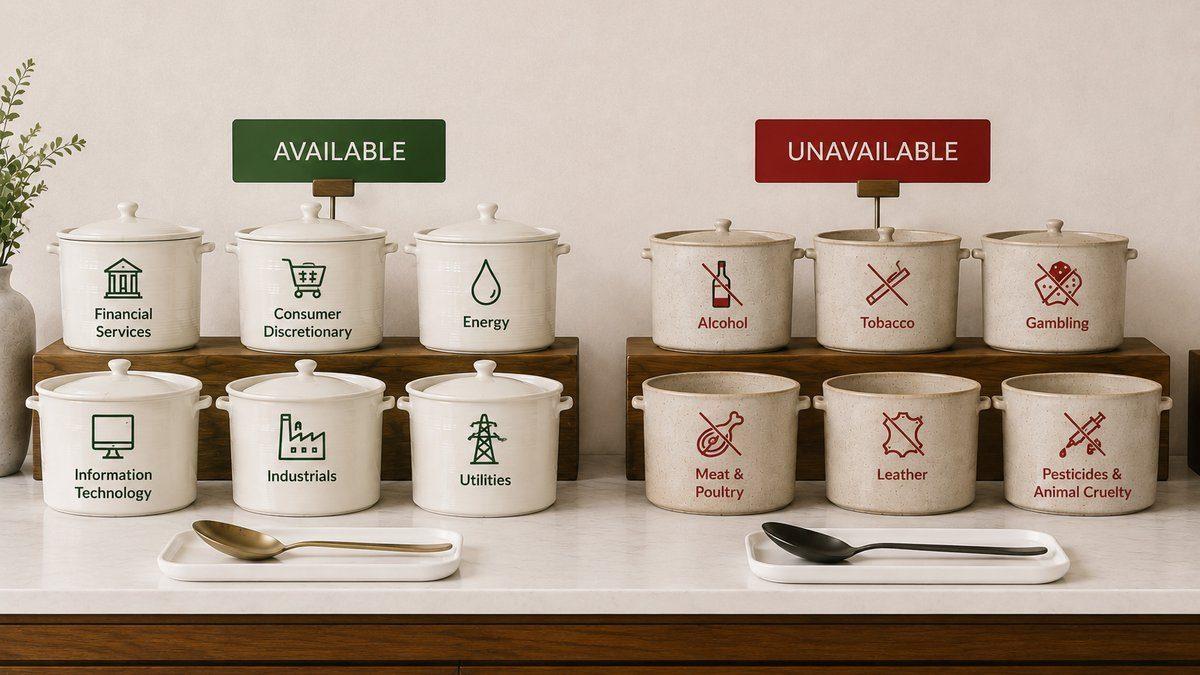
The BSE Saatvik 100 screens out alcohol, tobacco, gambling and meat – effectively a vegetarian, teetotal portfolio. Did the conscience cost you returns? We run it against the BSE 500 and find where the real bet is hiding.