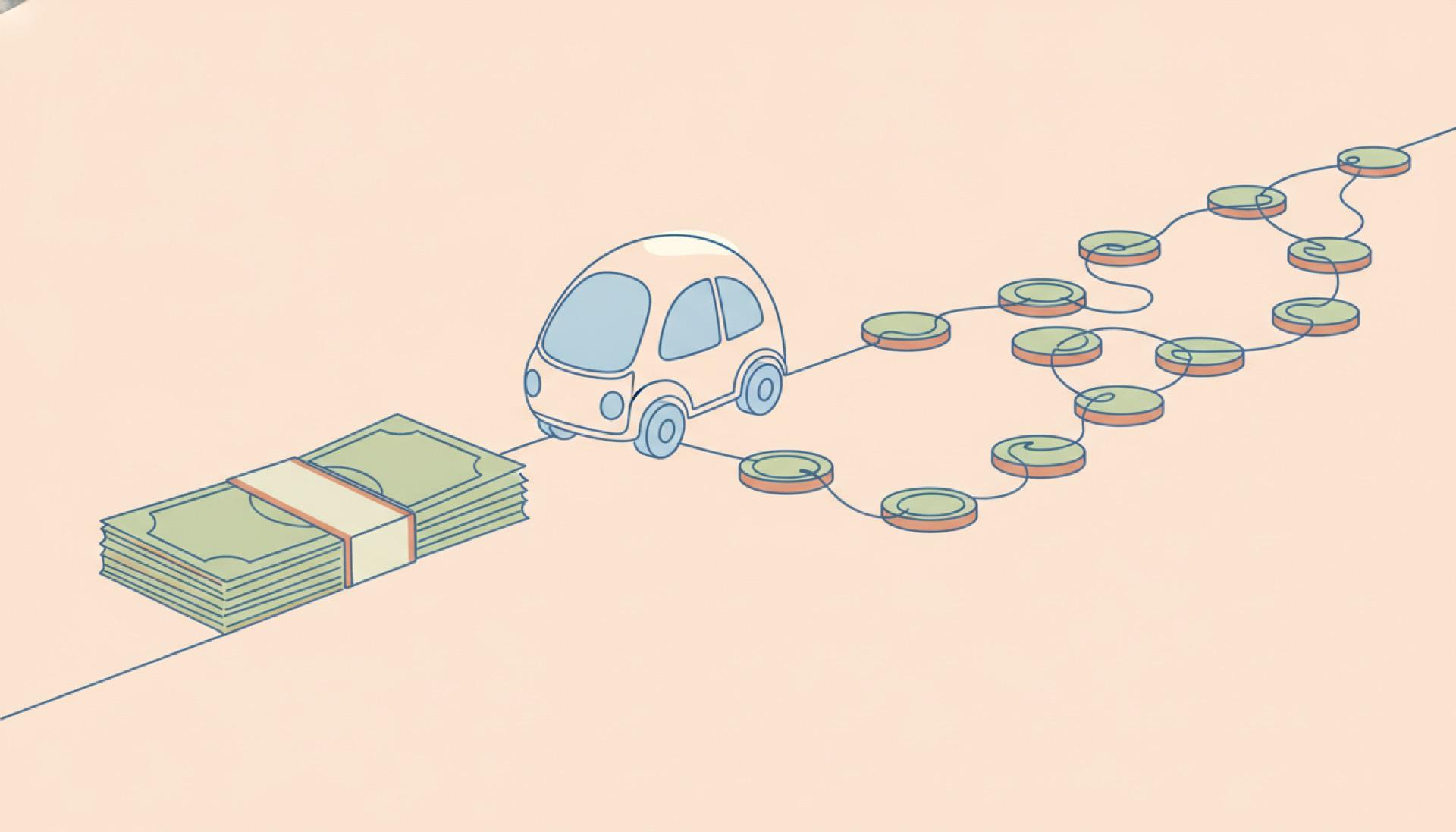
A car loses value whether you borrow or pay cash, so this is really a question about your money, not the car. Paying cash avoids interest but drains your liquidity; a loan keeps cash available but adds interest on a falling asset. The choice comes down to your loan rate, what the cash would otherwise do, and the buffer you must protect. Figures below are illustrative.
There is no universal winner here. The right answer depends on how much cash you have beyond your safety net and what that cash would earn if you kept it.
The trade-off in numbers (illustrative)
What a car loan actually costs
A loan has a price you can calculate exactly. Borrow ₹8 lakh at 9.5% over five years and the EMI is about ₹16,800 a month. Across the full term you repay roughly ₹10.08 lakh, so the interest is close to ₹2.08 lakh. That is the certain cost of keeping your cash rather than spending it now.
Because a car falls in value while you pay, the interest is money spent on a shrinking asset, not a growing one. That is what makes borrowing for a car different from borrowing for a home or education. Size your own EMI and interest with the car loan EMI calculator before you compare.
The opportunity cost of paying cash
Paying cash removes that ₹2.08 lakh of interest entirely, a real and certain saving. The catch is what the cash could have done instead. If it would otherwise sit idle in a savings account earning 3–4%, paying cash clearly saves more than that idle money would make. If you would have invested it, the expected return might exceed the loan rate over time, but market returns are not guaranteed and can fall, so that edge is uncertain, not assured.
So the honest comparison is a certain interest cost against an uncertain opportunity cost. Where your cash would earn little, or where liquidity is not a concern, paying cash tends to look stronger. Where the cash would stay invested and you can carry the loan comfortably, the loan can hold its own.
Liquidity itself has a value that is easy to miss. A large cash reserve lets you handle a job change, a medical bill or a business need without borrowing at short notice, often at a worse rate than a car loan. Spending it all on the car removes that flexibility. For some people the peace of a full reserve is worth more than the interest a loan costs; for others, sitting on idle cash while paying loan interest feels like the worse deal. Both readings are fair.
Loan or cash, side by side
| Compared on | Pay cash | Take a loan |
|---|---|---|
| Interest | None | ~₹2.08 lakh over 5 yrs (₹8L at 9.5%, illustrative) |
| Liquidity | ₹10 lakh gone at once | Cash stays available |
| Emergency fund | At risk if you stretch | Protected, if the EMI is affordable |
| Total outgo | Lower | Higher by the interest |
| Suits | Surplus beyond your buffer | Keeping cash working, or needing liquidity |
Protect the emergency fund either way
Whatever you choose, do not empty your emergency fund to avoid a loan. The interest saved is small comfort if a job loss or medical bill then forces you into a fresh, costlier loan. Keep three to six months of expenses set aside first.
A common middle path solves this: make a larger down payment from genuine surplus and take a smaller loan for the rest. You cut both the borrowing and the interest while keeping cash in reserve. It captures some of the certain saving without gambling your entire buffer on the purchase.
A car is not an investment
Framing helps. A car is a tool that loses value, not an asset that grows, so borrowing for one is borrowing against a falling price. That places a car loan closer to the bad-debt end of the spectrum than debt that funds a home or a skill. It can still be a sensible choice to protect liquidity or when the rate is low, but go in seeing it for what it is.
Related nyvo guides
- The Real Cost of Owning a Car in India – the full running cost to weigh before you fund the purchase.
- Good Debt vs Bad Debt – where a car loan sits, and why the asset behind the debt matters.
- Emergency Fund: How Much You Need in India – the buffer to keep intact whichever way you pay.
Loan or cash is not about the car; it is about your interest cost, your liquidity and the buffer you protect. Compare the certain interest a loan adds with what your cash would truly earn, keep your safety net whole, and let your own numbers settle it.