Good debt and bad debt are not different products; they are the same borrowing put to different uses. Debt is "good" when it buys something that builds your wealth or earning power at a sane interest rate, and "bad" when it funds a depreciating want at a punishing rate. The test is simple: does it build or drain? The label lives in the use and the terms, not in the loan itself.
The same personal loan can be good debt or bad debt depending on where the money goes. That is why "avoid all debt" is bad advice, and so is "borrow freely because everyone does".
What is the difference between good debt and bad debt?
Good debt is an investment in disguise. You borrow to acquire something that grows in value or earns you more (a home that appreciates, an education that raises your income) and you do it at a rate low enough that the gain outweighs the interest.
Bad debt is consumption on credit. You borrow to buy something that loses value the moment you own it (a gadget, a holiday, a lifestyle upgrade) and often at a high rate. The thing shrinks in value while the debt grows. Nothing about the loan changed; the destination of the money did.
What counts as good debt?
Borrowing that expands what you own or what you earn, at a rate that makes sense:
- A home loan funds an appreciating asset, usually at a relatively low, often secured rate, sometimes with tax benefits. A top-up on that loan can extend the same cheap credit to other needs.
- An education loan raises your earning power – an asset that pays out for decades if the course genuinely improves your prospects.
- A business loan that funds income-generating capacity, where the expected return clears the interest.
The common thread: the money buys something that is likely to be worth more, or earn more, than it costs to borrow.
What counts as bad debt?
Borrowing to fund things that lose value, especially at a high rate:
- A revolving credit-card balance at 36–45% a year, funding spends you could not otherwise afford. This is the sharpest example of bad debt; see personal loan vs credit card.
- Loans for depreciating wants: the latest phone, a lavish holiday, an upgrade you finance because the EMI "looks small".
- Any debt whose interest outruns the value of what it bought, which is most consumption borrowing at high rates.
Good debt vs bad debt at a glance
Good debt: builds you up
Start here- Buys an appreciating asset or higher income
- Reasonable, often secured, interest rate
- EMI fits comfortably within your budget
- Home loan, education loan, productive business loan
Bad debt: drains you
- Buys a depreciating want or pure consumption
- High rate, often 36–45% on a revolving card
- Stretches or strains the monthly budget
- Card balances, EMIs on lifestyle upgrades
Read the split as a test of use and terms, not a fixed list of products:
| Dimension | Good debt | Bad debt |
|---|---|---|
| What it buys | An appreciating asset or higher earning power | A depreciating want or pure consumption |
| Typical rate | Reasonable; often secured, single-digit or low double-digit | High; often 36–45% a year on a revolving card |
| Effect over time | The gain outweighs the interest, so it builds wealth | The purchase shrinks while the debt compounds, so it drains |
| Budget fit | EMI fits comfortably, with room to spare | Stretches or strains the monthly budget |
| Examples | Home loan, education loan, productive business loan | Card balances, EMIs on lifestyle upgrades |
| Can it change sides? | Yes: overborrowing or a rising floating rate can turn it bad | Clearing it is effectively a certain saving equal to its rate |
The same loan can sit in either column; where the money goes and how comfortably the EMI fits decide which.
The real test: does it build or drain?
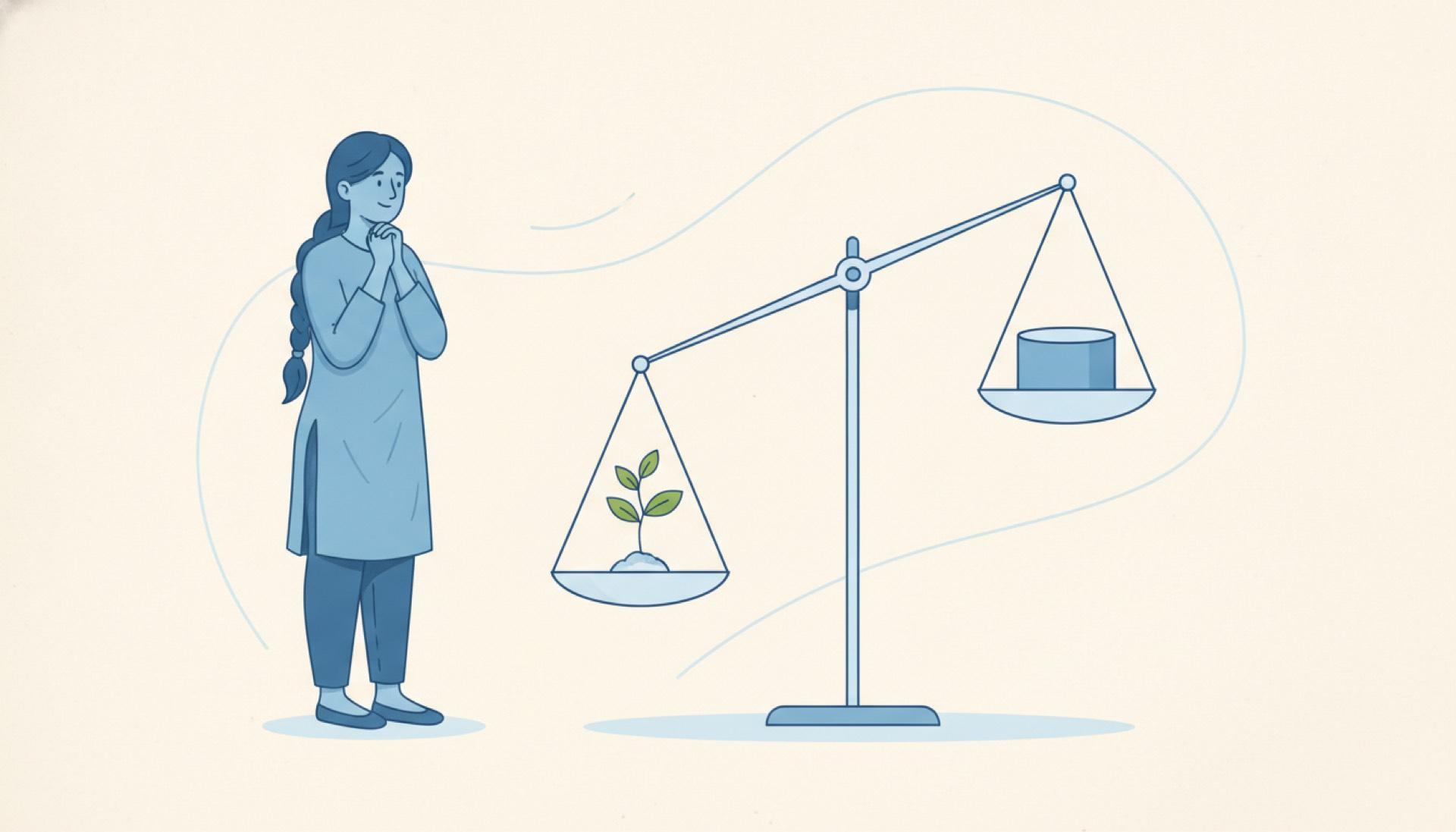
Before borrowing, ask two things. First, will what I am buying be worth more, or earn me more, than the interest I will pay? Second, does the EMI fit my budget with room to spare? A "yes" to both is the signature of good debt. A "no" to either is a warning.
Rate matters as much as purpose. Borrowing at a sane, single-digit or low double-digit rate for an appreciating asset is one thing; carrying a balance at 36–45% is another entirely. Clearing high-rate debt is effectively a certain saving equal to that rate, which is why paying it down usually beats investing the same rupee.
The Indian twist: even "good" debt can go bad
The category is not permanent. A home loan is good debt only while the EMI fits comfortably; stretch to buy more house than you can carry, and the same loan becomes a monthly strain. An education loan is good only if the course actually lifts your income. And a floating-rate loan that looked affordable can tighten when rates rise.
Two guardrails keep good debt good. Keep total EMIs to a modest share of take-home pay, and hold an emergency fund so one bad month does not turn a manageable loan into a missed payment and a dented credit score.
Before you sign the next loan
Put any loan you are considering through the two questions: will what it buys be worth more, or earn me more, than the interest costs, and does the EMI fit my budget with room to spare? Two yeses and the debt is working for you. Anything less, and the purchase can wait until it is.
Related nyvo guides
- Personal Loan vs Credit Card: Which for What?: matching the borrowing tool to the job, so good debt stays good.
- Saving vs Investing: Which Comes First?: why clearing high-rate debt often beats investing the same money.
- How to Improve Your CIBIL Score in India: handled well, good debt builds the record lenders reward.
- Car Loan vs Paying Cash for a Car: a car is a depreciating asset, which makes the good-or-bad-debt call a close one.