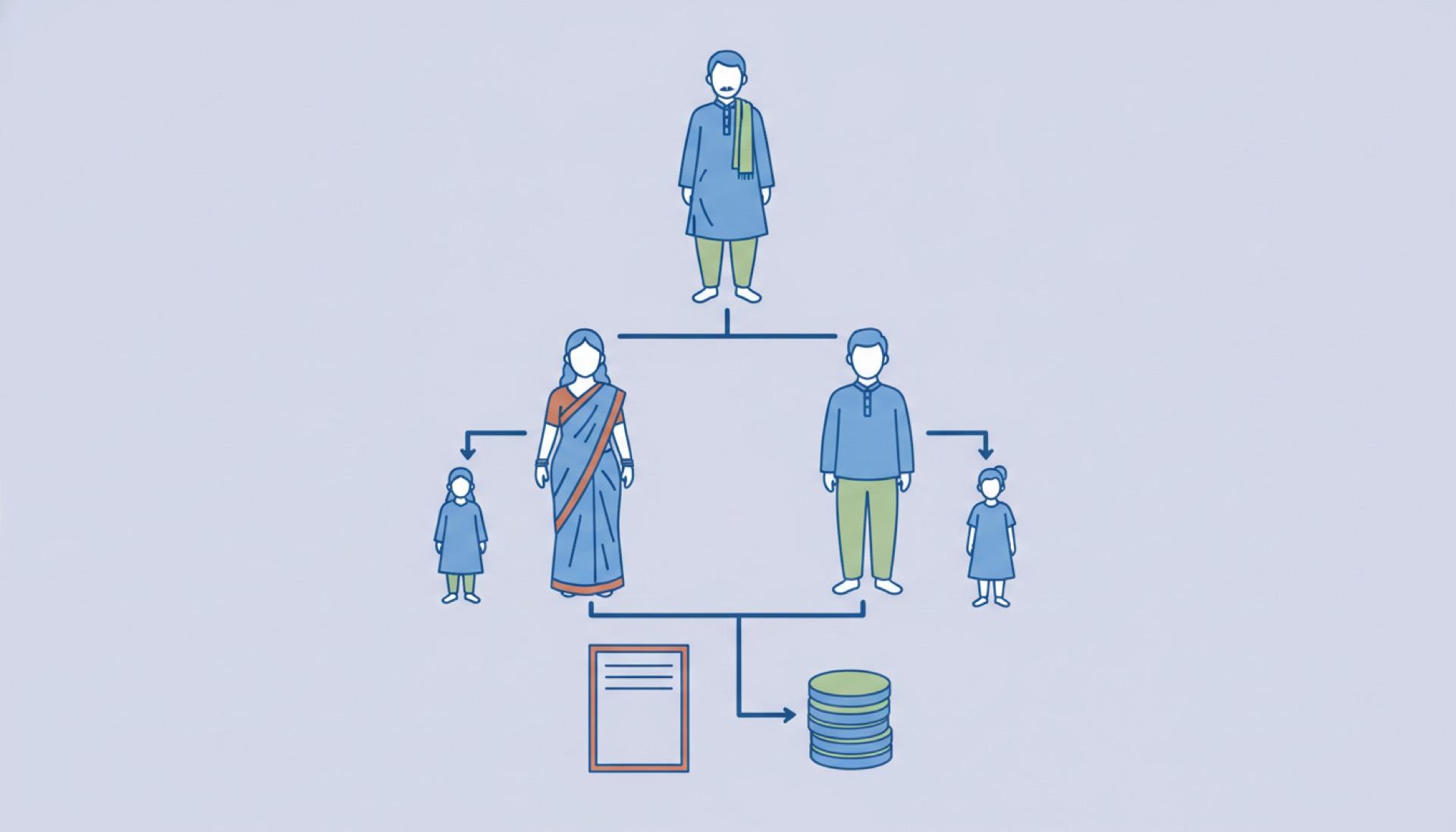
A will is a legal declaration of how you want your assets shared after your death. In India, any person of sound mind aged 18 or over can make one: list what you own, name who gets it, appoint an executor, and sign the document in front of two witnesses. Registration is optional, and there is no stamp duty on a will.
Most Indian families put this off for decades. The result is that assets get frozen and relatives argue, at exactly the moment a family can least handle it.
A will in India, at a glance
What a will actually is
A will is a written statement of how you want your property, money, and belongings distributed after you die. The person making it is the testator. The people who receive assets are the beneficiaries. The person you trust to carry out the instructions is the executor.
A will only takes effect after death. While you are alive it has no power over your assets, and you stay free to spend, sell, or give away anything you own.
If you die without a will, you are said to die intestate, and your assets pass by the succession law that applies to your religion rather than by your own wishes. You can read how one of those laws works in the Hindu Succession Act, explained.
Who can make a will in India
Two conditions matter: age and mind. You must be at least 18, and of sound mind, meaning you understand what you own and what signing the will does. The will must be made freely, without pressure from anyone who stands to gain.
That last point causes many disputes. A will signed by an elderly parent under pressure from one child can be challenged by the others.
How to make a will: the general steps
The usual sequence looks like this.
- List your assets. Property, bank accounts, mutual funds, shares, insurance, gold, and any loans owed to you. A clear list stops assets from being missed.
- Decide who gets what. Name your beneficiaries and what share each receives. Being specific reduces the room for argument.
- Appoint an executor. This is the person who will gather the assets and distribute them as written. Many people name a trusted family member, and sometimes a backup.
- Name a guardian if you have young children. Parents often use a will to state who should care for a minor child. This is common alongside the other money moves in the new-baby checklist.
- Sign in front of two witnesses. You sign the will, and two witnesses watch and sign to confirm they saw you do it. A witness should ideally not be a beneficiary.
- Store it safely and tell the executor where it is. A perfect will helps no one if nobody can find it.
Registering a will: optional, sometimes helpful
Registration is not required for a will to be valid. You can register it at the sub-registrar's office by appearing with your witnesses and paying a small fee.
Registration does not make a will "more legal", but it creates an official record and can make the document harder to dispute later. Many families choose to register for that reason. An unregistered will, correctly signed and witnessed, still stands on its own.
What a will can and cannot do
You can revise a will as often as you like while alive, either through a signed and witnessed amendment called a codicil, or by writing a fresh will that cancels the earlier ones. The most recent valid will is the one that counts.
A will does not automatically override a nominee registered on a bank account or insurance policy in every case, and the interaction between the two is a common source of confusion. That trap is covered in nomination vs will. A will also does not decide who inherits ancestral property that is governed by personal succession law rather than by your sole ownership.
There are also different formats a will can take, from a simple typed document to a handwritten one. Those are set out in types of will in India.
When to involve a professional
A short, clearly written will for a simple estate can be made without a lawyer. Involve a qualified professional when the picture is more complicated: assets in more than one country, a business, a dependent with special needs, a blended family, or property whose ownership is shared or disputed. Careless wording is where family fights begin.
Related nyvo guides
- Estate Planning in India: A Beginner's Guide – how a will fits alongside nominations, joint holdings, and trusts.
- Financial Checklist Before You Get Married – where a first will and updated nominees usually belong.
- Types of Will in India, Explained – the plain-language guide to the formats a will can take.
A will is one of the cheapest documents you will ever make and one of the most valuable your family will ever read. The hard part is not writing it. The hard part is finally sitting down to do it.