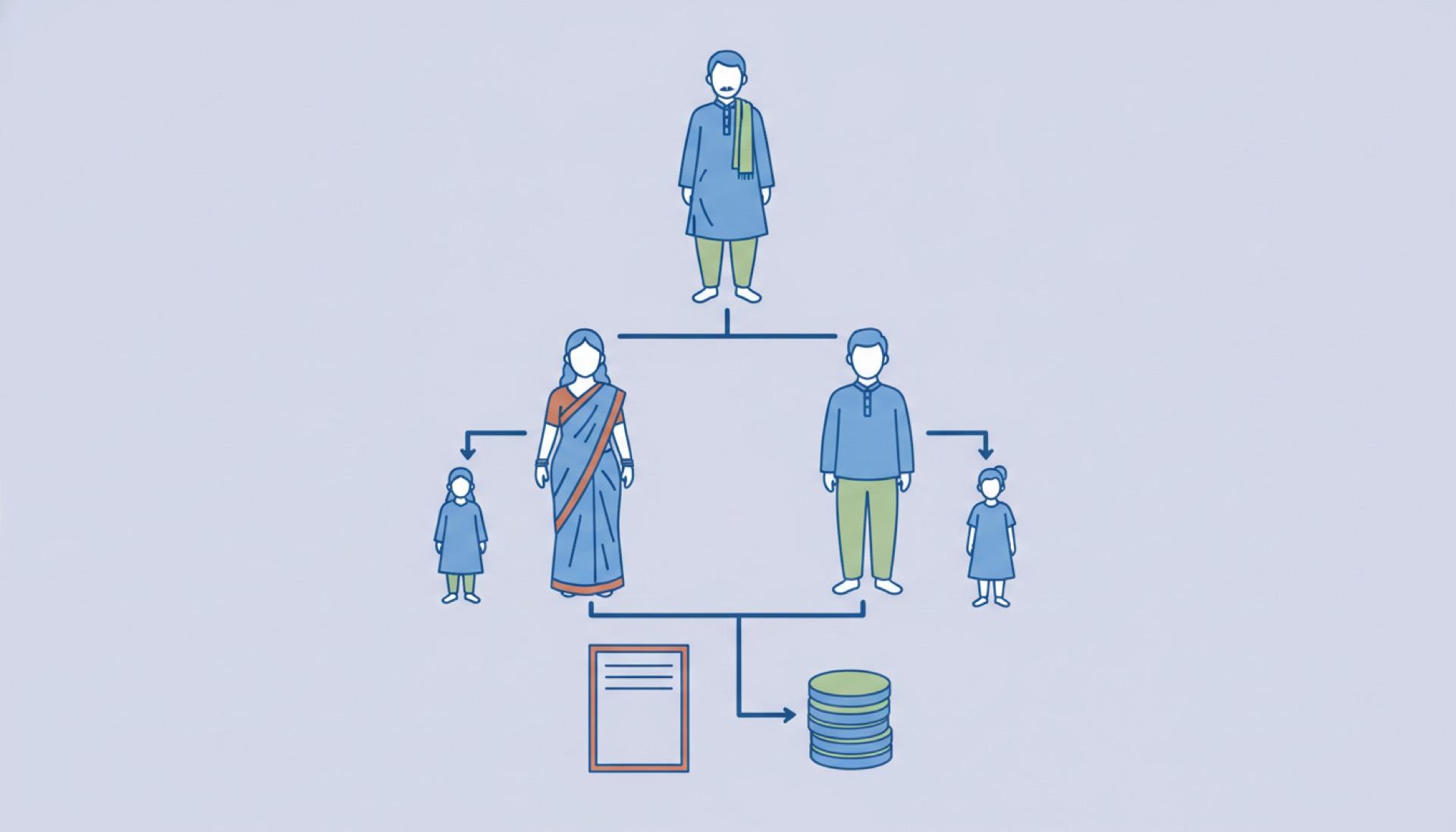
Estate planning sounds like something only the wealthy do. It is not. Estate planning in India is simply the process of arranging how your assets pass on after your death, and for most families the core is a valid will plus updated nominations, with joint holdings and trusts added only where they earn their place. The aim is to pass assets smoothly and reduce disputes.
This guide is the map. Each part below links to a deeper explainer, so you can start with the overview and go as far into any piece as you need.
The core of a family estate plan
Why estate planning matters
If you die without a plan, you do not avoid the question of who inherits. You just hand the answer to a default succession law, and that law is blunt. It follows fixed shares and a fixed order, regardless of the promises you made or the dependent you wanted to protect. One version of that default is set out in the Hindu Succession Act, explained, and others apply to Muslims, Christians, and Parsis.
The cost is not only about who gets what. Without a will and clear nominations, assets can freeze, and families sometimes have to go to court just to access money that was always meant for them.
The will: the centrepiece
A will is the document that says, in your own words, who inherits each asset. It is the one part of the plan that lets you override the default and decide for yourself. Almost every family benefits from having one.
Making a will is more straightforward than most people expect: list your assets, name beneficiaries and an executor, and sign in front of two witnesses. The full walk-through is in how to make a will in India, and the different formats a will can take are covered in types of will in India.
Nominations: speed, not ownership
Nominations are the second pillar, and the most misunderstood. A nominee on your bank account, mutual fund, insurance, or provident fund is the person the institution releases the asset to when you die. That matters, because it stops the money from getting stuck.
But a nominee is usually a trustee who receives and holds the asset, not the person who finally owns it. The will, or succession law, decides the inheritance. Getting this wrong is one of the costliest errors families make, and it is unpacked in nomination vs will. The takeaway for your plan: keep nominees updated and a will in place, so the two work together.
Joint holdings
Holding an asset jointly, a bank account or a property, can let it pass to the surviving holder, which helps continuity for a spouse. It is a useful tool, but it interacts with your will and nominations, and it does not by itself settle every ownership question. Treat joint holdings as one piece of the plan, not a substitute for a will.
Trusts: for specific needs
A trust is an arrangement where assets are held and managed by trustees for the people you want to benefit. Trusts can be useful for a minor child, a dependent with special needs, or business succession, and they can operate during your lifetime as well as after.
They also add cost and complexity, and they are not necessary for most families. A trust is a tool for a particular problem, not a default step. If your situation points that way, this is firmly a conversation for a qualified professional.
When there is no will
If someone dies without a will, heirs may need a court document just to collect assets like bank deposits and shares. That document, and how it differs from probate, is explained in succession certificate. The entire point of planning is to spare your family that route.
Where to start
You do not need to do everything at once. Many families begin around a marriage or a new baby, when nominees and a first will naturally come up. Start with the will and nominations, the two that cover the most ground, and layer on the rest only if your situation calls for it.
Related nyvo guides
- How to Make a Will in India – the step-by-step for the centrepiece of any plan.
- Nomination vs Will: The Costly Confusion – why a nominee is not an heir.
- The Hindu Succession Act, Explained – the default that applies if you skip the plan.
Two documents spare your family the court queue: a valid will and an up-to-date nominee list. Get those two done, and most of estate planning is already behind you.