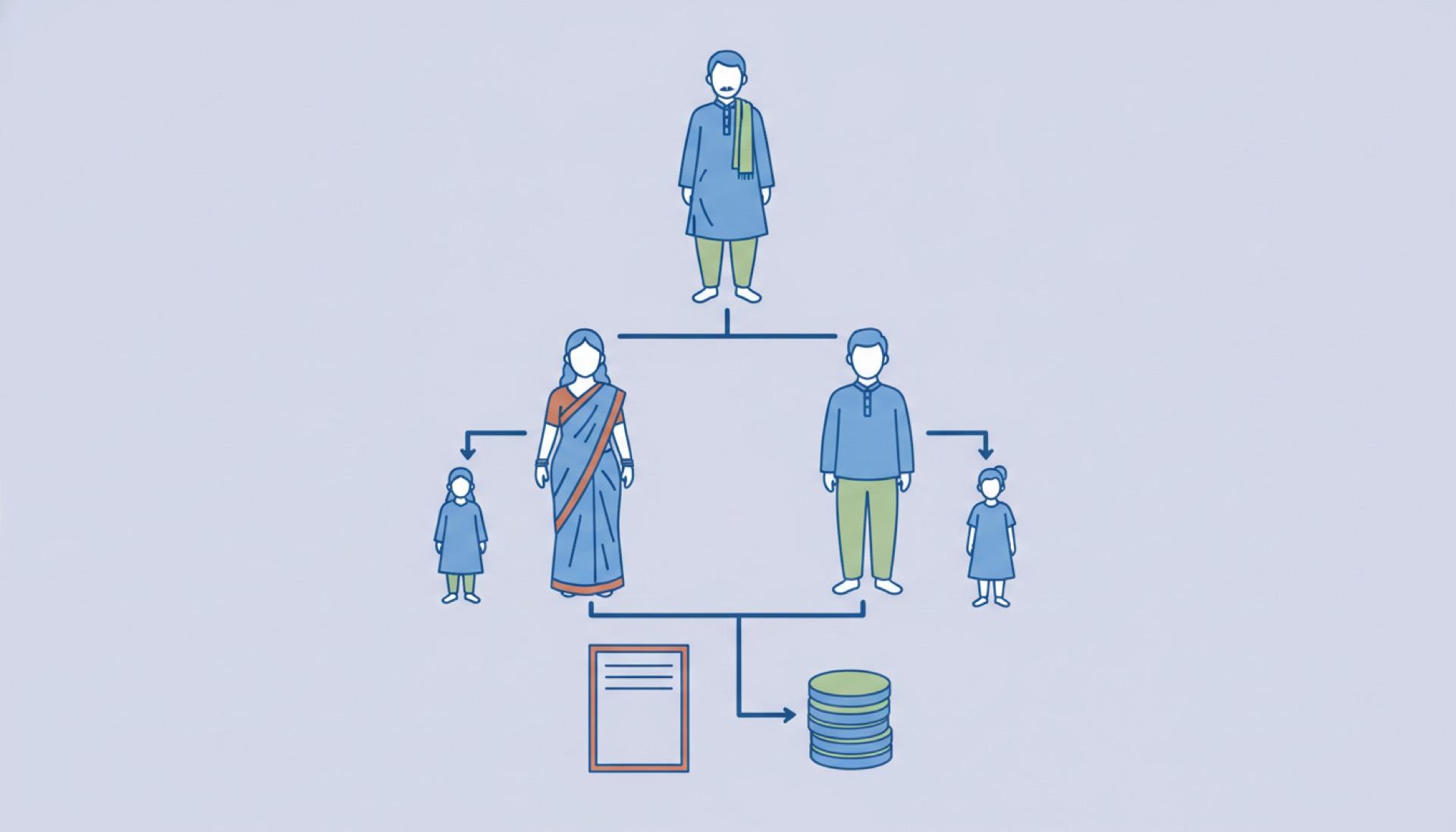
When someone dies without a will, their heirs often cannot simply walk into a bank and withdraw the money. A succession certificate is a document issued by a civil court that authorises the holder to collect the debts and securities, such as bank deposits, shares, and bonds, of a person who died without a will. Banks and companies ask for it to be sure they are releasing assets to the right people.
It is one of the most searched-for terms in Indian estate matters, usually by a family in the middle of a stressful situation. Knowing what it is, and what it is not, saves a lot of wasted trips.
Succession certificate, in short
What a succession certificate is for
Dying without a will is called dying intestate. When that happens, the deceased person's movable financial assets, things like bank balances, fixed deposits, shares, and bonds, still exist, but no one has clear written authority to collect them.
A succession certificate fills that gap. Granted by a civil court, it names the heirs and authorises them to receive those debts and securities and to give a valid discharge to the bank or company holding them. In practice it is the document institutions rely on to release money without fear of paying the wrong person.
It is mainly about movable assets and dues. Immovable property such as land and flats is often dealt with through other routes, which is one reason families sometimes need more than one document.
How it differs from probate
This is the distinction people most often get wrong.
Probate is a court's certification that a will is genuine and valid. It only exists when there is a will. A succession certificate is the opposite situation: it applies when there is no will. So the two never really compete. If a valid will names an executor, the path runs through probate or the will itself; if there is no will, heirs may need a succession certificate. You can read how a will is made in how to make a will in India.
How it differs from a legal heir certificate
A legal heir certificate is a lighter document, usually issued by a local revenue official or municipal authority. Families use it for matters like claiming a pension, provident fund, gratuity, or transferring a utility connection.
A succession certificate is heavier: it comes from a civil court and specifically empowers heirs to collect debts and securities. They are not interchangeable, and the one you need depends on the asset and the institution asking. When in doubt, ask the bank or company exactly which document they require.
The broad process
Procedure varies by state and court, so treat this as the shape rather than a checklist.
- The heirs file a petition in the appropriate civil court, generally where the deceased lived or where the assets are.
- The petition sets out the death, the relationship of the applicants, and the debts and securities involved.
- The court typically issues a public notice inviting objections, and waits a set period.
- If no valid objection stands, the court grants the certificate, sometimes after the heirs provide a bond or security.
Court fees are commonly charged as a percentage of the value of the assets. The whole process can take several months.
What it does not do
A succession certificate is often misread as proof that the holder owns everything the deceased owned. It is narrower than that. It authorises the holder to collect specific debts and securities and to give the bank or company a valid discharge. It does not, on its own, settle every question of who finally owns each asset, and it is not the standard route for transferring title to land or a flat. Families with immovable property or a will in the mix often need a different or additional process, which is another reason to ask each institution exactly what it requires before starting.
The point most families miss
Almost none of this is necessary if there is a valid will. A will lets you say who inherits, so your family may avoid the cost, delay, and public notice of a court process just to access assets you always meant them to have. A succession certificate is the fallback for when that step was skipped. How to avoid needing it is the subject of estate planning in India, and the nominee angle is covered in nomination vs will.
Related nyvo guides
- Estate Planning in India: A Beginner's Guide – the plan that keeps assets out of court in the first place.
- How to Make a Will in India – the document that removes most of the need for a succession certificate.
- The Hindu Succession Act, Explained – how heirs are decided when there is no will.
A succession certificate solves a problem you can largely design away. The cheaper fix is upstream: write a will, so your family collects, rather than litigates.