I Asked ChatGPT to Build My Portfolio. Here's Where It Lied to Me.
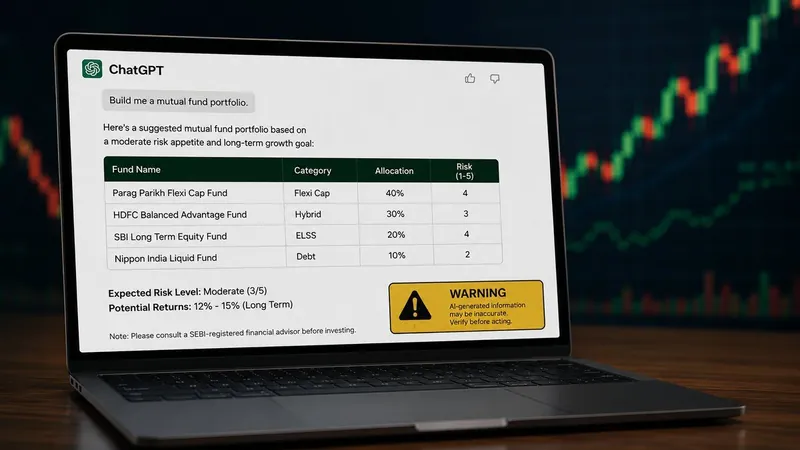
Type "build me a mutual fund portfolio" into ChatGPT and, in seconds, you get four funds, clean allocation percentages, a risk score, and a sign-off that reads like a SEBI-registered advisor wrote it.
None of it is wrong in an obvious way. It's wrong in the decimal-pointed way that's built to be believed.
Confidence is the product
ChatGPT isn't optimising for accuracy. It's optimising for the most satisfying next word. Fluency is the feature; being right is a side effect. It won't say "I don't have live NAV data" because hedging tests worse than a confident guess – uncertainty doesn't sell.
Sources: Shibui Finance · Harvard Business School · AlphaLog
Morgan Stanley's analysts put it bluntly: this isn't a bug that gets patched next quarter. It's structural.
What it doesn't carry
A SEBI-registered advisor carries a fiduciary duty – a legal obligation to act in your interest, backed by an exam, a paper trail, and a regulator who can pull the licence. ChatGPT carries none of it:
Even SEBI fenced in its own AI. Its chatbot SEVA ships with citations and is scoped to "general information on the securities market" – nothing about portfolios or buy/sell calls. A regulator deliberately caged its bot. ChatGPT has no cage.
An AI trained on the past is driving by the rearview mirror – fine for describing what already happened, useless for the shock that hasn't.
Why we fall for it
This is automation bias: we over-trust output that sounds authoritative and arrives instantly with zero friction. A human advisor hedges and asks questions; ChatGPT sounds sure, and sureness reads as competence.
Ask it "should I load up on small-caps for higher returns?" and it tends to answer your premise, not challenge it – your bias leaks straight into its reply. And it has no memory of you: it can't recall that you nearly sold everything in the last crash, or that a college fund has a hard four-year clock. It starts from zero every time, and it can't hear fear in your voice.
The fix is boring
Use it to learn, not to decide. It's genuinely great at explaining an expense ratio or compressing a 100-page annual report into five minutes. But verify every hard number – NAV, expense ratio, CAGR – against the AMC factsheet, AMFI, or Value Research, and treat any fund it names as a hypothesis, not an instruction.
Better input, better output: "build me a portfolio" gets a textbook; "stress-test this against a 2008-style crash, given my EMIs and tax bracket" gets something closer to analysis. But no prompt closes the accountability gap – the chatbot has never once had to explain a bad quarter to a client.
This was never AI versus humans. It's knowing when to read the machine, and when to call a human to read it for you.
Now in the nyvo app
Plan it for real in the nyvo app.
Goals, projections, fund grades and your whole family's money – in one place. Free. SEBI-registered.
Tools to try
Run the numbers yourself.
Free calculators that go with this issue. Built for Indian rules (rupees, inflation, tax regime).
- SIP Calculator – Monthly Mutual Fund Returns India
Estimate the future value of a monthly mutual-fund SIP in India. Enter your amount, expected return and horizon to see the corpus and gain split.
- Mutual Fund Returns Calculator – SIP + Lumpsum India
Project combined returns from a mutual-fund SIP, lumpsum and top-ups in one place. Built for Indian equity, debt, hybrid and ELSS funds.
← Newer issue
How Much Term Insurance Do You Actually Need? 3 Methods to Size Your Cover in India
Older issue →
Would a Vegetarian Portfolio Have Made You Richer or Poorer?
Also worth reading
25 June 2026
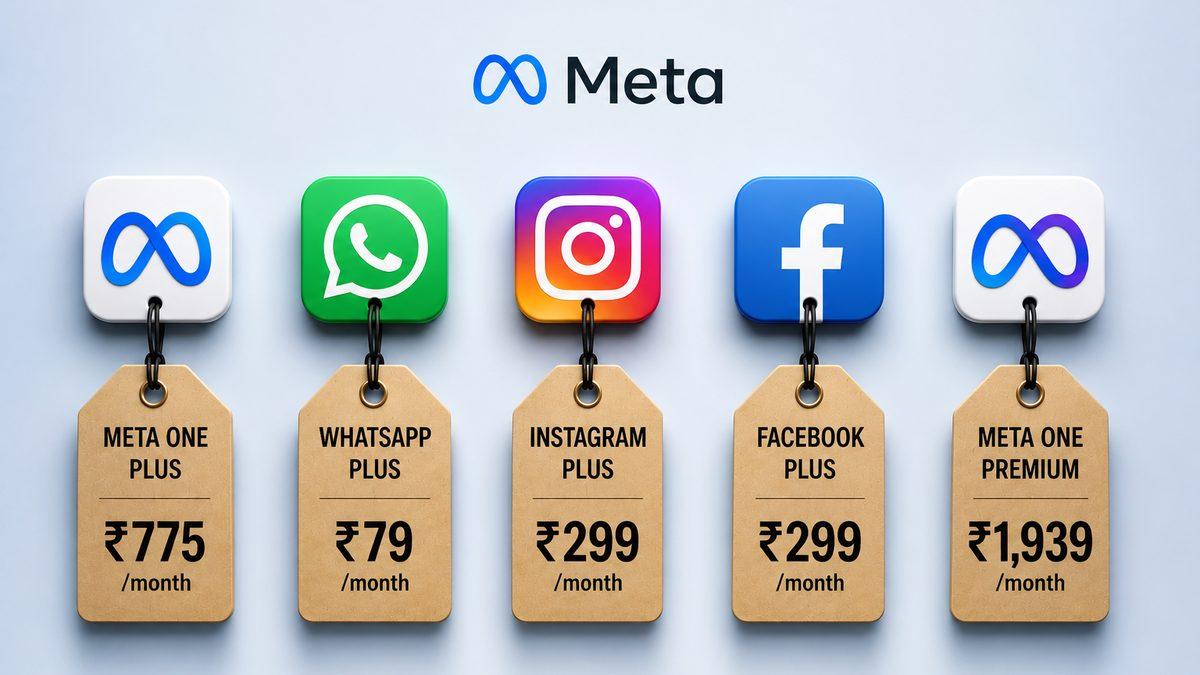
There's No Such Thing as a Free Lunch – or a Free WhatsApp
Meta is about to charge for an ad-free WhatsApp and Instagram in India – a lesson in why “free” apps were never free, and how subscription psychology quietly drains your wallet.
5 June 2026
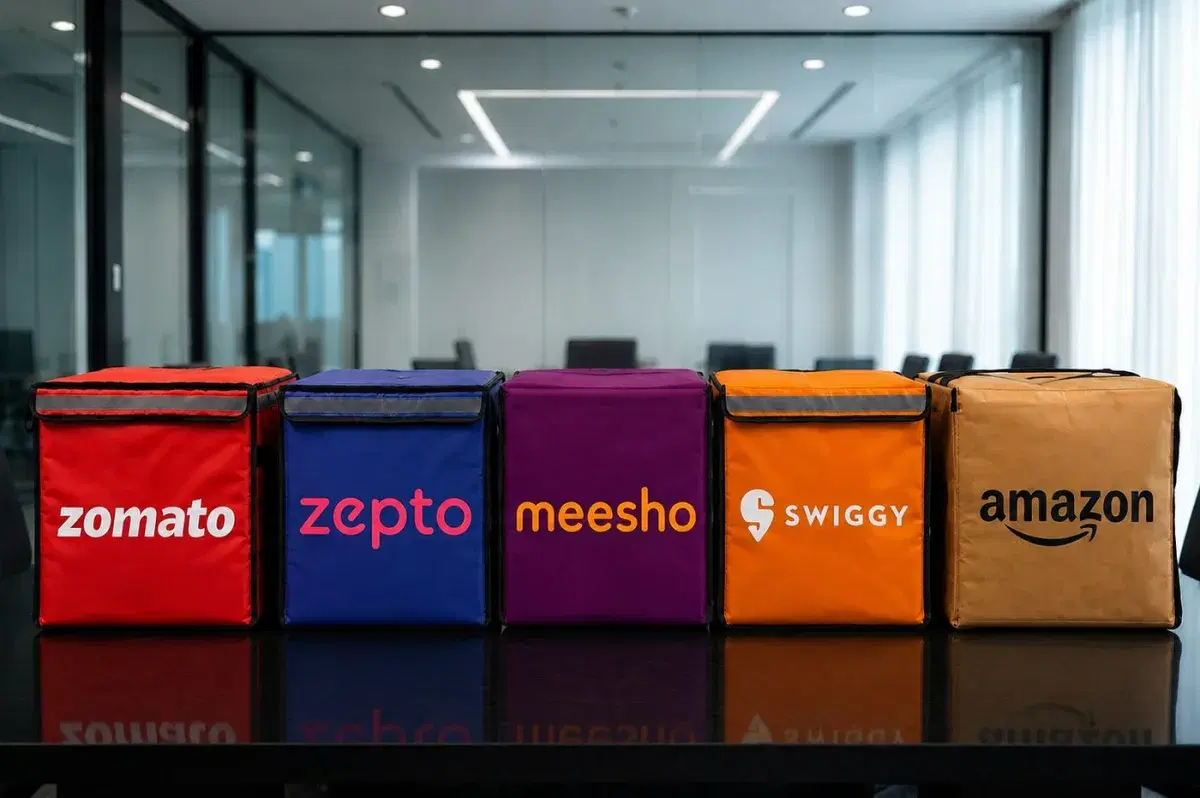
The Apps You Use Every Day Are Writing Their Own Rules
On June 1st, five giants – Amazon, Eternal, Meesho, Swiggy and Zepto – formed the Digital Commerce Coalition. One name is missing: Flipkart. Here's what seven years of regulatory pressure, eight platform-fee hikes and a room full of conflicts of interest add up to.