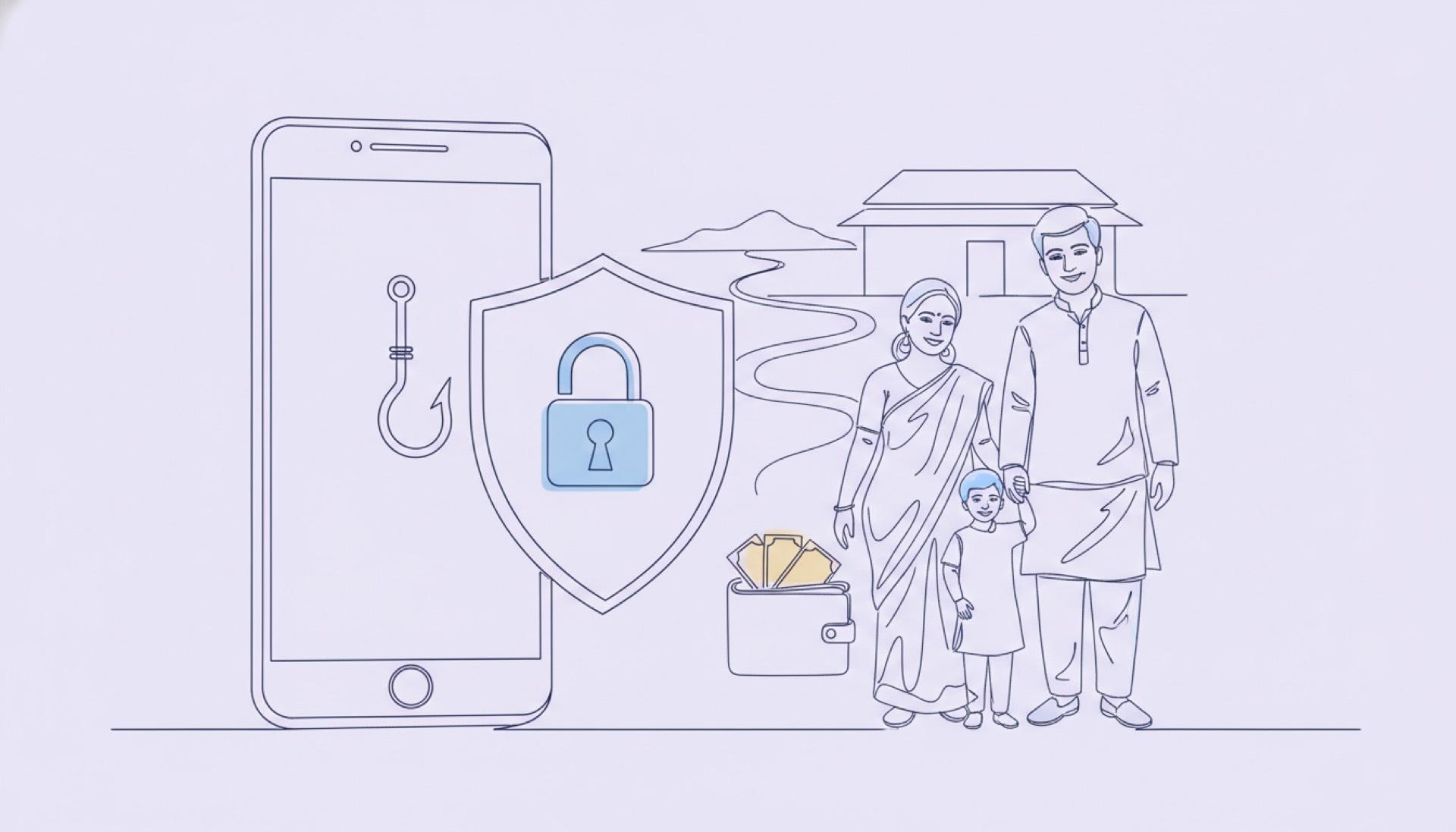
Most financial fraud in India is not a hack but a con that gets you to hand over an OTP, a PIN, or a QR scan yourself. The single rule that stops the majority of it: never share an OTP, PIN, CVV or password, because no real bank or official ever asks for them. The rest is just the story wrapped around that one ask.
Almost every scam below works the same way underneath: create a moment of fear or greed, then borrow your trust for the sixty seconds it takes you to approve something you should not.
What financial fraud usually looks like
Digital and banking fraud is social engineering, not code-breaking. The scammer supplies a reason (your account is blocked, your KYC has expired, you have won something, you owe something) and a fast channel to act on it. The reason changes; the goal is always the same secret from you: a one-time password, a card number, a UPI PIN, or your approval on a payment app.
Never share these, whatever the story
Some things are simply never needed by a genuine caller. A bank, a wallet, the income-tax department, the police and SEBI will never phone to ask for your OTP, UPI PIN, card PIN, CVV, full card number or net-banking password. There is no legitimate reason for any of them to want it. Treat the request itself as proof the caller is fake, and hang up.
The common financial frauds in India
- UPI and QR "receive money" tricks. You are told to scan a QR or approve a request "to get" a refund or payment. Scanning and entering a PIN sends money out, never in. You never need a PIN to receive.
- OTP and phishing links. A text with a link to "reactivate", "claim" or "pay a pending due" leads to a lookalike page that harvests your login and OTP.
- Fake KYC-update and "account blocked" messages. A warning that your account, wallet or SIM will be suspended today unless you click and "verify". The panic is the point.
- Fake customer-care numbers. You search for a helpline, call a number planted online, and a "support agent" walks you into installing a screen-sharing app or reading out an OTP.
- SIM-swap. Fraudsters gather your details, get a duplicate SIM issued, then receive your OTPs directly. A sudden loss of mobile signal for no clear reason is worth checking at once.
- Malicious loan apps. Instant-loan apps that demand access to your contacts and photos, then harass and threaten over tiny sums. Borrow only from regulated lenders.
- Job, lottery and "electricity disconnection" scams. An offer or a threat: a job needing a "registration fee", a prize needing "tax", a power cut tonight unless you pay. Each is designed to rush a payment.
Four things worth memorising
The rules that stop most of it
- Never share an OTP, PIN, CVV or password with anyone, on any call, for any reason.
- Do not click links in SMS, email or chat apps for KYC, refunds or dues. Open the bank's own app, or type the official website yourself.
- Verify the number, not the caller. Find helplines on the back of your card, in the bank's app or on its official site, never from a search-result ad or a forwarded message.
- Slow down when rushed. Fear and urgency are the tools; a genuine institution gives you time.
- Do not install apps a caller tells you to, especially anything that shares your screen.
How to report financial fraud in India
Speed decides whether you get your money back. The moment you suspect fraud, call the national cyber-crime helpline on 1930 and file at cybercrime.gov.in, then tell your bank so it can freeze the account and try to reverse the transfer. Reporting in the first hours gives the best chance of stopping the money before it moves on. Keep screenshots, numbers and transaction IDs. Investment "opportunities" often arrive through the same channels, so it pays to also spot an investment scam before you send anything.
The verdict
You do not stay safe by spotting every new scam. There is always a new one being written. You stay safe by guarding the few things every scam eventually asks for. Protect your OTP, your PIN and your approval, refuse to be hurried, and verify numbers yourself, and the story wrapped around the ask stops working. The fraud needs your help to succeed. Simply do not give it.
Related nyvo guides
- How to Spot an Investment Scam in India – the "guaranteed returns" cousin of these digital cons.
- How to Check if an Adviser is SEBI-Registered – verify anyone who asks to manage your money.
- Emergency Fund: How Much Do Indian Families Actually Need? – a cash buffer keeps one fraud from turning into a crisis.