Why did India hold up when global tech stocks fell?
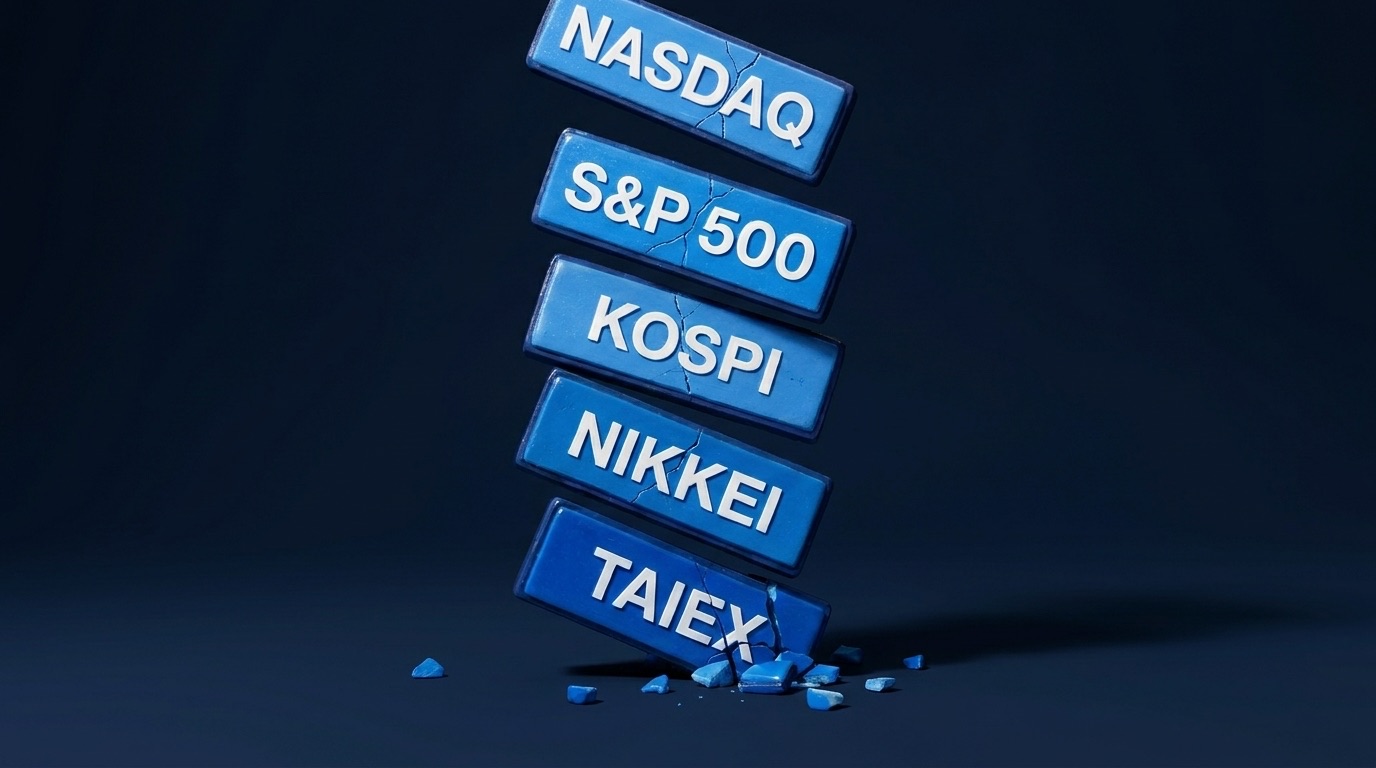
Asia's chip markets fell hard and India barely moved
On 6 November 2026, Korea's Kospi fell as much as 8.8% and set off a circuit breaker that stopped trading for 20 minutes.
Japan's Nikkei dropped 6.2%, on course for its biggest one-day fall since April 2025. India's Nifty 50 opened 104 points lower, then recovered most of that within the hour. A day earlier it had closed up 2.40% at 24,536.60, with the Sensex up more than 2,000 points.
The US midterm results set off the sell-off
President Trump's Republicans lost both houses of Congress on 3 November, and many Democrats had campaigned against new AI data centres.
Investors read that as fewer data centres, and so fewer chips. On 5 November the Nasdaq fell 5.52%, the Philadelphia chip index fell more than 12%, and Nvidia lost over $400 billion in value. AI has not actually slowed yet. The new Congress has not even been sworn in. What fell was the expectation, on top of older doubts about whether AI spending will pay off.
India did not hold up because it is strong
The easy explanation is that India has become a safe place. The numbers for 2026 say otherwise.
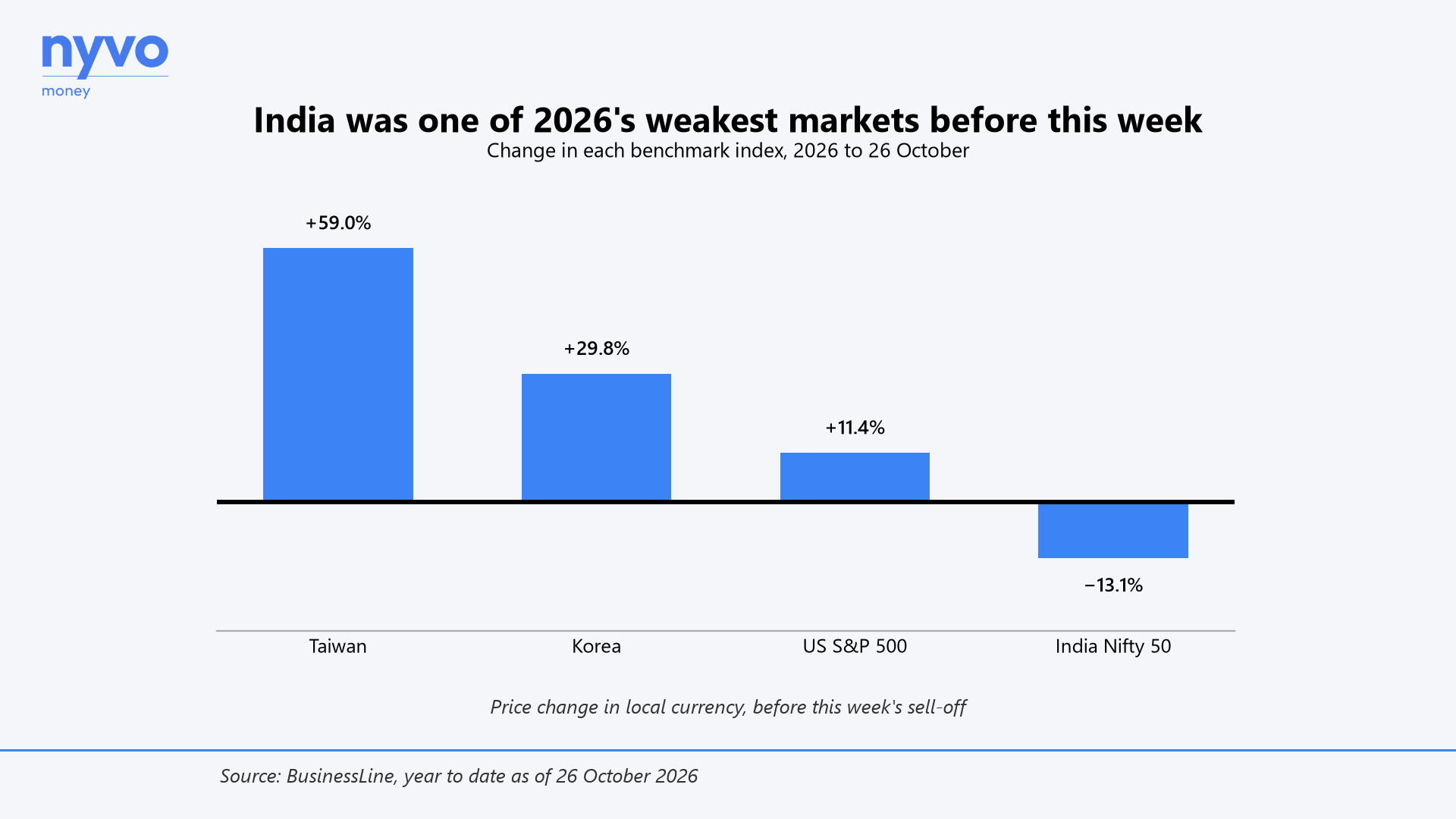
Up to 26 October the Nifty was down 13.1% for the year, while Taiwan was up 59%. Among the major benchmarks compared, only Indonesia did worse. Foreign investors had sold about ₹3.1 lakh crore of Indian shares by 23 October, and the rupee had lost 5.58% against the dollar.
The Nifty has no chipmaker in it
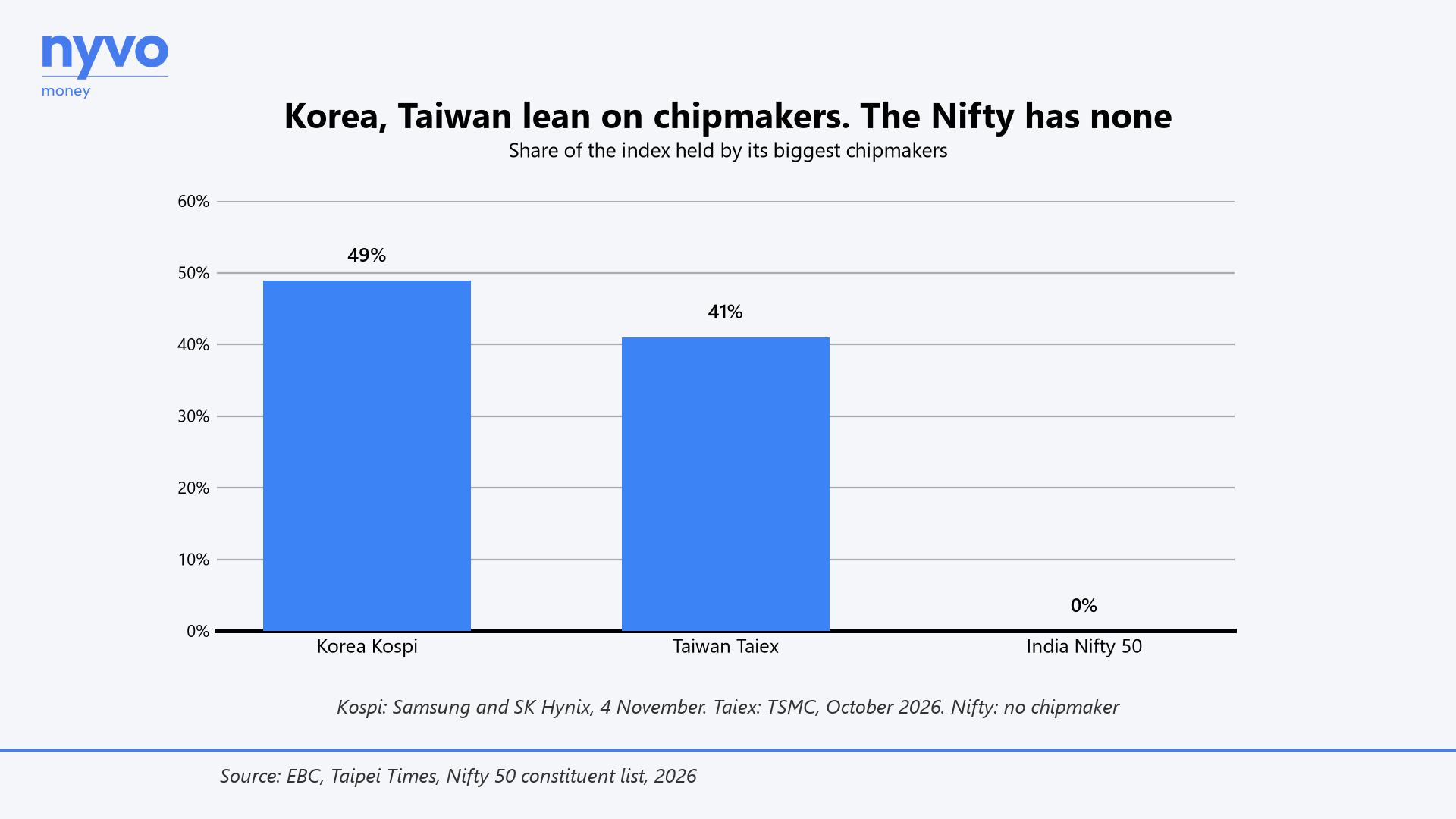
An index is just a list of companies, and you own whatever is on the list.
Samsung and SK Hynix made up 48.9% of the Kospi on 4 November. TSMC is about 41% of Taiwan's index. The Nifty's biggest sector is financial services, at 36.47% on 31 August 2026, and none of its 50 companies makes chips. So when chip stocks lose 12% in a night, Korea takes it directly. Indian IT stocks, which sell software services, actually led Friday morning's gainers.
The same list cost India most of 2026
What protected the Nifty this week is what held it back for nine months.
Foreign funds sold India to chase the AI boom in Taiwan and Korea. By 25 May 2026 Taiwan's stock market had overtaken India's in value, at $4.95 trillion against $4.92 trillion. Taiwan's economy is less than a quarter the size of India's. India's weight in the MSCI Emerging Markets Index fell to about 12%, from 19% the year before.
Foreign money has started coming back, in small amounts
Foreign investors bought about ₹21,086 crore of Indian shares across 4 and 5 November, on provisional data.
That is ₹7,284.03 crore and then ₹13,801.83 crore, after they sold ₹34,843 crore in all of October. It is still under 7% of what they had sold this year by 23 October. Thursday's jump also had a second driver: Brent crude fell about 8.7% on 4 November, to below $95.
Oil could undo this faster than anything else
India's lack of chipmakers does nothing to protect it from oil.
India imports most of its crude. Brent was above $114 around 23 October, fell below $95 on 4 November, and was back at $98.29 on 5 November. The rupee opened at 94.49 to the dollar on 6 November. The Nifty is not cheap either, at a P/E of 20.4 on 26 October against 19.9 for the Nikkei. Even after this rally, it sits 6.1% below its 2025 close of 26,129.60.
What this means if you are invested in India
India is not the AI bet. That is why it was fine when AI stocks crashed this week.
It is also why India missed the boom. ₹1 lakh in the Nifty at the start of 2026 had become about ₹86,900 by 26 October. In Taiwan's index, before dividends and currency moves, it would have been about ₹1,59,000. So if you are invested in India, an AI crash matters less to you than oil, the rupee and whether foreign investors keep buying.
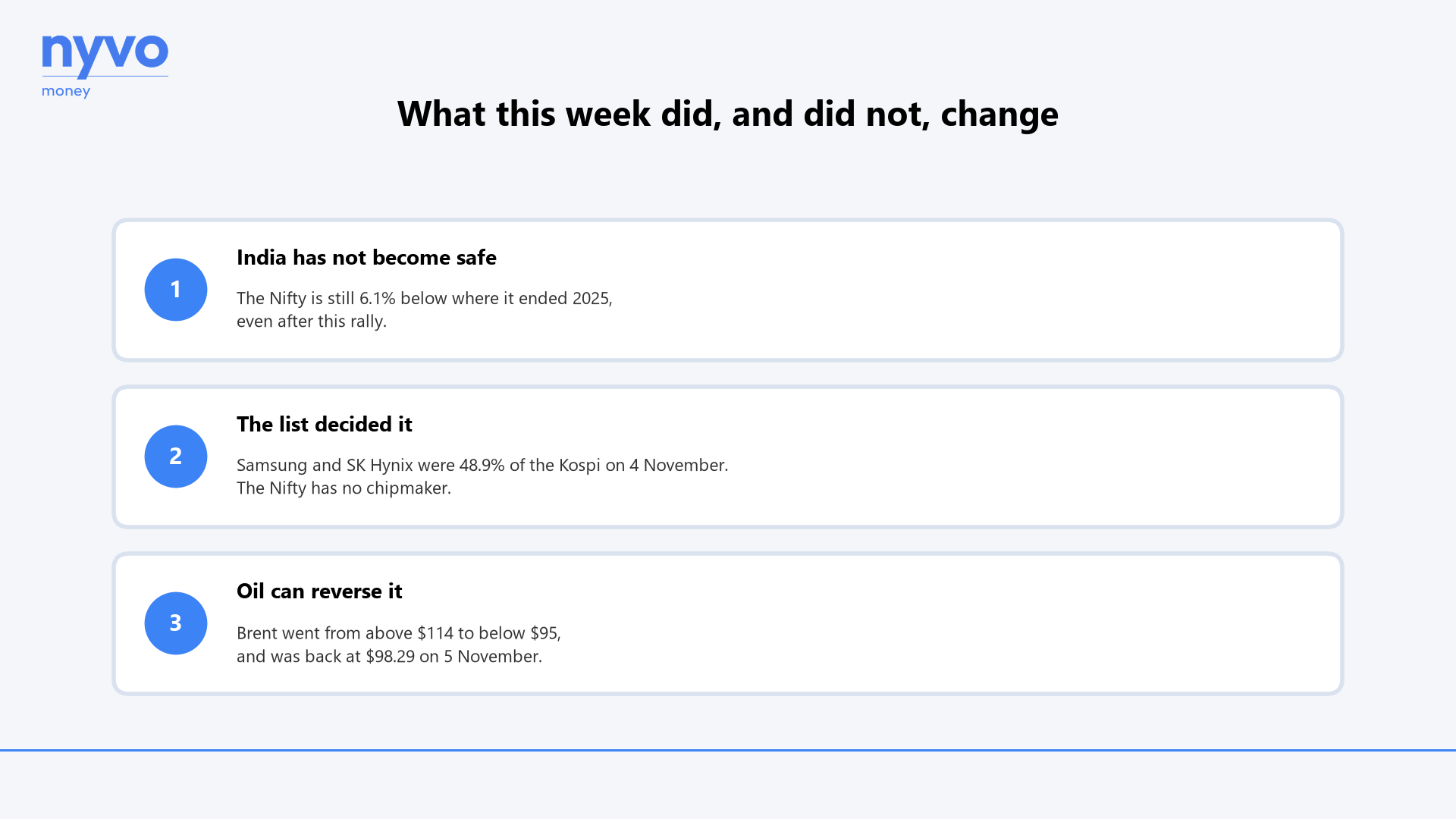
The Nifty did not dodge this crash. It never owned what crashed.
Published for information only. Nothing here is investment advice or a recommendation to buy, sell or hold. Past performance is not a guide to future returns. Speak to a registered adviser before acting.
Now in the nyvo app
Plan it for real in the nyvo app.
One view of the whole family's money, with goals and a month-by-month SIP plan. Free to download. SEBI-registered Investment Adviser.


Tools to try
Run the numbers yourself.
Free calculators that go with this issue. Built for Indian rules (rupees, inflation, tax regime).
- Lumpsum Calculator – One-Time Investment India
Estimate the future value of a one-time mutual-fund or fixed-income lumpsum in India. Enter principal, expected return and horizon to see the corpus.
- SIP Calculator – Monthly Mutual Fund Returns India
Estimate the future value of a monthly mutual-fund SIP in India. Enter your amount, expected return and horizon to see the corpus and gain split.
Also worth reading

24 October 2026
Is AI a bubble? Why the investors who say yes keep buying
Is AI a bubble? A record 54% of fund managers said yes in 2025. A year on, they hold the most tech since 2020. What 1999 says about why.

8 October 2026
How game theory can help beat a falling market
The Nifty 50 is down 13.7% in 2026. Von Neumann's game theory explains why that is a discount for some investors and a trap for others.

13 August 2026
The Cost of Global Investing: You Pay Going Out. You Pay Coming Back.
Forex markup, wire fees, brokerage and TCS are charged on the way out and again on the way back. Following ₹2 lakh through the full round trip shows what a foreign investment has to earn before it has earned anything.